Guwahati, 03 July (HS): The ₹6,950-crore Kaziranga Elevated Corridor Project is emerging as a landmark infrastructure initiative that aims to strike a balance between development and environmental conservation. Spanning 86 km along the Kaliabor–Numaligarh section of NH-715, the project is expected to significantly improve road connectivity, boost tourism, facilitate trade, and ensure safer wildlife movement across one of India's most ecologically sensitive landscapes.
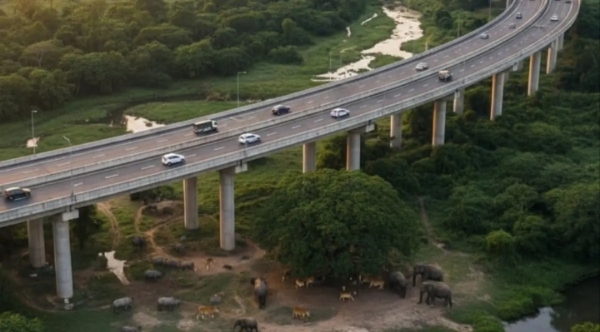
A key highlight of the project is the 35-km elevated wildlife corridor, which will allow animals such as one-horned rhinos, elephants, tigers and deer to move freely beneath the highway, particularly during the annual monsoon floods when they migrate towards the Karbi Anglong hills. The design is expected to drastically reduce road accidents involving wildlife and protect traditional migration routes.
Beyond conservation, the corridor is expected to cut travel time between Nagaon, Kaziranga and Golaghat, improve transport efficiency and strengthen connectivity to Upper Assam. The project also includes 21 km of greenfield bypasses and widening of 30 km of the existing highway from two lanes to four, easing traffic congestion and enhancing regional logistics.
Improved infrastructure is likely to provide a major boost to tourism by offering faster and safer access to Kaziranga National Park, while also creating opportunities for local businesses, hospitality, agriculture and transport sectors. Better road connectivity is expected to support economic growth across Nagaon, Karbi Anglong and Golaghat districts.
The project was planned in consultation with the Wildlife Institute of India to minimise ecological impact. Although environmentalists have expressed concerns over habitat disturbance and noise during the construction phase, authorities maintain that the elevated design represents one of the country's most ambitious attempts to integrate modern infrastructure with wildlife conservation.
Prime Minister Narendra Modi laid the foundation stone of the project in January this year. Once completed, the corridor is expected to become a model for sustainable infrastructure, demonstrating how development, environmental protection and tourism can progress together.-----------
Hindusthan Samachar / Sriprakash


03 Jul 2026