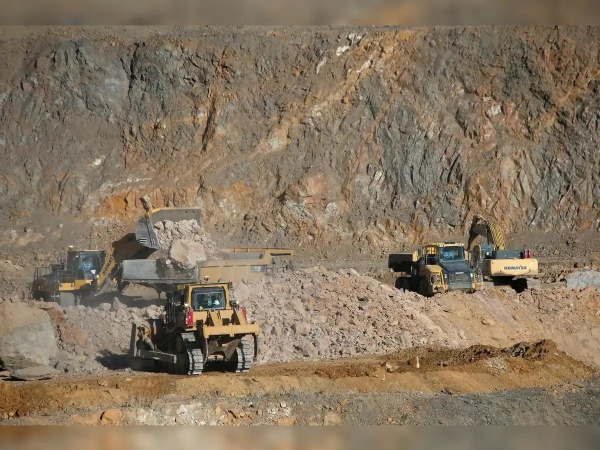
New Delhi, 29 July (H.S.): For decades, oil defined geopolitical influence and industrial power. Today, another resource is rapidly assuming similar strategic importance: critical minerals. Rare earth elements, titanium and other strategic minerals now underpin everything from electric vehicles and wind turbines to fighter aircraft, semiconductors and advanced defence systems.
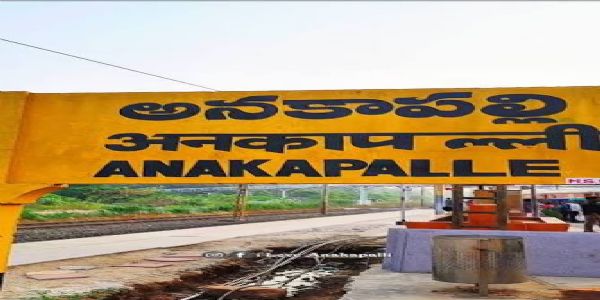
As countries seek to diversify supply chains away from excessive dependence on China, the spotlight is increasingly turning to new resource hubs. Among them, Anakapalle, a coastal district in Andhra Pradesh, is quietly emerging as one of India's most strategically significant locations.
Once known primarily for agriculture and its proximity to Visakhapatnam Port, Anakapalle is now at the centre of India's ambition to build an integrated critical minerals ecosystem that stretches from mining and mineral separation to permanent magnet manufacturing and advanced industrial production.
A New Strategic Geography
The transformation is driven by a combination of favourable geology and changing global geopolitics.
India's eastern coastline contains some of the country's richest deposits of beach sand minerals. Surveys have identified commercially significant reserves of rare earth-bearing monazite, ilmenite, zircon and other strategic minerals across Andhra Pradesh, while the state also hosts one of the world's largest barytes deposits in Kadapa.
Recognising the growing strategic importance of these resources, both the Union and Andhra Pradesh governments have accelerated exploration, policy reforms and industrial planning. Dedicated rare earth corridors announced in the Union Budget, the National Critical Minerals Mission, reforms to the Mines and Minerals (Development and Regulation) Act, and incentives for Rare Earth Permanent Magnet (REPM) manufacturing together mark a shift in India's mineral policy—from exporting raw resources to building domestic value chains.
Within this strategy, Anakapalle is emerging as the focal point for rare earth processing and permanent magnet manufacturing, supported by complementary industrial developments in Srikakulam and Machilipatnam.
Beyond Extraction
Historically, much of India's mineral wealth generated limited industrial value because raw materials were exported for processing elsewhere before returning as expensive finished products.
The new strategy seeks to reverse that model.
Rather than exporting mineral concentrates, the objective is to establish complete domestic value chains—from mining and chemical separation to refining, magnet production and component manufacturing.
Permanent magnets produced from rare earth elements are indispensable for electric vehicle motors, offshore wind turbines, industrial robotics, precision electronics and numerous defence applications. The ability to manufacture these components domestically could significantly reduce India's dependence on imports while strengthening its manufacturing competitiveness.
Government support has expanded through the ₹7,280-crore Rare Earth Permanent Magnet incentive programme, alongside state-level plans to attract investments exceeding ₹50,000 crore over the coming decade. Major industrial groups have also shown interest in establishing processing and downstream manufacturing facilities across the proposed corridor.
Building an Integrated Industrial Corridor
Instead of isolated mining operations, Andhra Pradesh is pursuing a cluster-based approach.
Anakapalle is expected to anchor rare earth separation and magnet manufacturing.
Srikakulam is being positioned for titanium processing and advanced alloy production, serving aerospace, maritime and defence industries.
Machilipatnam is envisioned as an integrated processing and export hub, leveraging its coastal connectivity to global markets.
Together, these locations could create one of India's first fully integrated critical minerals corridors linking resource extraction with high-value manufacturing and international trade.
Why the World Is Watching
The significance of AAnakapalle extends well beyond India's industrial ambitions.
China currently dominates global rare earth processing and permanent magnet manufacturing, creating supply chain vulnerabilities for countries pursuing energy transition and advanced manufacturing.
Governments in the United States, Europe, Japan and several Indo-Pacific economies are actively seeking diversified and resilient supply chains for strategic minerals. India's participation in initiatives such as the Minerals Security Partnership reflects this broader effort to build trusted alternatives.
If Andhra Pradesh successfully develops its planned processing ecosystem, Anakapalle could emerge as an important supplier of strategically significant materials for electric mobility, renewable energy, aerospace, defence and high-technology manufacturing.
Rather than competing solely on mineral reserves, the district's long-term advantage would lie in integrating extraction, refining, manufacturing and port connectivity within a single industrial ecosystem.
Looking Ahead
The coming decade could determine whether India evolves from a supplier of raw minerals into a major producer of high-value strategic materials.
If planned investments materialise, Anakapalli may become one of Asia's leading centres for rare earth processing and permanent magnet manufacturing, supporting domestic industries while contributing to increasingly diversified global supply chains.
Its importance will ultimately be measured not by the volume of minerals extracted from its coastline, but by its ability to produce the technologies that power electric vehicles, offshore wind farms, satellites, aircraft, semiconductors and next-generation defence systems.
Just as Silicon Valley became synonymous with digital innovation and Shenzhen with advanced manufacturing, Anakapalle is seeking to establish itself as a strategic node in the emerging global critical minerals economy—a transformation that could reshape India's industrial future while influencing the balance of global technology supply chains.
---------------
Hindusthan Samachar / Indrani Sarkar