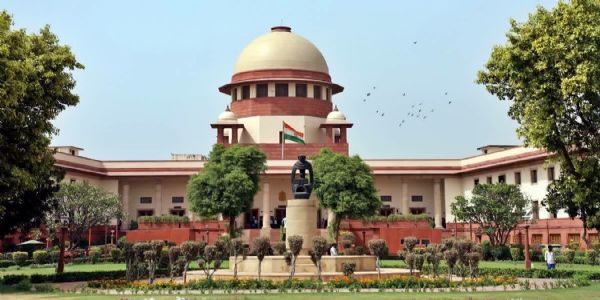
New Delhi, 28 July (H.S.): The Supreme Court on Tuesday stayed police action against protesters across the country and directed all state governments to immediately release detained minors. However, the Court clarified that the relief would not extend to individuals with a criminal record. A Bench headed by Chief Justice Surya Kant issued notices to the Chief Secretaries of Delhi, Maharashtra, Bihar, Kerala, Madhya Pradesh, and Uttar Pradesh.
The Court directed all states to preserve all evidence related to protests, including CCTV footage, drone recordings, body-camera footage, wireless communication records, and PCR call logs. It also instructed police forces across the country to preserve protesters' digital data and refrain from making it public.
The Bench further ordered that no personal information or private data of protesters should be published and directed that no preventive action be taken against student protesters. It also ordered the immediate release of all detainees below the age of 18 who had been arrested during the protests.
During the hearing, the Court expressed concern over the reported use of baton charges, pellet guns, and tear gas against demonstrators protesting the alleged NEET paper leak. It also noted reports of rubber bullets and electric batons being used to disperse protesters.
The Court observed that Solicitor General Tushar Mehta was not opposing an independent inquiry into the matter. Mehta submitted that several criminal elements had allegedly infiltrated the protests and injured nearly 200 police personnel. He argued that an impartial investigation was necessary and should also address the concerns of the injured police personnel and their families. The Bench directed the Central Government to file its response before any committee is constituted.
During an earlier hearing, the Supreme Court had observed that every citizen has a constitutional right to protest peacefully and within the bounds of the law. It had stated that the mere existence of a protest does not justify baton charges or excessive use of force by the police. Chief Justice Surya Kant had said that if any excesses were committed by the police, they should be investigated impartially, and that uniform national guidelines should be framed for handling protests across the country.
Justice Bagchi, the other member of the Bench, had remarked that the Court was equally concerned about injured students and police personnel. He also questioned why police officers were not provided with adequate protective equipment, including helmets, to deal with violent situations.
The protest at Jantar Mantar, led by the Cockroach Janata Party (CJP), had begun on June 20 demanding the resignation of Union Education Minister Dharmendra Pradhan over allegations related to the paper leak. Environmentalist Sonam Wangchuk had launched an indefinite hunger strike at the protest site on June 28 and was shifted to Safdarjung Hospital after nearly 20 days of fasting.
The protesters also organised a march to Parliament on July 20, during which clashes reportedly took place between demonstrators and the Delhi Police at several locations in the national capital. The petition before the Supreme Court alleges that police used excessive force against protesters, including baton charges and tear gas. FIRs in connection with the incidents were registered at Connaught Place Police Station, Parliament Street Police Station, and several other police stations in Delhi.
---------------
Hindusthan Samachar / Jun Sarkar
28 Jul 2026