




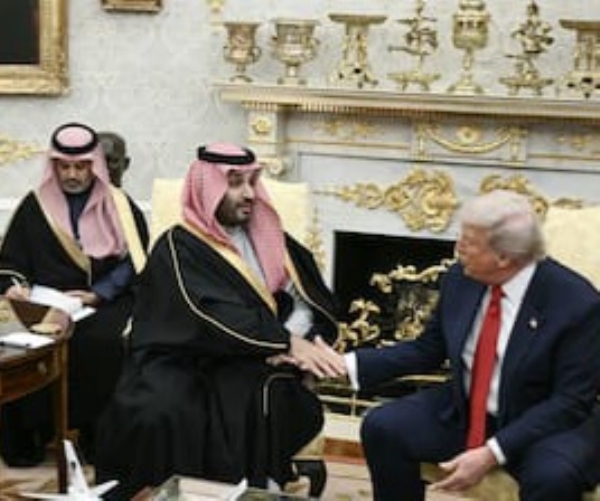
Washington, 23 July (H.S.): The United States and Saudi Arabia have signed a landmark agreement to establish a framework for civilian nuclear cooperation, marking a major step in strengthening strategic and economic ties between the two countries.
The agreement, announced by the US Department of Energy, includes two key pacts — one focused on peaceful nuclear cooperation and another covering bilateral nuclear safeguards. The documents were signed by US Energy Secretary Chris Wright and Saudi Energy Minister Prince Abdulaziz bin Salman.
The US administration said the agreements would create a legal foundation for a long-term, multi-billion-dollar partnership while ensuring compliance with international nuclear non-proliferation standards.
The deal comes at a time of heightened tensions in the Middle East, particularly amid Washington’s ongoing conflict with Iran, which has been linked to longstanding concerns over Tehran’s nuclear ambitions. Nuclear issues remain a major obstacle in diplomatic efforts aimed at reducing regional tensions.
Under the agreement, American companies could potentially participate in developing Saudi Arabia’s civilian nuclear infrastructure, including nuclear power projects. However, concerns remain over whether the deal could allow Saudi Arabia to develop uranium enrichment capabilities, a process that can be used for both civilian energy production and nuclear weapons development.
The final details of the agreement have not yet been publicly released. The pact will now be reviewed by the US Congress, though lawmakers are not expected to block its implementation due to strong bipartisan interest in maintaining strategic relations with Riyadh.
Saudi Arabia has repeatedly stated that it has the right to develop a civilian nuclear programme and has been seeking international partnerships to expand its energy sector. The kingdom has also strengthened defence ties with nuclear-armed Pakistan through a mutual defence agreement signed last year.
The United States has been pushing for a broader strategic arrangement with Saudi Arabia that could include defence cooperation and potential diplomatic normalisation between Saudi Arabia and Israel.
Experts have expressed mixed views on the agreement. Supporters argue that closer nuclear cooperation with Washington could prevent Saudi Arabia from turning to countries such as Russia or China for nuclear technology. Critics, however, have warned that allowing uranium enrichment facilities on Saudi territory could create long-term proliferation risks in the region.
US Energy Secretary Chris Wright defended the agreement, saying it would maintain strict nuclear safety standards and promote the use of advanced American nuclear technology.
The United States currently has civilian nuclear cooperation agreements with more than 50 countries under Section 123 of the US Atomic Energy Act, with the terms varying depending on each partner nation.
The agreement with Saudi Arabia is expected to play a significant role in shaping the future of energy security, regional diplomacy and nuclear policy in the Middle East.
---------------
Hindusthan Samachar / Jun Sarkar

23 Jul 2026