New Delhi, 21 July (H.S.): Amid Pakistan’s attempts to seek mediation through Canada, India has made it clear that the 1960 Indus Waters Treaty will not be revived in its existing form.
Sources familiar with the Indian government’s policy told Hindustan Samachar, “The Indus Waters Treaty will not function again in its present form. Remaining within this treaty is not in India’s interest.”
Describing the agreement as effectively defunct, the sources said, “India had entered into this treaty despite facing disadvantages, with the spirit of goodwill and friendship. However, by openly promoting cross-border terrorism as a state policy for four decades, Pakistan has violated the goodwill enshrined in the treaty. The foundation of the agreement has been destroyed.”
India maintains that while it respected the treaty for more than six decades, including during periods of war, Pakistan’s continued support for cross-border terrorism — including attacks on Parliament, Mumbai, Uri, Pulwama, and Pahalgam — has completely eroded the mutual trust and reciprocity required for the agreement to continue.
India suspended the treaty in 2025 following the Pahalgam terror attack carried out by Pakistan-trained terrorists. A return to the framework that existed before 2025 is now “not possible”, the sources said.
The sources stated that under existing international law, the use of terrorism as a state policy itself constitutes a violation. Any future agreement, if negotiated, would have to reflect present-day realities, including climate change, glacier retreat, changing hydrology, rising water demands, new technologies, and security concerns.
The World Bank-mediated treaty has historically allocated waters of the Indus river system, giving Pakistan access to more than 80 per cent of the water from the three western rivers — the Indus, Jhelum, and Chenab — while allowing India limited usage of the eastern rivers — Ravi, Beas, and Sutlej. However, India argues that the arrangement is “one-sided” and has become completely impractical in the present circumstances after several decades.
The sources said, “Pakistan needs to credibly abandon its support for cross-border terrorism. Any constructive step on this issue depends entirely on Pakistan’s actions.” They also pointed out that no credible measures have been taken by the Pakistani government regarding individuals who continue to appear at public events and promote anti-India messaging from within Pakistan.
Responding to a question, the sources clarified that the suspension of the treaty has made all institutional mechanisms inactive, including meetings of the Permanent Indus Commission, official visits, inspections, data exchanges, and participation in dispute resolution processes involving a “Neutral Expert”.
On whether India would continue sharing flood-related data, the sources said that it would continue as it did last year through the Indian High Commission in Islamabad.
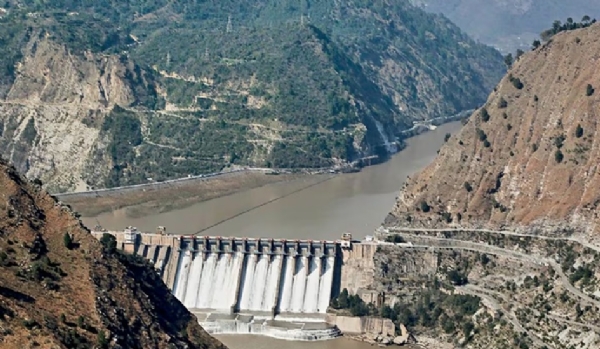
Meanwhile, India said it is moving ahead with the full utilisation of its share of Indus waters. Two major hydropower projects — the 624 MW Kiru Hydroelectric Project and the 1,000 MW Pakal Dul Hydroelectric Project — are expected to become operational this year.
India plans to add around 5,500 MW of additional hydropower capacity in Jammu and Kashmir in the coming years. The projects include the 1,856 MW Sawalkot project, 850 MW Ratle project, 240 MW Uri-I project, 260 MW Dulhasti-II project, and 540 MW Kwar project. Several of these projects have faced long-standing objections from Pakistan.
The sources said, “India has provided information about more than 70 projects, from Baglihar to Tulbul, which have been objected to by Pakistan. In 2023, India again sought negotiations, but Pakistan continued to avoid substantive discussions.”
Comparing India’s approach with Pakistan’s water management record, the sources said, “Pakistan wastes more water from the Indus river system than India’s entire allocated share.” They claimed that Pakistan has not created any major new storage facilities for decades, wastes nearly 50 per cent of its water resources, and continues to face inter-provincial disputes.
The long-proposed Kalabagh Dam remains stalled amid opposition from Sindh and Khyber Pakhtunkhwa. The Mangla Dam has already lost around 12 per cent of its capacity due to silt accumulation.
Highlighting what it described as Pakistan’s systematic disruption and misuse of the treaty, the sources said Pakistan has consistently obstructed India’s legitimate development projects on the western rivers. These objections have ranged from a small 200-kilowatt hydropower project built for a remote tribal area to prolonged disputes over major projects such as Salal, Tulbul, Baglihar, Kishanganga, Ratle, and Pakal Dul.
India also criticised Pakistan for allegedly misusing the treaty’s dispute resolution mechanism as a tool to delay projects. The sources said Pakistan had taken routine technical issues to third-party forums and sought parallel proceedings before both a Neutral Expert and a Court of Arbitration, violating the treaty’s graded dispute resolution structure.
The sources further stated that India has consistently maintained that the Court of Arbitration was constituted illegally and that it considers its existence, proceedings, and any decisions issued by it to be completely invalid and without legal effect.
---------------
Hindusthan Samachar / Jun Sarkar