Kolkata, 19 July (H.S.) : Former Chief of the Army Staff General Manoj Pande on Sunday night said that Operation Sindoor demonstrated India's growing military capability. He stressed that every military campaign provides valuable lessons and that such experiences must be used to strengthen the strategy, operational capability and preparedness of the armed forces for future conflicts.
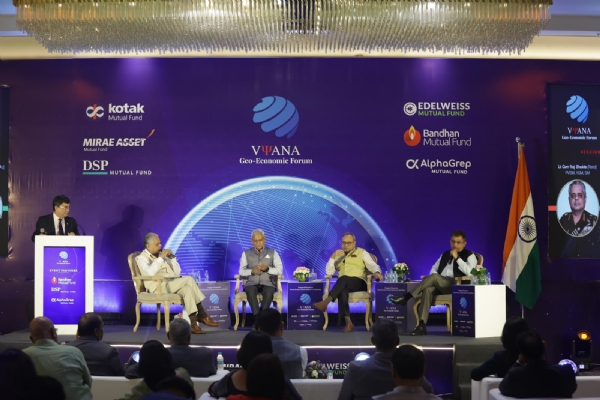
General Pande was speaking during the concluding session of the inaugural national seminar titled National Security and Economic Resilience: India's Strategic Imperatives in the Emerging Global Order, organised by the Vyana Geo-Economic Forum (VGEF) at Fairfield by Marriott in Kolkata.
In a special conversation, the former Army Chief said India has made significant progress in strengthening its strategic capabilities in recent years. However, evolving security challenges require continuous investment in defence preparedness, technological advancement and military modernisation.
He observed that the nature of warfare is undergoing a rapid transformation with the emergence of artificial intelligence, drones, cyber warfare, space-based surveillance systems and advanced precision weapons. In such an environment, he said, conventional military strength alone would not be sufficient, and the armed forces must rapidly integrate emerging technologies into operational planning and execution.
General Pande noted that future wars would be multi-domain conflicts involving land, sea, air, cyber and space. He emphasised the need for the Indian Armed Forces to develop integrated capabilities across all these domains while focusing on advanced training, modern weapon systems, technological proficiency and faster decision-making.
Despite the growing role of technology, he said the core strengths of a soldier remain unchanged. Discipline, integrity, courage, dedication to the nation and commitment to duty continue to define the character and effectiveness of the Indian Army, he added.
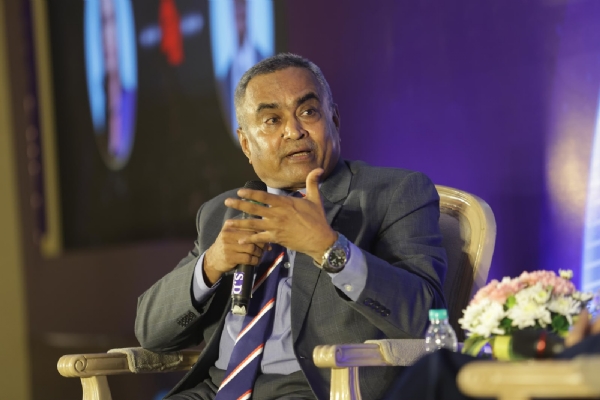
Earlier, the seminar's first technical session focused on India's Defence Preparedness and Strategic Deterrence in the Emerging Global Order. Speakers, including Lieutenant General Raj Shukla, Lieutenant General Subrata Saha, Lieutenant General Dushyant Singh and Air Marshal Nagesh Kapoor, discussed India's evolving national security strategy, lessons from Operation Sindoor, military modernisation, strategic deterrence, defence self-reliance and the role of emerging technologies in future warfare. The panellists underlined the importance of expanding indigenous defence manufacturing to strengthen India's long-term security architecture.
The second session, titled Economic Security as National Security: Present and Future Perspectives, featured Karan Datta, Dr Ajit Ranade, Sugata Ghosh Dastidar and Siddharth Srivastava. The discussion centred on global supply chains, energy security, protection of critical industries, defence expenditure, technological competition, defence manufacturing and defence exports. The speakers emphasised that sustained national security depends on a resilient economy and that defence and economic growth must progress together.
Participants also highlighted the increasing role of private industry in India's defence manufacturing ecosystem, stating that greater private sector participation would not only enhance domestic defence capabilities but also boost defence exports and contribute to economic growth.
The seminar stressed that safeguarding critical infrastructure, ensuring energy security, strengthening resilient supply chains, enhancing coordination between government and industry, and preparing for multi-domain warfare should remain among India's highest strategic priorities. Experts also called for long-term planning to enhance India's global competitiveness and support its vision of becoming a developed nation.
The event was attended by several distinguished military leaders and strategic experts, including Eastern Command Chief of Staff Lieutenant General Gambhir Singh, Brigadier Aditya Sahay, senior veterans, economists, industry representatives and capital market experts.
VGEF Chairman Lieutenant General (Retd.) Tarun Kumar Aich said national security and economic strength are inseparable pillars of India's long-term strategic future. He said the forum has been established to bring together experts from defence, industry, economics and strategic affairs to facilitate evidence-based discussions that can contribute to national policymaking.
Concluding the event, the organisers announced that the seminar marked the beginning of an ongoing national dialogue on security, geopolitics and geo-economics. The forum plans to organise regular discussions bringing together experts from diverse fields to deliberate on issues related to India's security, economic resilience and global leadership.
Hindusthan Samachar / Satya Prakash Singh
21 Jul 2026