Nagpur, 16 July
(HS): In 2013 the Bombay High Court, while expressing concern over open
defecation and garbage created during the annual ‘Vari’ (Religious procession on
foot), had threatened banning the procession. The religious sentiments were
hurt, but the concern for growing damage to the environment was not wrong. This
was also responsible for spreading infections in many villages. The participants
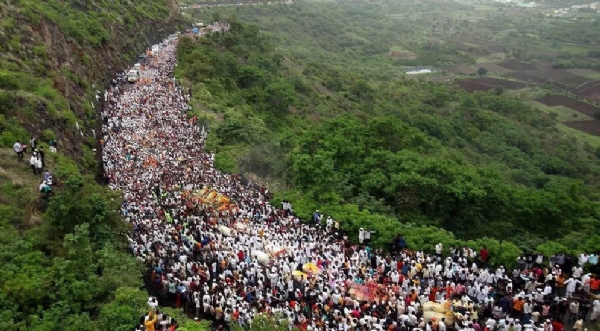
in the annual Vari was ever growing. By 2026 it is expected to be more than 3
million.
Management Plan and Support
The remarks by
High Court moved an IT Professional and a devotee, Narendra Vaishyampayan, who
started planning for the permanent solution to the issue. The plan was
implemented in two villages on ‘Vari’ route. He conveyed his plan to RSS which
agreed to cooperate, and gradually ABVP (Akhil Bharatiya Vidyarthi Parishad)
volunteers, health service personnel from Maharashtra University of Health
Sciences (MUHS) joined the project under the banner of ‘Seva Sahayog’ founded
by Vaishyampayan.
Use of Technology
Over 3600 mobile
toilets were provided for the devotees participating in the ‘Vari’. With help
of NEERI (National Environment Engineering Institution), Nagpur, about four
crore litre of sewage and water are processed and converted into fertilizer and
given to farmers. ABVP workers took initiative in managing traffic on the route
for the safety of the devotees and also to prevent inconvenience to the
vehicles. They also served the devotees in providing food and drinking water
free of cost. MUHS health personnel took care of the devotees’ health. They
even performed massage of their legs and feet during their halt.
Seva Sahayog
started changing the condition under the ‘Swacha Bharat’ mission and ensure
cleaniless on the route making it a ‘Nirmal Vari’ by 2017. The roads which were
full of garbage were decorated with Rangoli to welcome the ‘Vari’. Everyday the
ABVP volunteers with other social organisations clean the path and decoate it by
drawing Rangoli.
Government Support
Maharashtra
Chief Minister Devendra Fadnavis also made financial support for providing
basic amenities for the devotees.
What It
Vari
As per the stories
from ancient “Puranas’ a devotee Pundalik prayed for Lord Vishnu to visit his
home appear before him. Satisfied with Pundalik’s faith and prayers Lord
Krishna in the form of Vitthal descended on his door step. Pundalik was serving
his ailing parent and asked Vitthal to wait and offered a brick to rest.
Pleased with his service to parents Vittha decided to stay permanently in
Pandharpur with both hands on his waist.
The story also a
lesson for those who neglect their parents.
Pandharpur on
the banks of Chandrabhaga River in Maharashtra is a symbol of devotion and
dedication.
A large number
of devotees visit the place every year on Ashad Ekadashi (Eleventh day of Ashadh
month’s bright fortnight in Hindu Almanac). It usually falls towards end of June
and beginning of July. The devotees from Maharashtra, Karnataka and Goa participate
in the event. Every person bows to each other believing him to be Lord Vitthal in
his form.
The procession to
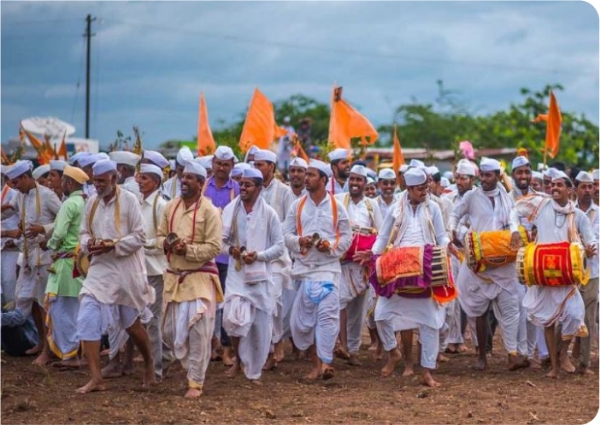
Pandharpur on foot is called ‘Vari’ and the devotees ‘Varkari’. They carry
palanquins of social reformer saints Sant Gyaneshwar, Sant Tukaram etc.
Scientific relevance
The day also
marks beginning of Chaturmas, four months of season during monsoon. During the
four months till Kartik Ekadashi (Oct-Nov). Restriction on food consumption is
followed to prevent infections. Many refrain from eating non-veg food during
the period.
Several
religious events fall during the period, when Yagya and other rituals are performed.
The rituals including performing Yagya are vector repellent, which has been
proved by experiment.
Conclusion
Hindu civilisation
is not a religion, but is a guide to lifestyle in consonance with the nature.
The rituals in different regions differ based on the flora and fauna of that
region.
It survived for
centuries only because of philosophical lessons embedded in its. As it is
related to nature, modern science is gradually accepting it after performing
long experiments in the laboratories.
---------------
Hindusthan Samachar / Ajay Vasant Mardikar