Lucknow, 07 July (HS): Brahmashaila, the towering 5566 meter
peak overlooking the Shalshal-La pass in Uttarakhand’sKumaon region stands as a
profound testament to India’s ancient civilizational memory embedded in its
Himalayan geography. Far from being a mere cartographic marker this high
altitude massif reflects a continuity of sacred naming traditions rooted deeply
in Vedic, Puranic and regional cultural consciousness, where landscapes are not
inert terrain but living embodiments of cosmic order and spiritual symbolism.
Etymology and Civilizational Depth: The name ‘Brahmashaila’
arises from ‘Brahma,’ the creator in the Hindu trinity and ‘shaila,’ meaning
sacred rock or foundational stone. Together, the term evokes the idea of a
primordial cosmic anchor—“Brahma’s Sacred Stone.” In Vedic and Puranic
traditions such stones were not incidental features but sites of yajnas,
meditative anchoring points and metaphysical symbols of creation itself. These
shailas represented stability, purity and the emergence of existence from the
primordial sound ‘Om,’ forming an integral part of India’s sacred geography.
Across the Himalayas, such naming conventions have persisted
for millennia reflecting a worldview in which geography and divinity are
inseparable. Brahmashaila fits squarely within this tradition embodying a
continuity of thought that predates colonial mapping systems and modern
geopolitical boundaries.
Historical and Cultural Continuity: The Shalshal-La
corridor, situated east of the Milam Glacier and west of Adi Kailash, has long
functioned as a vital trans-Himalayan passage. From early Vedic-era movements
to the flourishing trade networks under the Katyuri (7th–11th century CE) and
Chand dynasties (7th–18th century CE), this route facilitated exchanges of
salt, borax, wool and cultural ideas between the Indian subcontinent and Tibet.
Archaeological and textual evidencefrom Mesolithic rock art
at LakhuUdyar to copper plate inscriptions—points to the region’s continuous
habitation and integration into broader Indic civilization. The ShaukaBhotiya
communities, indigenous to these valleys, have preserved ritual traditions such
as jagar invocations and ancestral offerings on sacred stones like
Brahmashaila, reinforcing its role as a spiritual guardian of the land.
Within the broader sacred landscape of Kurmanchal (Kumaon)
associated with Vishnu’s Kurma avatar, peaks are revered as abodes of deities.
Brahmashaila resonates with nearby sacred sites such as Om Parvat and Adi
Kailash, forming part of an extended pilgrimage network often referred to as
“Little Kailash.” These traditions were further woven into the pan-Indian
spiritual fabric by AdiShankaracharya and later yogic lineages.
Mythological Resonance: Puranic narratives frequently
describe sacred rocks as stabilizing forces during cosmic events, such as the
SamudraManthan or the aftermath of Daksha Yagna. In regional lore, the
Shalshal-La region is envisioned as a threshold to higher spiritual realms
guarded by yakshas and sanctified by rishis like Markandeya. The Mahabharata
links nearby valleys such as Darma and Johar to the Pandavas’ exile further
embedding the region into India’s mythological landscape. In this framework,
Brahmashaila is not merely a peak but a cosmic fulcrum—connecting svarga
(heaven), prithvi (earth) and the spiritual journeys that traverse between
them.
Strategic Significance Near the LAC: Beyond its cultural
depth, Brahmashaila occupies a position of considerable strategic importance.
Rising above the Shalshal-La pass at approximately 4950 meters, it commands a
clear vantage over a critical trans-Himalayan corridor leading toward the Line
of Actual Control (LAC).
Its significance includes: Surveillance dominance: The
elevation provides extensive visibility over approaches from the Tibetan
plateau, enabling effective monitoring of movement across a sensitive frontier
zone.
Control of key routes: Shalshal-La functions as a natural
funnel between valleys linked to the Gori and Kali river systems, making it a
crucial axis for patrol and logistical movement.
Proximity to contested areas: The region lies within a
sector that has witnessed sustained tensions, especially after the 2020 Galwan
Valley developments, increasing the need for persistent vigilance.
Integration with infrastructure: Connectivity improvements
by the Border Roads Organisation, including routes toward Sin La and Nabhi La,
enhance operational readiness and rapid troop deployment.
Terrain advantage: Flanked by major features like the
Rajrambha massif, the peak contributes to layered defensive positioning in
high-altitude warfare scenarios. In modern strategic terms, Brahmashaila serves
as both a physical and psychological high groundreinforcing territorial
awareness while aligning military presence with a deeply rooted civilizational
landscape.
Hindusthan Samachar / Abhishek Awasthi


10 Jul 2026
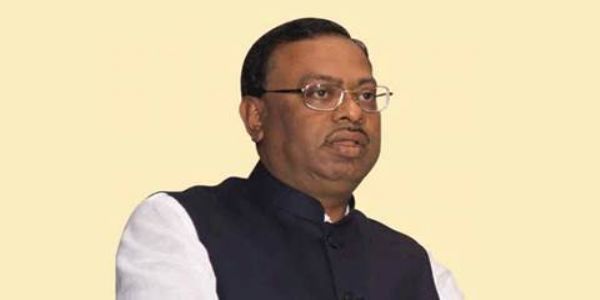
No role for political parties in feeding patients at Medical colleges ,G.Sudhakaran MLA
No role for political parties in feeding patients at Medical colleges ,G.Sudhakaran MLA..