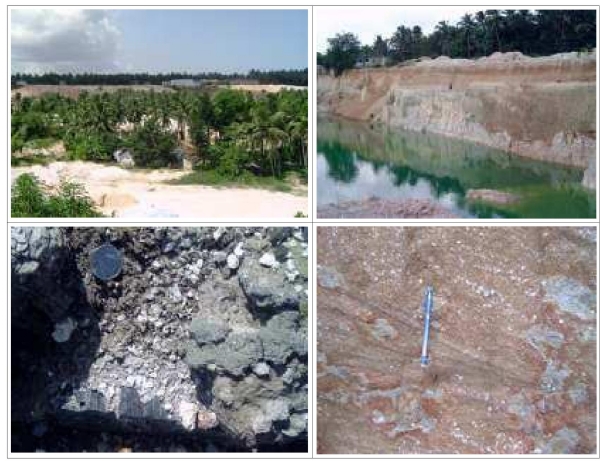
Thiruvananthapuram, 02 June (H.S.): While Kerala’s coastline is celebrated for its scenic beaches, fishing communities and tourism potential, the shores of Kollam and Alappuzha conceal another valuable asset beneath their sands — one of the richest deposits of heavy mineral sands in the world. These coastal stretches have long been recognised as strategic mineral zones containing valuable resources that are crucial for industries ranging from aerospace and defence to electronics and renewable energy.
The mineral-rich black sands, locally known as karimanal, are particularly concentrated along the Chavara-Alappad belt in Kollam district and extend towards parts of the Alappuzha coast. These deposits contain a range of heavy minerals including ilmenite, rutile, zircon, monazite, sillimanite and garnet. The concentration of these minerals was formed over thousands of years through the weathering of rocks in the Western Ghats and their subsequent transport by rivers to the coast, where wave action and ocean currents concentrated them into economically viable deposits.
Among these minerals, ilmenite is the most significant. It serves as the primary source of titanium dioxide, which is widely used in paints, plastics, paper, cosmetics and aerospace applications. Kerala’s coastal deposits are considered among the largest ilmenite-bearing beach sand reserves in the country. The Kerala Minerals and Metals Limited (KMML), headquartered at Chavara in Kollam, has been extracting and processing ilmenite for decades.
Another highly valuable mineral found in these coastal sands is monazite, a rare-earth-bearing mineral that contains thorium and rare earth elements. Rare earths have become increasingly important in modern technology, finding applications in electric vehicles, wind turbines, advanced electronics and defence systems.
Zircon is extensively used in ceramic tiles, refractory materials and foundry industries. Rutile is valued in the production of welding electrodes and titanium metal. Garnet is widely used as an industrial abrasive, while sillimanite is a key raw material in the manufacture of high-temperature refractory products.
The economic importance of these deposits extends beyond mining revenues. Thousands of jobs, both direct and indirect, are linked to mineral extraction, processing and transportation activities in the region.
However, the mineral wealth has also generated controversy. Environmentalists and local residents have frequently raised concerns about coastal erosion, ecological degradation and displacement associated with mining activities. The Alappad-Chavara coastline has witnessed repeated debates over balancing economic development with environmental sustainability and the livelihoods of coastal communities.
With global demand for titanium and rare earth elements rising sharply due to the growth of clean energy technologies and advanced manufacturing, Kerala’s coastal mineral belt is increasingly viewed as a critical national resource. As India seeks to strengthen its position in strategic minerals and reduce dependence on imports, the mineral-rich sands of Kollam and Alappuzha are likely to play an even greater role in the country’s industrial and technological future.
---------------
Hindusthan Samachar / Arun Lakshman

02 Jun 2026
Anil Joshi to Submit Innovative Proposal to PM Seeking Mandatory Carbon Footprint Labelling on All Products

02 Jun 2026