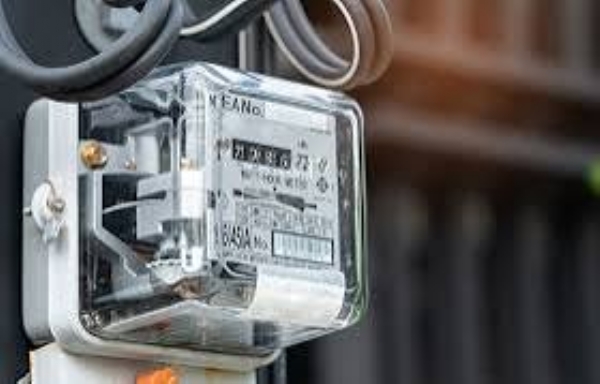
Kolkata, 12 June (H.S.) : A recent directive issued by the West Bengal government requiring government employees to install smart electricity meters at their residences has triggered strong criticism from sections of the education community, with teachers and academic associations questioning the state's authority to dictate the type of electricity meter used in private homes.
The controversy follows a notification issued by Nabanna, the state secretariat, extending the implementation of smart meters beyond government offices to the residences of government employees, including teachers, professors and education staff.
Earlier, on June 3, the state government had directed that smart electricity meters be installed in all government offices. The latest order expands the scope of the initiative, leading to concerns among government employees about potential future moves to make smart meters mandatory for the wider public.
According to the notification, instructions have been sent to departmental heads, the Director General of Police, divisional commissioners, police commissioners and district magistrates to ensure that the directive reaches all government employees. The order is linked to the Centre's Revamped Distribution Sector Scheme (RDSS), under which smart metering is being promoted to modernise power distribution and improve efficiency.
The notification states that all individuals receiving salaries, honorariums or remuneration from the state exchequer are required to install smart meters at their homes.
The directive has drawn criticism from several teachers' organisations and education sector representatives.
A school headmaster, speaking on condition of anonymity, questioned the government's intervention in personal matters. We have little experience with smart meters. Our homes are private spaces. The government should not decide what kind of meter we install in our residences, he said.
Swapan Mondal, General Secretary of the Bengal Teachers' and Education Employees' Association, alleged that the government was imposing additional burdens on employees instead of fulfilling promises related to reducing electricity costs.
Kinkar Adhikari, General Secretary of the Shikshanuragi Oikya Manch, expressed concerns about reports from some consumers who claim that smart meters can result in higher bills and operational difficulties. He noted that many smart meters function on a prepaid model, requiring consumers to deposit money in advance before using electricity, which could create difficulties for households during the middle of a billing cycle.
However, the government notification also mentions that the meters can be operated under a postpaid billing system.
Sagaramoy Ghosh, General Secretary of the Calcutta University Teachers' Association, said that while he personally had a positive experience with smart meters, he did not support making them compulsory.
He pointed out that the notification does not clearly explain how the system will function across different regions of the state. He also noted that electricity tariffs vary significantly between state-run utilities and private power distribution companies.
Previous attempts to introduce smart meters had generated complaints regarding difficulty in tracking actual power consumption and higher electricity charges. Making the system mandatory is not the right approach, Ghosh said.
The state government has not yet issued a detailed clarification regarding the concerns raised by teachers' organisations and other government employees. The directive has nevertheless reignited a broader debate over consumer choice, electricity billing transparency and the extent of government authority in matters involving private residences.
Hindusthan Samachar / Satya Prakash Singh
12 Jun 2026