Tehran, 11 June (H.S.): The conflict between the United States and Iran intensified sharply on Thursday as Washington carried out a fresh round of military strikes against targets inside Iran, while Tehran claimed to have launched retaliatory attacks against American military installations across the Gulf region.
According to reports, the United States Central Command (CENTCOM) conducted additional self-defence strikes on multiple targets in Iran. The latest attacks came shortly after US President Donald Trump warned that Washington would continue military action if Tehran failed to accept a proposed peace framework.
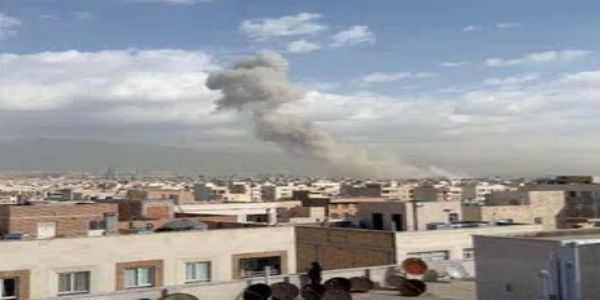
Iranian media reported that air-defence systems were activated across several parts of the country during the attacks. Explosions were reported in western Tehran, Fars Province, Bandar Abbas, Qeshm Island, Kish Island, Minab and parts of Isfahan, indicating the broad geographical scope of the military operations.
In response, Iran's Islamic Revolutionary Guard Corps (IRGC) said its aerospace force and naval units carried out a two-wave operation targeting American military positions in the region. Iranian media reports claimed that 18 strategic sites associated with US forces were attacked. Independent confirmation of the extent of the damage was not immediately available.
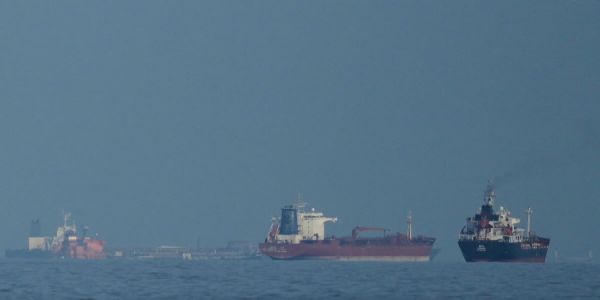
One of the most significant developments came when Iranian military sources claimed that the Strait of Hormuz, one of the world's most important maritime oil routes, had been closed to all vessels because of the deteriorating security situation. Iranian officials stated that commercial ships and oil tankers would not be allowed to transit through the waterway until further notice.
However, the United States military quickly challenged that assertion. CENTCOM stated that commercial shipping traffic continued to move through the Strait of Hormuz despite the heightened tensions and said claims of a complete closure were inaccurate.
The Strait of Hormuz remains a critical global energy corridor through which a substantial portion of the world's oil exports passes each day. Any disruption to shipping in the area could have significant consequences for international energy markets and global trade.
Speaking to American media outlets, President Trump said the latest operation involved the use of dozens of Tomahawk cruise missiles against targets inside Iran. He also stated that US military aircraft continued to operate over Iranian airspace and had targeted radar and air-defence installations in the country's southwest.
Trump further claimed that senior Iranian officials had contacted him seeking an end to the bombardment. Iranian authorities strongly denied those assertions, insisting that no direct communication had taken place between Tehran and Washington.
Meanwhile, Brigadier General Majid Mousavi, commander of the IRGC Aerospace Force, warned that Iran would respond forcefully to any attempt to threaten navigation in the Gulf region. He said Iran would take further action if the Strait of Hormuz or Iranian interests came under additional pressure.
The regional security situation became more tense after air-raid sirens sounded in parts of Bahrain following reports of Iranian attacks on US-linked facilities. Bahraini authorities urged residents to remain calm and move to designated safe locations as a precautionary measure.
Hindusthan Samachar / Jun Sarkar