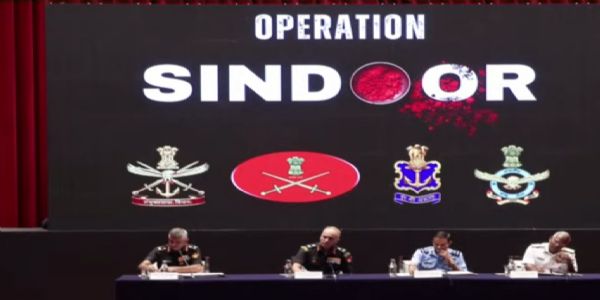
New Delhi, 07 May (H.S.): On the first anniversary of Operation Sindoor against Pakistan, all three armed services detailed their achievements to the nation. Following the terrorist attack in Pahalgam, India meticulously planned and executed strikes beyond the Line of Control and international border with Pakistan, targeting terrorist bases with unprecedented operational freedom that enabled ground, air, and maritime capabilities to deliver decisive lessons to the enemy.
The Indian Army launched Operation Sindoor against Pakistan on May 7 last year. Given the long border, military presence, and sensitivity of border districts, Rajasthan served as the primary hub for Operation Sindoor.Consequently, the Army selected Rajasthan to commemorate the operation's first anniversary.
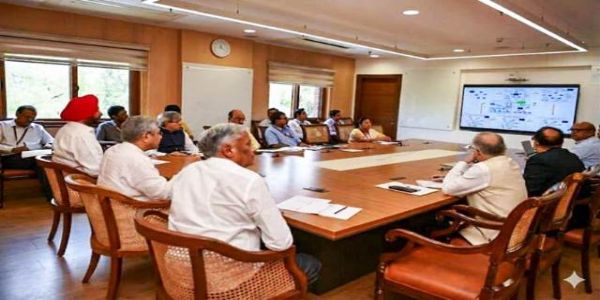
A Joint Commanders' Conference will be held today at the Headquarters South Western Command, Jaipur Military Station. This crucial national security conference will discuss military strategy, coordination, and security matters. The Defence Minister will be the chief guest, with participation from the Chief of Defence Staff (CDS) and heads of the Army, Navy, and Air Force. A film related to Operation Sindoor will be released during the evening program.
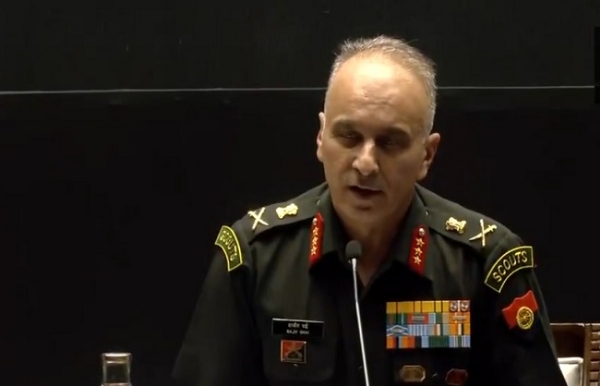
Lieutenant General Rajiv Ghai, who served as Director General of Military Operations (DGMO) during Operation Sindoor, shared critical insights during a press conference in Jaipur today. He stated that India deliberately advanced beyond conventional methods to precisely target terrorist bases across the Line of Control and international border with Pakistan. Operation Sindoor was a tri-service effort integrating land, air, and maritime capabilities with situational awareness, common operations, intelligence imagery, and real-time decision-making.
He revealed that nine targets were struck during the operation, with seven hit by the Indian Army and two by the Indian Air Force. All strikes were executed with perfect timing and complete surprise. Maximum damage was inflicted on bases in Pakistan-occupied Jammu and Kashmir and deep within Pakistan territory, sending a clear message that no terrorist base is safe from India's vigilance. Operation Sindoor was not an end but just the beginning. India's fight against terrorism continues, he emphasized.
Lieutenant General Ghai highlighted that Operation Sindoor exemplified India's integrated governmental approach functioning like clockwork. The Defence Ministry, intelligence agencies, cyber and information operations institutions, border guarding, and paramilitary forces collaborated seamlessly with armed forces in an operation now regarded worldwide as the military and strategic gold standard. The government provided two clear directives from the outset: dismantle the terror ecosystem and prevent future attacks from Pakistan-based terror camps, while granting armed forces complete freedom to plan and execute.
Lieutenant General Ghai asserted that Operation Sindoor proved 'Atmanirbhar Bharat' is more than a slogan—it's a force multiplier. Over 65% of defence equipment is now manufactured domestically. Amid global protracted conflicts, India executed a decisive strike achieving clear objectives, compelling Pakistan to seek negotiations and request cessation of hostilities.
Intelligence agencies provided precise targeting information, while cyber and electronic warfare units maintained information dominance.
The former DGMO emphasized that the operation showcased indigenous capabilities. Major weapon systems, ammunition, rockets, missiles, sensors, and electronic warfare suites used were developed and produced in India. BrahMos, Akash, advanced surveillance and targeting systems, indigenous ammunition, and spare parts played pivotal roles. Indigenous equipment signified not just self-reliance but operational customization, sustained supply chains, and the flexibility to respond with speed and confidence.
---------------
Hindusthan Samachar / Jun Sarkar
07 May 2026