Lucknow, 23 May (HS):
The ABVP welcomes the historic decision by the Central Board of Secondary
Education to implement the three-language policy as mandatory for Class 9 from
the 2026-27 academic session, in accordance with the National Education Policy
2020 and the National Curriculum Framework 2023. This decision by the Board is
a major step towards making school education flexible, inclusive,
forward-looking, and transformative, which will play a crucial role in fulfilling
the resolve and aspirations of a 'Developed India 2047.' Furthermore, the ABVP
also demands that board examinations be conducted in all three languages, so
that these languages are not limited to learning but also
assessment-oriented, leading to long-term results.
ABVP believes that the policy's requires that at
least two of the three languages be of Indian origin will strengthen the
country's linguistic richness and cultural roots. India is inherently a
multilingual society, where students use different languages at home, school,
and workplace. Therefore, enabling students to communicate in multiple Indian
languages is crucial. Given the similarities in grammar, sentence structure,
vocabulary, and cultural contexts across Indian languages, this policy will
provide students with a seamless opportunity to learn multiple languages
simultaneously without any additional mental burden. The inclusion of
languages like Santhali, Maithili, Dogri, and Konkani for the first time,
providing a wide choice of 44 languages, is a commendable and welcome
initiative by the Board.
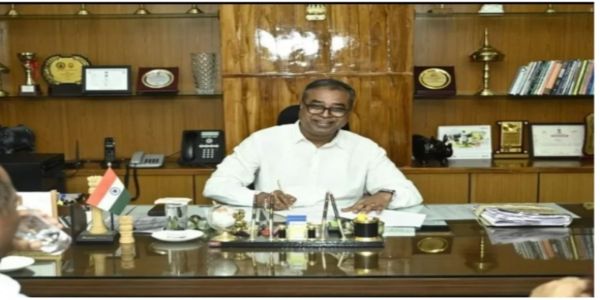
Dr. Virendra Singh
Solanki, National General Secretary of the Akhil Bharatiya Vidyarthi Parishad,
said, The decision by the Central Board of Secondary Education to fully
implement the three-language policy is a positive step towards indigenizing
Indian education and strengthening national unity. Given the ever-increasing
inter-state migration for employment and higher education in the country,
knowledge of Indian languages will prove extremely useful for students'
future. The Board's flexible solutions to address practical challenges such as
textbook availability and teacher shortages during the transition period are
commendable. ABVP commends the fact that this policy has kept the third
language assessment entirely internal at the school level to relieve students
of the pressure of the main board exams, allowing them to learn the language
without any stress and enjoy it. ABVP believes that, in addition to learning
languages, board exams should also be conducted in three languages to make
this policy more effective. ABVP demands that the three-language policy be
implemented simultaneously with the study of board exams in all three
languages.
Hindusthan Samachar / Abhishek Awasthi


23 May 2026