New Delhi, 14 May (H.S.): Roche Pharma India, one of the major companies in the pharmaceutical sector, launched the immunotherapy drug Tecentriq in India on Thursday. With Tecentriq (atezolizumab) SC, the time required for lung cancer immunotherapy will be reduced from hours to just seven minutes.
The company stated that this is the first time the drug can be administered subcutaneously, reducing the administration time to just seven minutes. In comparison, traditional intravenous infusion takes at least two hours. However, this convenience comes at a high cost, as the maximum retail price (MRP) of one vial is approximately Rs 3.7 lakh. A patient may require an average of about six cycles of this drug.
According to Roche Pharma India, this is India's first subcutaneous (subcutaneous-administered) lung cancer immunotherapy, which can be given in about seven minutes.
Traditional IV infusion takes several hours. By reducing treatment time to just 7 minutes, Tecentriq SC is a revolutionary innovation that can significantly improve the treatment experience for its patients. It also reduces treatment time by nearly 80%, lowers indirect costs associated with treatment, and minimizes the need for long travel for therapy.
At the launch of Tecentriq SC, Rajivender (Rajeev) Mehrotra, Chief Executive Officer (CEO) and Managing Director of Roche Pharma India, said, “At Roche, we are committed to bringing meaningful innovations to India that not only improve clinical outcomes but also address broader treatment challenges.” He added that the launch of Tecentriq SC demonstrates their continued commitment to enhancing access to advanced cancer care.
Rajivender Mehrotra said it allows patients and their caregivers to spend less time in hospitals and more time living life on their own terms. The time taken for one patient with intravenous infusion can treat five patients, helping optimize healthcare resources. It has been approved in 85 countries, with over 10,000 patients worldwide already benefiting.
He stated that Tecentriq SC is the world's first and only PD-(L)1 inhibitor available in both intravenous (IV) and subcutaneous (SC) forms for the treatment of multiple types of cancer. It was first approved by MHRA in 2023 and subsequently by USFDA in 2024.
Clinical studies have shown it to be as effective and safe as IV Tecentriq. In India, Tecentriq SC has been approved by DCGI so far for the treatment of adjuvant and metastatic lung cancer (NSCLC).
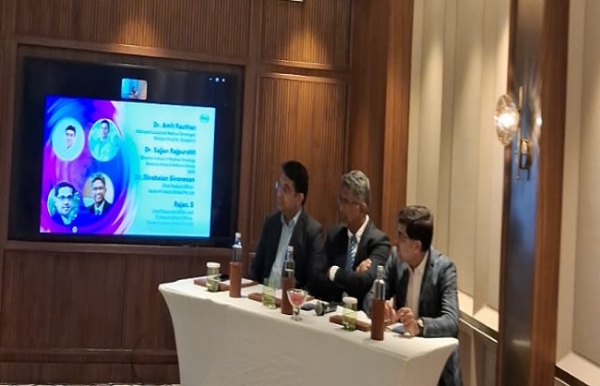
Roche Pharma India's Chief Medical Officer, Dr. Siva Balan Sivanandan, said, “Cancer treatment is no longer just about keeping patients alive; it now emphasizes approaches that prioritize patient experience, convenience, and quality of life.” He added that with Tecentriq SC, they are introducing an innovation that significantly reduces treatment time while maintaining Tecentriq's proven efficacy and safety profile. He believes such advancements can play a key role in making cancer care more patient-centric and future-ready in India.
On this occasion, Dr. Sajjan Rajpurohit, Head and Director of Medical Oncology at Medanta, said, “Immunotherapy has brought revolutionary changes in cancer patient treatment, but traditional IV administration is lengthy and burdensome. It puts significant pressure on tertiary care hospitals. Frequent hospital visits and long treatment times further increase the emotional and physical stress of therapy. Subcutaneous administration allows patient treatment to be done quickly and easily. It improves their overall treatment experience, reduces waiting time, and minimizes delays in receiving care.”
Dr. Amit Rauthan, Consultant and Head of Department of Medical Oncology at Manipal Hospital, Bengaluru, said in his address via video conferencing, “Given the rising burden of cancer in India, it is essential to rethink how we deliver treatment to patients. Innovations like subcutaneous immunotherapy simplify administration, reduce pressure on hospital beds, and can promote more decentralized models of care beyond major metro hospitals. Shorter treatment times can improve access to therapy, making cancer care more practical for both patients and the healthcare system.”
---------------
Hindusthan Samachar / Jun Sarkar

14 May 2026