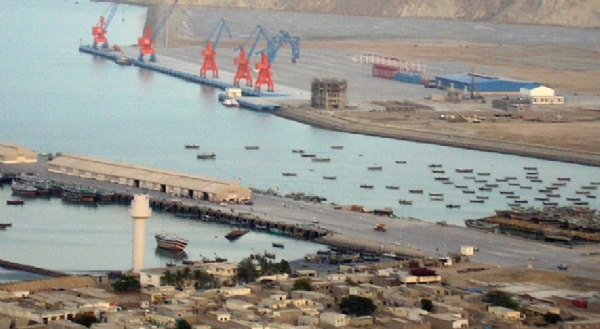
Islamabad, 12 May (H.S.): Intense anger has erupted against Pakistan’s paramilitary Coast Guard following the mass killing of 12 labourers in the troubled province of Balochistan. Locals allege that on May 11, the Pakistan Coast Guard opened fire and killed at least 12 Baloch workers and fishermen in the Kundgani and Jiwani areas of Gwadar, sparking widespread condemnation and protests.
Several others were reportedly seriously injured in the incident, which has further inflamed already tense relations between the security forces and the local Baloch population.
According to a report carried by The Balochistan Post, residents and Baloch activists allege that the Pakistan Coast Guard fired indiscriminately at unarmed Baloch civilians, including day‑labourers and small‑scale fishermen. The incident has sharply heightened tensions in the region and comes amid an ongoing, decades‑long conflict in Balochistan and long‑standing accusations of human‑rights abuses by security personnel.
Sholan Baloch, Chief Spokesperson of the Baloch Students Organisation Azad, described the killings as the “worst example of the barbarity” of Pakistan’s Coast Guard. “Almost a dozen workers, who had merely gone out in search of work and livelihood, were gunned down,” he said, alleging that Baloch civilians have been systematically deprived of their basic economic rights. He claimed that the local people are being forced to work in extremely harsh conditions while the authorities exploit their labour. He added that Baloch workers have been targeted in similar operations in the past.
Sholan further accused government officials—including the Coast Guard, police, army, and other security agencies—of systematically extorting poor Baloch truck drivers and shopkeepers at checkpoints and markets. He urged ordinary people in the region to raise their voices in protest against the killings and to demand accountability from the state.
The Balochistan National Party (BNP) and the National Party also strongly condemned the massacre. In a statement, the BNP said that the ruling establishment, which professes to guarantee “roti, kapda, aur makan” (bread, clothing, and shelter), is in reality depriving the people of Balochistan of the basic right to existence by sealing borders and restricting trade. The party demanded that the authorities register a formal case against the officers involved instead of covering up the incident, and that the perpetrators be brought to trial and punished.
The National Party’s central spokesperson called the shootings “cruel, condemnable, and intolerable” and described the incident as a serious violation of human rights. The party, along with other Baloch‑rights groups, insisted on justice for the victims and their families.
Hak Dhu Tehreek Balochistan, another Baloch political‑rights organisation, condemned the killings and demanded the death penalty for the perpetrators. The group also called for the immediate registration of a murder case against the officers involved and the officials responsible for the operation. It demanded that the accused be not only dismissed from their posts but also duly punished, and that full justice, including compensation and support, be provided to the families of the victims.
---------------
Hindusthan Samachar / Jun Sarkar