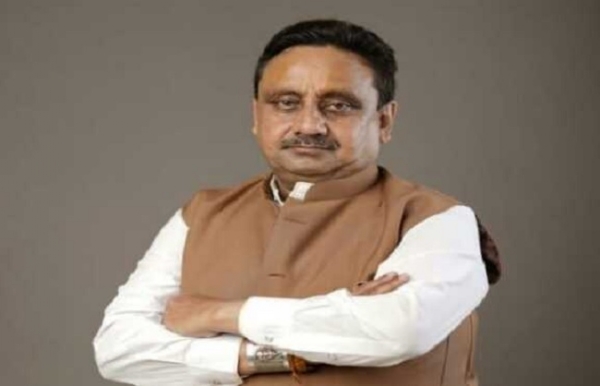
Delhi, 11 May (H.S.): Praveen Khandelwal, National General Secretary of the traders’ body Confederation of All India Traders (CAIT) and a Member of Parliament, has welcomed Prime Minister Narendra Modi’s seven‑point appeal to citizens as timely and essential for cushioning India’s economy against the current global energy and logistics stress.
Speaking through a statement on Monday, Khandelwal said the Prime Minister had urged the nation to adopt a seven‑point resolve to keep the economy stable and prevent ordinary people from facing hardship in these uncertain global conditions. The appeal was made by the Prime Minister while addressing a public rally in Hyderabad yesterday.
In line with the Prime Minister’s call for giving rail transport priority over road transport for goods movement, Khandelwal today wrote a letter to Railway Minister Ashwini Vaishnaw, emphasising that the suggestion is highly relevant given rising fuel consumption, mounting traffic pressure, environmental challenges and the need to strengthen the country’s logistics framework. He praised the transformative modernisation undertaken by Indian Railways under the Modi government, highlighting improvements in infrastructure, electrification, freight corridors, technological integration, station‑redevelopment, cleanliness, safety standards, timeliness and operational capacity, which have boosted public confidence and positioned railways as a strong pillar of India’s economic growth.
Khandelwal pointed out that rail transport is the most cost‑effective, environmentally friendly and efficient mode for freight movement. If a significant share of road‑based freight is shifted to rail, it would sharply cut diesel and petrol consumption, lower logistics costs, reduce pollution, ease pressure on highways and contribute meaningfully to building a greener and stronger India.
Nonetheless, Khandelwal noted that despite past reforms, traders and small businesses across the country continue to face multiple practical difficulties in using rail freight and parcel services. These include cumbersome booking procedures, poor last‑mile connectivity, opaque pricing and weak grievance redressal.
As a result, many traders remain reluctant to shift to rail and stay dependent on relatively expensive road transport.
In his letter, Khandelwal urged the Railways to undertake wide‑ranging improvements in the freight system. He called for:
Making freight booking transparent and fully digital,
Fixing clear accountability for deliveries,
Establishing dedicated freight facilitation centres for traders at major stations,
Introducing real‑time consignment tracking,
Rationalising freight‑rate structures,
Boosting parcel‑van capacity,
Developing modern loading and unloading infrastructure,
Strengthening last‑mile connectivity,
Setting up an effective complaint‑redressal mechanism, and
Building regular dialogue between railway officials and trade bodies.
Win‑Win Outcome For Economy And Railways
The CAIT leader argued that if freight services are made more efficient, accountable and trader‑friendly, millions of small and medium‑scale businesses will naturally prefer rail‑based freight movement. This would increase railway and government revenues, help cut dependence on imported fuels and accelerate sustainable economic growth.
Khandelwal added that the trader community, through CAIT, stands ready to cooperate fully with the Railways to promote large‑scale, rail‑centric freight movement. He has also requested Rail Minister Vaishnaw to grant time for a detailed discussion so that practical measures and policy reforms can be jointly worked out to make rail freight services more accessible, effective and useful for traders.
---------------
Hindusthan Samachar / Jun Sarkar

13 May 2026