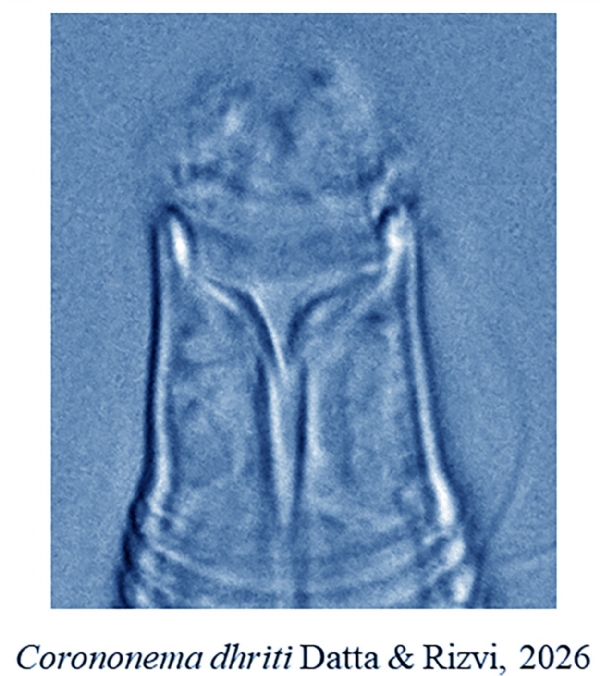
Kolkata, 06 April (H.S.): In a significant addition to India’s marine biodiversity records, researchers from the Zoological Survey of India (ZSI) have discovered two new species of marine nematodes off the Tamil Nadu coast. The findings were published on March 25, 2026, in the international taxonomy journal Zootaxa.
The study was conducted by ZSI researchers Ritika Datta and Anjum Rizvi, who provided the scientific description of the two newly identified species—Corononema dhriti and Epacanthion indica. Despite their microscopic size, these organisms play an important role in maintaining the balance of marine ecosystems.
In a statement issued on Monday evening, ZSI said that Corononema dhriti is only the fourth known species of this genus reported globally. Earlier, species of this genus were documented only in Australia, Thailand and Vietnam. Its presence in Indian waters is considered significant from the perspective of marine biogeography.
The species has been named in honour of ZSI Director Dr Dhriti Banerjee in recognition of her contributions to the documentation of India’s faunal diversity.
Microscopic predator in the marine food chain
The second species, Epacanthion indica, has been named after India. It stands out for its complex anatomical structure. While many nematodes typically feed on microorganisms, this species possesses specialised mandibles and tooth-like structures, enabling it to function as a microscopic predator in the benthic marine food chain.
Experts say such organisms are crucial to marine ecology. They help decompose organic waste, recycle nutrients, maintain the quality of marine sediments, and also act as indicators of environmental changes and climate impacts.
Commenting on the discovery, Dr Dhriti Banerjee said that a large part of marine biodiversity still remains unexplored. She stressed that understanding these microscopic organisms is essential for developing effective marine conservation strategies and ensuring the long-term sustainability of coastal ecosystems.
Experts believe that such discoveries will strengthen India’s marine biodiversity documentation efforts and provide important support for environmental conservation initiatives.
Hindusthan Samachar / Satya Prakash Singh

06 Apr 2026
CPI(M), Congress are BJP’s ‘B teams’; vote for Trinamool for development: Abhishek Banerjee


06 Apr 2026