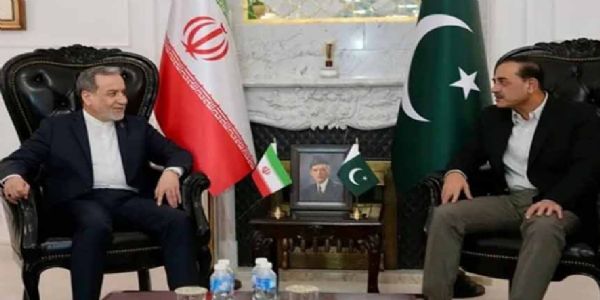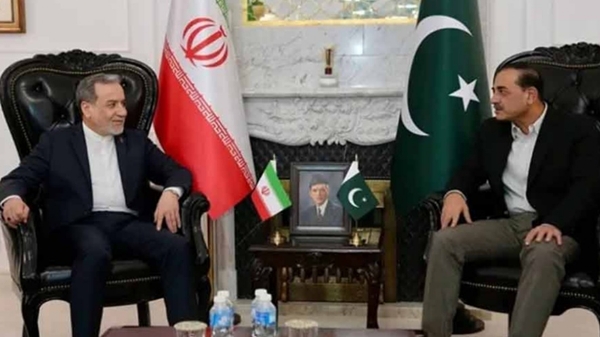
Islamabad, 27 April (H.S.): Iran has stepped up its diplomatic push to end the ongoing war‑like confrontation with the United States, sending Foreign Minister Abbas Araghchi on a whirlwind tour that has taken him from Oman to Pakistan and now to Russia. After a high‑level meeting with Pakistan’s Army Chief Field Marshal Asim Munir in Islamabad, Araghchi left on Sunday night for Russia, where he is scheduled to meet President Vladimir Putin in Moscow on Monday to brief him on the status of the peace efforts.
Araghchi returned to Islamabad from Oman, where he had briefed Sultan Haitham bin Tariq Al‑Said on the latest situation in the war‑zone and the outlines of Iran’s proposed framework for a durable ceasefire. In Pakistan, he met Field Marshal Munir and other senior civil and military leaders, presenting Tehran’s “views and considerations” on how to end the hostilities. A Pakistani diplomatic source described the talks as “very fruitful” and said the next round of indirect US–Iran conversations is expected to yield a tangible outcome.
Iranian state media have not broadcast detailed coverage of the Islamabad meeting, and Pakistan’s public narrative remains cautious, but officials in both countries suggest that the next phase of talks will include representatives of Gulf states, alongside Iran and the United States, broadening the circle of regional stakeholders.
From Islamabad, Araghchi flew to Moscow, arriving in St Petersburg on Monday for talks with President Putin. Russian officials have said the visit is aimed at consulting with Russian leadership on the latest status of the negotiations, ceasefire modalities, and related developments in the broader West Asia theatre. Tehran has also sent written messages to Washington through Pakistani intermediaries, which reportedly cover Iran’s red lines on nuclear issues and the Strait of Hormuz, even though these exchanges are framed as preparatory rather than formal negotiations.
Araghchi has publicly questioned whether Washington is genuinely serious about diplomacy, pointing out that US President Donald Trump cancelled a planned visit by American envoys to Islamabad. The Iranian foreign minister said it is still unclear whether the US is ready to move beyond symbolic gestures, while Trump insisted that talks would continue “over the telephone” and repeated that the war will “end very soon.”
Against this backdrop, Iran’s outreach to Moscow via Araghchi is seen as an effort to secure Russian political backing and ensure that any emerging peace formula is aligned with Moscow’s calculus in the region. At the same time, by engaging both Pakistan and Oman, Tehran is trying to anchor the process in trusted regional mediators, hoping to overcome the current deadlock and bring the conflict to a more stable, negotiable footing.
---------------
Hindusthan Samachar / Jun Sarkar

27 Apr 2026