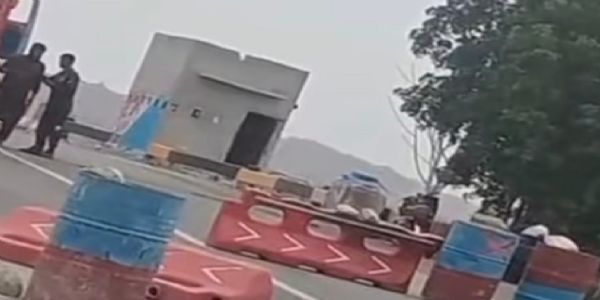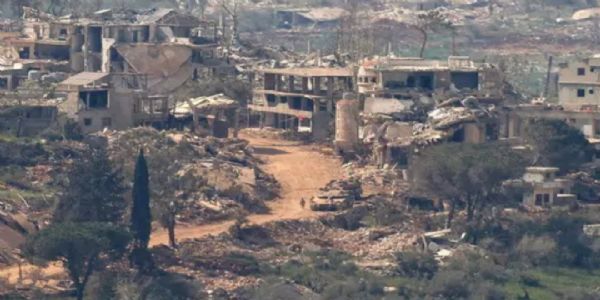
Beirut, 26 April (H.S.): Four people were killed in southern Lebanon on Saturday after Israeli airstrikes hit multiple locations near the border, reigniting fears that the already‑fragile ceasefire may be unraveling. The Lebanese state news agency reported the deaths, while the Israeli military said it had targeted Hezbollah rocket launchers and fighters in several sites across the region.
The Israeli Defense Forces (IDF) stated that overnight strikes destroyed loaded rocket launchers in three locations and hit facilities used by Hezbollah’s elite Radwan forces, which operate in southern Lebanon. Israeli officials also claimed that Hezbollah had fired rockets at northern Israel, at least one of which was intercepted, with no casualties reported on the Israeli side.
The strikes come amid a tenuous ceasefire between Israel and Lebanon, brokered by the United States and extended by three weeks after it was originally due to expire.
Despite the truce, both sides have repeatedly accused each other of breaching the agreement, with Israel stating that Hezbollah has continued to stockpile and launch weapons from the south, while Lebanese officials and Hezbollah lawmakers argue that the ceasefire is “meaningless” without guarantees for civilian safety and full withdrawal.
Lebanon’s Civilian Toll and Humanitarian Worries
Civilian areas in southern Lebanon have borne the brunt of cross‑border attacks. According to Lebanese health and state‑run sources, repeated Israeli bombardments over the past year have killed more than a thousand people and wounded thousands more, forcing tens of thousands to flee their homes.
Many displaced families now live in makeshift shelters or overcrowded buildings, raising concerns among humanitarian groups about a worsening crisis if the ceasefire collapses.
Hezbollah, an Iran‑backed militant group embedded in Lebanon’s political fabric, has rejected disarmament proposals pushed by Washington and some Lebanese officials.
The organization continues to portray its armed presence as a “resistance” against Israel, even as it deepens Lebanon’s internal divisions and complicates efforts to form a stable democratic order.
Lebanon was expected to hold parliamentary elections in May 2026, but the renewal of hostilities has led the country’s political elite to delay the polls. The parliament voted to extend its own term for two years, citing the difficulty of organizing elections under ongoing conflict and displacement.
Critics argue that the move only entrenches an old‑guard system long accused of corruption and patronage, while ordinary citizens struggle with economic hardship and security fears.
International Concerns and Regional Tensions
The United Nations and several Western powers have repeatedly warned that another full‑scale war between Israel and Hezbollah could quickly spiral into a wider regional conflict. The UN’s peacekeeping force in southern Lebanon has also come under fire in recent months, underlining the volatility of the border zone.
For now, Lebanese residents near the border remain under pressure from Israeli evacuation advisories, while Israeli communities in the north continue to live under the threat of rockets and drones.
---------------
Hindusthan Samachar / Jun Sarkar

26 Apr 2026