New Delhi, 02 April (H.S.):
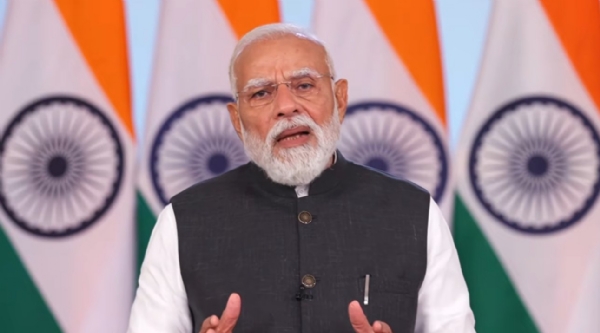
Prime Minister Narendra Modi on Thursday said that to keep pace with an ever‑changing world, India’s public services must be constantly upgraded. Speaking at the inauguration of the ‘Karmayogi Sadhana Saptah’ (Karmayogi Sadhana Week), he stressed that a capable, sensitive and modern administrative system will play a crucial role in achieving the vision of a developed India by 2047.
In a video address, the Prime Minister noted that global systems are evolving rapidly in the 21st century and India, too, is moving ahead at a similar pace. In this context, he said that the administrative machinery must be made “time‑aligned” and responsive to new challenges. The Karmayogi Sadhana Week, he added, is an important initiative aimed at enhancing the skills and work culture of government employees.
He highlighted that the guiding principle of the present governance framework is “Nagrik Devata Bhav” (the citizen is supreme), and the government is working to make public services more efficient and more sensitive to citizens’ needs.
PM Modi said that today’s India is an “aspirational society” in which every citizen has dreams and goals, and the responsibility of the government and the administration is to support them in realising those aspirations. He argued that the real metric of governance success is steady improvement in citizens’ “ease of living” and quality of life.
The Prime Minister called on officers and staff to develop a daily habit of learning something new and to mould themselves into true “karmayogis” (workers who see their job as service). He said that only through continuous learning and self‑development can the administrative system become stronger and deliver better outcomes.
On administrative reforms, he said that the old mindset used to emphasise “being an officer” more than the discharge of duty, but the time now demands a priority on a “duty‑conscious” approach. Officers, he added, should always reflect on their responsibilities before taking decisions, which will automatically make those decisions more effective and socially beneficial. Every decision, he said, must be viewed in the broader context of the country’s long‑term future and the goal of a developed India by 2047.
Personal transformation, he asserted, can lay the foundation for institutional transformation.
Emphasising the need for boundless energy, he said this energy comes from a spirit of service. Public officials, he urged, should see their work as a form of service and carry it out with that mindset. On technology and data, he noted that over the past years, digital tools have been widely deployed in governance, improving service delivery. With the arrival of artificial intelligence (AI), he said, this transformation is set to accelerate. The successful administrator of the future, he said, will be the one who understands technology and data well, and that such understanding will make decision‑making more effective and transparent.
He called for sustained focus on capacity building and regular training and expressed hope that the Karmayogi Sadhana Week will give special attention to these themes. Referring to India’s federal structure, he said that the nation’s success depends on the collective progress of all states, and the old labels of “leading”, “lagging” or “BIMARU” states must be left behind. To reduce disparities among states, he said, “siloed thinking” must be discarded, and better coordination and a shared understanding must guide actions.
The Prime Minister stressed the need to adopt a “whole‑of‑government” approach, which he said will help all government missions succeed. He extended greetings on the foundation day of the Capacity Building Commission (CBC), praising the institution for playing a key role in enhancing the capabilities of government personnel. He expressed confidence that such initiatives will help build a strong team of modern, competent, dedicated and sensitive karmayogis.
Highlighting the local interface with citizens, he said that for the common person, the nearest government office is the “face of the entire governance system”. The behaviour and work culture of officers at that level, he added, directly shape public trust in democracy and constitutional institutions. Maintaining and strengthening this trust, he said, is the shared responsibility of all.
The Prime Minister concluded by expressing confidence that the Karmayogi Sadhana Week will prove to be an important milestone on India’s journey towards becoming a developed nation. The programme was attended by Principal Secretary to the Prime Minister P.K. Mishra, S. Ramadorai, Chairman of Mission Karmayogi Bharat, and S. Radha Chowdhary, Chairperson of the Capacity Building Commission, along with several other dignitaries.
---------------
Hindusthan Samachar / Jun Sarkar

02 Apr 2026
Namami Gange: 524 Projects Sanctioned So Far, 355 Completed Under Ganga‑Rejuvenation Drive
02 Apr 2026