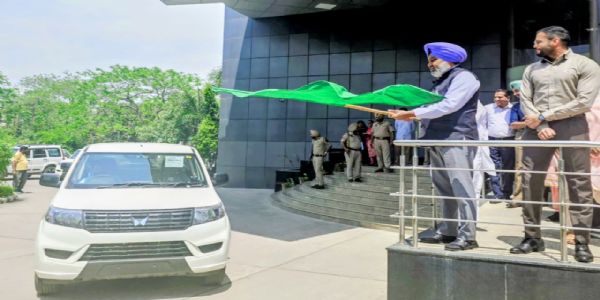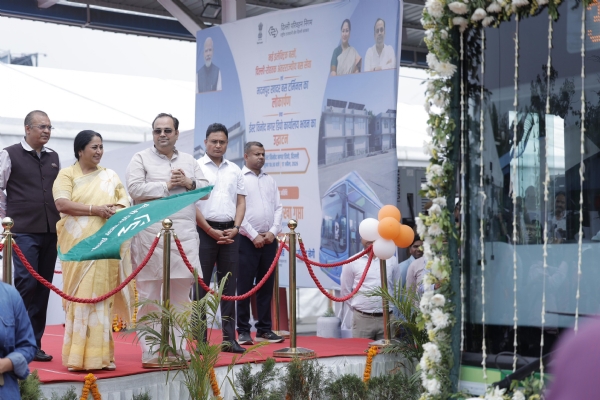
New Delhi, 17 April (H.S.): Delhi Chief Minister Rekha Gupta on Friday flagged off 200 new electric buses from the East Vinod Nagar Depot of the Delhi Transport Corporation (DTC) and flagged the launch of an interstate e‑bus service between Delhi and Rohtak, underlining the government’s aggressive push for clean, green, and inclusive public transport.
The event also saw the inauguration of the Madanpur Khadar bus terminal, located near Kalindi Kunj Metro Station, and the new administrative building at the East Vinod Nagar bus depot, completing a four‑fold infrastructure‑mobility upgrade for the capital.
The 200 newly inducted electric buses include a significant number of compact “Devi buses,” designed to ply through narrow lanes and remote neighbourhoods, improving last‑mile connectivity for residents.
The buses are equipped with CCTV cameras, panic buttons, real‑time GPS tracking, and disability‑friendly features, enhancing safety and accessibility for all passengers.
With this infusion, the city’s bus fleet has grown to over 6,300 vehicles, of which more than 4,500 are electric buses, making Delhi the owner of India’s largest EV‑bus fleet.
The government has set a target to expand the total bus fleet to around 14,000 buses by the financial year 2028–29, with a strong emphasis on electric mobility.
The Delhi–Rohtak interstate e‑bus service was launched on the route from ISBT Kashmiri Gate/Pirangipur–Tikri Border to Bahadurgarh and Rohtak, bolstering regional connectivity and offering commuters a cleaner, quieter alternative to conventional diesel and CNG buses.
Madanpur Khadar bus terminal: modern, sustainable hub
The newly inaugurated Madanpur Khadar bus terminal features three bus bays, two passenger shelters, and parking provision for about six buses at a time, along with toilets, ticket counters, and ramps for differently‑abled passengers.
The facility will host 22 buses on multiple routes, including services running from Madanpur Khadar to Safdarjung Terminal and Nehru Place, thus decongesting other terminals and streamlining city‑link plying patterns. The terminal also incorporates a rooftop rain‑water harvesting system, aligning with the city’s water‑conservation goals.
At the East Vinod Nagar depot, a new two‑storey administrative building was formally opened, housing 23 offices, canteen areas, and rest zones for staff, along with accessibility‑friendly provisions for differently‑abled employees.
The complex includes a 50,000‑litre fire‑fighting tank and an on‑site rain‑water harvesting system, reinforcing safety and sustainability within the depot ecosystem.
The installation of a biometric‑attendance system and medical‑check‑up facilities is intended to ensure that drivers and other operational staff are in good health and condition before taking buses on the road, thereby reducing the risk of accidents and improving service reliability.
Commitment to ‘clean, green, sustainable’ transport
Speaking at the launch, the Chief Minister hailed the day’s initiatives as a major leap toward building a “Clean, Green, and Sustainable Delhi” in the transport sector.
She highlighted the government’s four‑year allocation of ₹40,000 crore for electric‑mobility projects, which will not only incentivise private EVs and offer concessions on road tax, but also drive a phased transition of school buses and commercial vehicles to electric power.
A large‑scale EV‑waste (EV‑batteries) disposal plant is being planned at Holambi Kalan, to ensure scientific recycling and safe disposal of e‑vehicle batteries and protect the environment from hazardous leakage.
Transport Minister Dr. Pankaj Kumar Singh said Delhi has now firmly positioned itself as the country’s EV‑bus leader, with a steadily rising bus revenue and an expanding network of eco‑friendly routes.
---------------
Hindusthan Samachar / Jun Sarkar

17 Apr 2026
Kerala restaurant owners detained over Advt featuring Lord Krishna eating non veg dish
Kerala restaurant owners detained over Advt featuring Lord Krishna eating non veg dish..