New Delhi, 10 April (H.S.):
Amid escalating tensions in West Asia, the Indian government on Friday reiterated that the country has sufficient fuel stocks at liquefied petroleum gas (LPG) distributors and petrol pumps, with no reports of any shortage so far. Officials also stressed that household LPG supplies are running normally, underpinned by robust refinery output and well‑managed logistics.
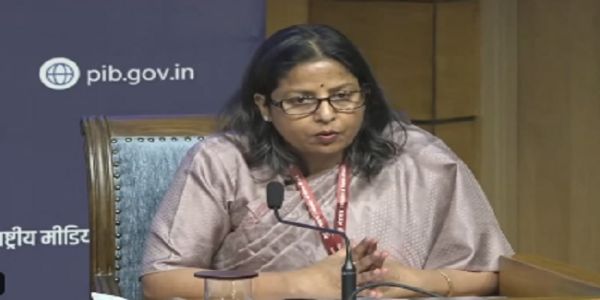
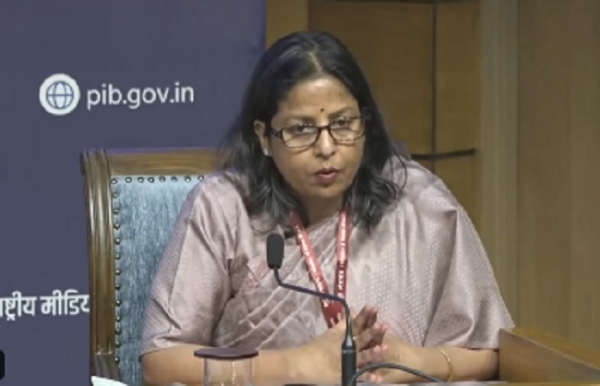
Sujata Sharma, Joint Secretary (Marketing and Oil Refineries) in the Ministry of Petroleum and Natural Gas, said at an inter‑ministerial press briefing that fuel stocks remain adequate across the national network of LPG distributors and over 100,000 retail fuel outlets.
She added that the government has not received any credible report of depletion or disruption in petrol, diesel, or LPG availability.
Sharma noted that 98% of household LPG bookings are now being processed online, signalling strong digital penetration and orderly demand management. Commercial LPG supplies, which initially faced disruptions, have been restored to around 70% of normal levels, she said, while stressing that distribution channels are functioning smoothly.
According to Sharma, since March 14 an estimated 1,06,000 metric tonnes of commercial LPG have been sold, with daily sales hovering between 6,000 and 6,500 tonnes. She highlighted that relief measures include doubling the allocation of 5‑kg domestic cylinders to be supplied without the need for identification documents, easing access for vulnerable users.
Approximately one lakh five‑kg cylinders are being sold each day, aggregating to about 11 lakh cylinders since March 23. The official also reported that nearly 80% of LPG supplies to industrial units have been restored, while fertiliser‑sector deliveries have rebounded to around 95% of usual levels, underscoring the sector‑wide recovery.
Piyush Singh, Additional Secretary at the Ministry of Power, outlined that special directions under Section 11 have been issued to ensure that coal‑imported‑based power plants operate at full capacity. This has added roughly 4,000 MW of additional generation, including from Tata Power’s CCGT Mundra plant.
Singh added that routine maintenance schedules have been deferred by three months at several plants, freeing up an estimated 10,000 MW of extra capacity. He also noted that coal stocks have stabilised at about 55 million tonnes, sufficient for roughly 19 days of current operations, bolstering system resilience.
The power ministry plans to commission around 22,000 MW of additional capacity over the next three months from a mix of thermal, solar, wind, and hydro sources. Gas‑based plants, which account for only about 1.4% of the system’s total capacity, are being consciously ramped up to support grid stability.
Plant operators have been permitted to procure liquefied natural gas (LNG) imports, enabling them to run closer to their design efficiency. This move is expected to keep overall power supply steady even as the country closely monitors fuel‑transport routes in West Asia.
Mukesh Mangal, Additional Secretary at the Ministry of Ports, Shipping and Waterways, said the ministry has held regular consultations with stakeholders, including exporters, shipping lines, and customs authorities, to address operational bottlenecks.
A joint meeting was held yesterday with the Ministry of Commerce, the Central Board of Indirect Taxes and Customs (CBIC), and DigiFT India to review prevailing challenges.
Mangal reported that exporters and their associations have been asked to explicitly identify the ports where they face issues, enabling targeted interventions. Shipping lines have also been instructed to pass on port‑granted benefits and concessions directly to exporters, rather than processing them on a reimbursement basis, thereby streamlining logistics and reducing delays.
Across ministries, officials have urged the public to avoid panic buying and to rely on official channels and digital platforms for LPG bookings and fuel information. The government reiterated that India’s energy‑supply system remains “fully secure and under control,” with sufficient reserves and a coordinated policy response to shield consumers from geopolitical disruptions in West Asia.
---------------
Hindusthan Samachar / Jun Sarkar


10 Apr 2026