New Delhi/Paris, 27 March (H.S.):
India’s External Affairs Minister S Jaishankar, participated in the ongoing G7 Foreign Ministers’ meeting in France, where he led a discussion on the urgent need for reforms in global governance. Jaishankar addressed a session titled “Reform in Global Governance” and underlined India’s focus on multilateral institutions, peacekeeping operations and humanitarian supply chains, even though India is not a member of the G7 grouping.
France, as the host and chair of this year’s forum, extended a special invitation to India, reflecting its growing role in global diplomacy.
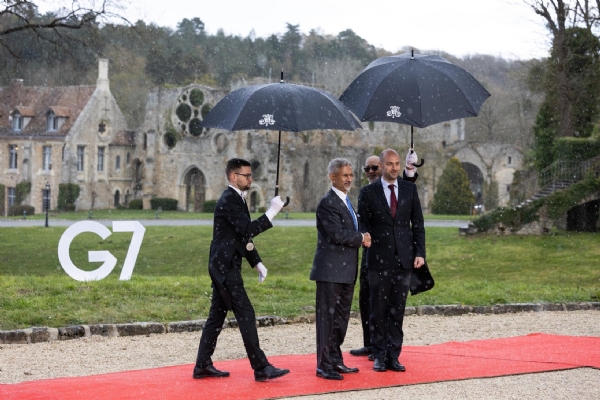
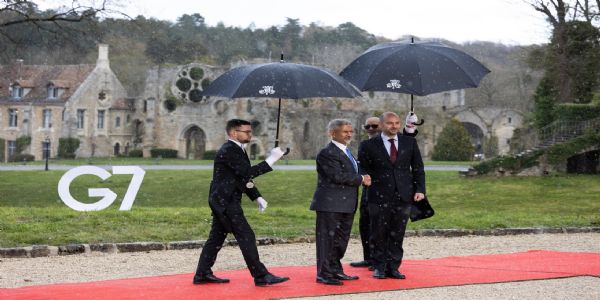
The meeting is being held at the Vaux‑de‑Cernay Abbey near the French capital, Paris, where leading foreign ministers from the G7 countries have gathered to discuss pressing international security and geopolitical issues. Jaishankar arrived in Paris on an invitation from the French government and was warmly received by French Foreign Minister Jean‑Noël Barette at his arrival.
The warm welcome underscored the close strategic partnership between New Delhi and Paris and the importance both countries attach to cooperative global governance.
Using the social platform X, Jaishankar shared photos from the session and posted a brief account of his intervention. He wrote, “At a session of the G7 Foreign Ministers’ meeting, I discussed reform in global governance with the invited partners. I stressed the urgency of reforms in the UN Security Council, the need to better organise peacekeeping operations and the importance of strengthening humanitarian supply chains.”
He also highlighted India’s position on the priorities of the Global South, pointing to energy security, fertiliser supply chains and food security as key concerns.
Jaishankar specifically flagged the energy challenges facing developing countries, the vulnerabilities in global fertiliser markets and the risks to food security that emerging economies face amid geopolitical volatility. He suggested that a more inclusive and responsive multilateral architecture is essential to tackle these interconnected crises. His remarks at the Paris session come at a time when major powers are re‑examining global institutions after years of rising tensions, regional wars and economic disruption.
In the media report dated 27 March 2026, it was noted that the French presidency of the G7 has actively sought to bring key emerging partners like India into its outreach, recognising that any meaningful reform of global governance cannot proceed without the participation of the Global South.
Jaishankar’s participation in the Paris meeting, therefore, is seen as part of India’s broader effort to position itself as a constructive architect of a more equitable and representative international order.
---------------
Hindusthan Samachar / Jun Sarkar
27 Mar 2026