Hooghly, 26 March (H.S.): The Uttarpara assembly constituency in Hooghly district is emerging as a keenly watched seat in the 2026 West Bengal elections, where the contest is shaping up to be more than just a battle for a single seat, reflecting shifting political equations and a test of strategic recalibration.
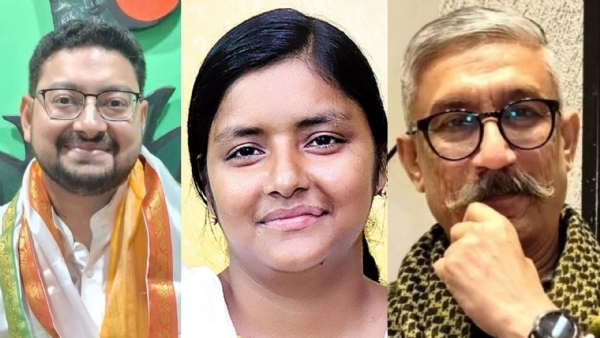
The Trinamool Congress (TMC) has fielded Shirshanya Bandyopadhyay, while the CPI(M) has nominated Meenakshi Mukhopadhyay and the Bharatiya Janata Party (BJP) has put up Dipanjan Chakraborty, making it a triangular contest. The electoral history of the seat highlights a pattern of fluctuations and political polarisation.
In the 2016 assembly elections, TMC secured around 45 per cent vote share, while the Congress-Left alliance garnered about 39 per cent. BJP remained a distant third with nearly 13 per cent votes. TMC won the seat by roughly a 9 percentage point margin, indicating a close bipolar contest between TMC and the Left-Congress combine.
However, the political landscape underwent a significant shift in 2021. TMC increased its vote share to around 47 per cent, while BJP made a sharp jump to nearly 29 per cent, emerging as the principal challenger. In contrast, CPI(M)’s vote share declined to about 16 per cent. TMC registered a decisive victory with a margin of around 17 percentage points, underlining the transition to a bipolar contest dominated by TMC and BJP.
As the 2026 elections approach, these vote share trends are shaping new political calculations. TMC is aiming to retain its 47 per cent support base, while BJP is looking to expand its 29 per cent vote share closer to the 40 per cent mark to mount a stronger challenge. CPI(M), which saw its support drop from around 39 per cent in 2016 to 16 per cent in 2021, is attempting a revival, targeting a vote share of 20–25 per cent with Mukhopadhyay as its face.
The candidates’ profiles add another dimension to the contest. TMC’s Shirshanya Bandyopadhyay, son of Serampore MP Kalyan Banerjee, is a lawyer by profession and is considered an organisationally strong grassroots leader. CPI(M)’s Meenakshi Mukhopadhyay is known for her aggressive, youth-driven activism and is seeking to consolidate traditional Left voters along with young supporters. BJP’s Dipanjan Chakraborty, a former NSG commando, is focusing on expanding the party’s reach among urban and middle-class voters.
With an electorate of around 2.5 lakh voters and a voter turnout of approximately 77 per cent in 2021, the constituency remains politically vibrant. Its urban and semi-urban character, coupled with a significant middle-class and youth voter base, makes the electoral arithmetic more complex. Even a 2–3 per cent swing in votes could translate into thousands of ballots and potentially alter the outcome.
Overall, Uttarpara is shaping up as a key battleground in 2026, where vote share dynamics, candidate appeal and shifting voter alignments are expected to play a decisive role, offering broader indication of the direction of West Bengal’s political landscape.
---------------
Hindusthan Samachar / Priyanka Pandey