Lucknow,
26 March (HS): “Today, the world is passing through a profound phase of
transition. War-like situations, an energy (oil) crisis, economic instability,
and growing human insecurity are collectively shaping a global environment
where being powerful alone is no longer enough—what is essential now is to be
sensitive and solution-oriented. In such a time, India faces not only the
question of its own security and stability, but a far greater responsibility:
to provide direction to the world. India’s identity has never been limited to
that of a nation-state; it has always been a civilization. This is the land
where the idea of “Vasudhaiva Kutumbakam”—the world as one family—was born, a
principle that offers perhaps the most relevant solution to today’s divided
world. When the world struggles over resources, India speaks of coexistence;
when the world drifts toward division, India conveys the message of unity,”
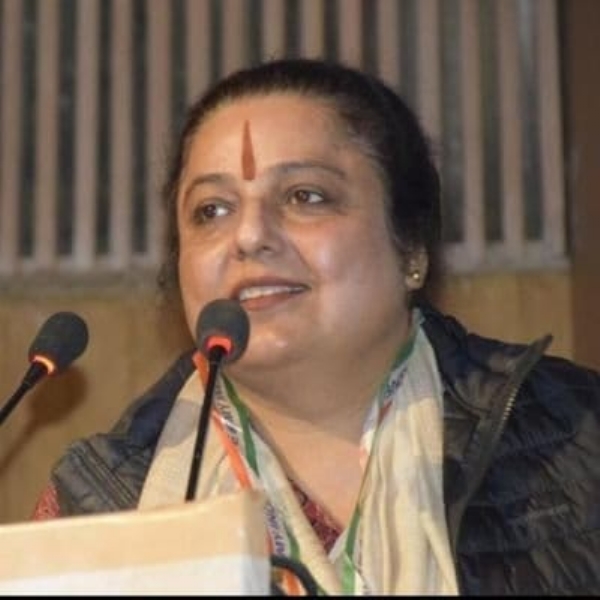
opines Prof Geeta Singh Chairperson, Vishvagram.
“The
current circumstances are not limited to geopolitical conflicts. The energy
crisis—especially rising oil prices and uncertain supply—has shaken the global
economy, and its impact is reaching even the poorest individuals. Yet, this is
not merely a crisis of resources; it is a crisis of our development model and
mindset. We have equated progress with consumption, forgotten balance, and
weakened our relationship with nature. India’s traditions, however, teach us
that development and balance can go hand in hand, offering the world an
alternative model that is both sustainable and harmonious. At this critical
juncture, India has a unique opportunity—not just to participate, but to lead.
As a nation rooted in democratic values, a living example of unity in
diversity, and a consistent advocate of peace and dialogue, India’s voice is
gaining increasing importance on global platforms. It must now demonstrate that
true strength lies not only in military capability, but also in moral
leadership—the kind that can transform conflict into dialogue and crisis into
opportunity,” she asserted during a free-wheeling discussion.
“The
ongoing oil crisis serves not only as an economic challenge but also as a
warning that the world must rethink its development approach. India’s
initiatives in solar energy, biofuels, and green technologies are steps toward
self-reliance and also set an example for the global community. By presenting a
balanced and sustainable development model, India can play a crucial role in
addressing the global energy crisis,” she claimed.
“India’s
greatest strength lies in its youth. Today’s young generation must evolve from
being mere job seekers to becoming solution creators—embracing innovation and
entrepreneurship, understanding their responsibilities toward society and the
nation, and acting as agents of positive change. This is not just a time for
personal success, but for meaningful national contribution. Equally important
is social unity, which forms the true foundation of any nation’s strength. In a
diverse country like India, it becomes even more vital to keep differences
within limits, reject divisive ideologies, and move collectively toward a
shared national goal. This is a time that demands cooperation more than
criticism,” she emphasised.
“The media
and intellectual community also have a crucial role to play in guiding society.
They must prioritize truth and balance, avoid rumors and sensationalism, and
promote constructive and positive dialogue. At a time when the world is trapped
in the mindset of “I” and “mine,” India speaks of “we” and “ours.” “Vasudhaiva
Kutumbakam” is not merely an ideal but a practical philosophy that reminds us
that we are all interconnected—that one’s crisis is everyone’s crisis, and
one’s solution can become a solution for all. India must embody this principle
not just in words, but through its actions,” she added.
“Today’s
moment sends a clear message: crisis is not only a challenge, but also an
opportunity. India has the chance to strengthen its internal unity, build a
balanced development model, and emerge as a solution-oriented global force. When
the world is uncertain, when paths become unclear, and when powers collide,
there comes a moment when one nation steps forward to show direction and
inspire hope. Today, that nation can be India. Let us resolve that we will not
remain mere spectators, but become agents of change—thinking not only for
ourselves, but for all humanity. And let us show the world that when it stood
in crisis, India did not merely stand by—it stood as the solution. India must
now not only rise, but take responsibility for guiding the world. Jai Hind… Jai
Bharat,” she said prior to signing off.
Hindusthan Samachar / Abhishek Awasthi