Tel Aviv, 22 March (H.S.):
Iran‑backed militant group Hezbollah has fired anti‑tank missiles into northern Israel, setting two vehicles on fire and killing one person in a direct strike on Sunday morning, 22 March 2026. Israeli emergency medics said rescue teams are still checking for additional casualties after the attack, which comes amid the fourth week of Operation Roaring Lion and the ongoing broader conflict between Israel, Iran and allied groups.
Attack near the northern border
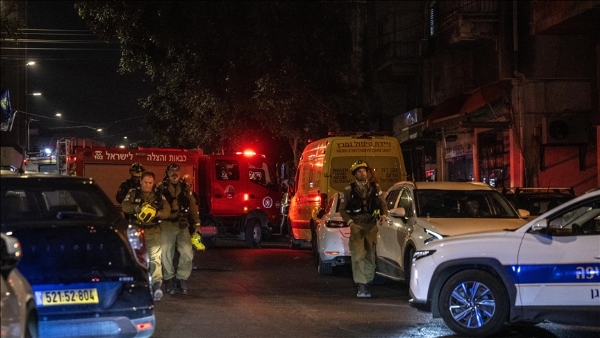
According to reports from Israeli media outlets such as The Jerusalem Post and The Times of Israel, the Hezbollah barrage hit a civilian area in the far north of the country, striking two cars and igniting them. One person trapped inside a burning vehicle died at the scene, while another person was wounded in the blaze.
Emergency responders have said the incident occurred in the northern border community of Misgav Am, a kibbutz close to the Lebanese frontier.
Israeli emergency service Magen David Adom has confirmed that the fire was triggered by an anti‑tank missile fired from southern Lebanon and that first responders are still assessing the full extent of injuries in the area.
The Israel Defense Forces have verified that launch activity was detected from Lebanon shortly before the strike.
Also on Sunday morning, in the same timeframe marking the start of the fourth week of Operation Roaring Lion, Iran launched a missile carrying a cluster munition toward central Israel. The strike involved a cluster‑type warhead that scattered submunitions over a wide area, but Israeli air‑defence systems failed to intercept the incoming missile.
Earlier, on Saturday night, Iranian‑launched ballistic missiles struck the southern Israeli cities of Dimona and Arad, injuring around 200 people, of whom 11 are reported to be in critical condition.
During those attacks, Israel’s air‑defence shield was unable to block at least two incoming ballistic missiles, allowing them to hit residential and civilian infrastructure.
Top leaders vow to intensify strikes
In the wake of these attacks, Prime Minister Benjamin Netanyahu and IDF Chief of Staff Lieutenant General Eyal Zamir have stated that Israel will continue and escalate its counter‑strikes against Iran and its allied militias. Netanyahu has reiterated that Tehran and its proxies must pay a heavy price for directly targeting Israeli cities and population centres.
The latest Hezbollah‑led strike in the north and the Iranian cluster‑missile attack in central Israel further underline the expanding geographic footprint of the conflict and the growing risk to civilian populations across the country. Security officials have warned that the intensity of attacks is likely to remain high as Israel and its regional partners deepen their campaign against Iranian military infrastructure and allied groups in the region.
---------------
Hindusthan Samachar / Jun Sarkar
22 Mar 2026