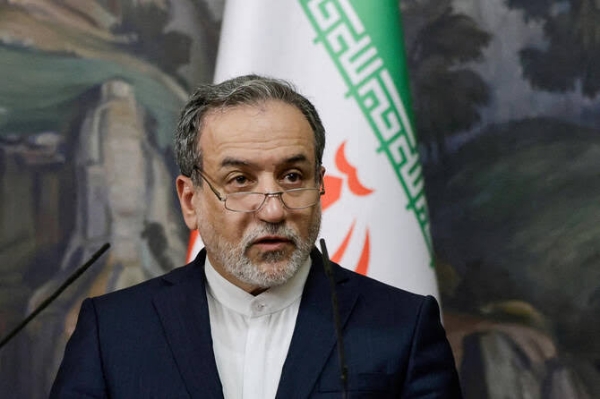
Tehran, 18 March (H.S.): Iran's Foreign Minister Abbas Araghchi asserted that the recent assassination of top security chief Ali Larijani in an Israeli strike will not undermine the Islamic Republic's governance, emphasizing a robust institutional framework over individual leadership.�
In an exclusive interview with international media, Araghchi underscored Tehran's political system's durability, stating that the presence or absence of a single individual does not affect this structure. He portrayed Iran's leadership as anchored in well-established political, economic, and social institutions, capable of enduring targeted eliminations of high-profile figures like Larijani, his son Morteza, and aide, as well as Basij militia head Gholamreza Soleimani.
Araghchi's remarks highlight Iran's Mosaic Defence strategy, a decentralized military doctrine devised by strategist Mohammad Ali Jafari to counter decapitation strikes.
This approach disperses authority across 31 provincial commands of the Islamic Revolutionary Guard Corps (IRGC), Basij units, regular army elements, missile forces, and naval assets, ensuring operational autonomy even if central communications falter.
Experts note that this restructuring renders Iran's defenses resilient against precision attacks, as local units retain independent intelligence, weaponry, and decision-making capabilities. Araghchi framed it as a two-decade study incorporating lessons from U.S. military setbacks, affirming that recent bombings, including those following Supreme Leader Ayatollah Ali Khamenei's death, fail to impair Tehran's war-fighting capacity.
Larijani's killing, confirmed by Iran's Supreme National Security Council, marks the regime's most significant loss since the conflict's onset, yet Araghchi maintained that such blows merely reinforce the system's solidity.
---------------
Hindusthan Samachar / Jun Sarkar