Kathmandu, 06 November (H.S.): Nepal’s Ministry of Health and Population has approved the “Management Standards 2026 for the Prevention, Diagnosis, Treatment and Management of High-Altitude Mountain Sickness in High-Hill and Himalayan Regions”, aimed at establishing a systematic and effective framework for addressing altitude-related illnesses.
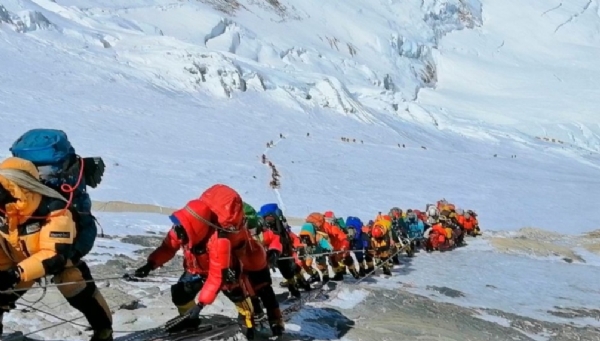
The primary objective of the standards is to ensure the timely identification and appropriate treatment of altitude sickness among tourists, trekkers, mountaineers and local residents travelling to or living in high-altitude areas.
The guidelines place particular emphasis on strengthening the treatment capabilities of healthcare institutions located in high-hill and Himalayan regions, ensuring the availability of essential medicines and medical equipment, and streamlining emergency rescue operations and patient referral services.
At altitudes of 2,500 metres or above, atmospheric pressure decreases, reducing the amount of oxygen available to the human body. When the body is unable to adapt adequately to these changed environmental conditions, altitude sickness can develop. Although the condition may initially manifest through relatively mild symptoms, it can become serious if not identified and treated promptly. In severe cases, it can lead to life-threatening complications such as high-altitude pulmonary oedema (fluid accumulation in the lungs) and high-altitude cerebral oedema (swelling of the brain).
The newly approved standards prioritise preventive measures such as ascending gradually, allowing sufficient time for the body to acclimatise, maintaining adequate fluid intake and avoiding further ascent if symptoms of altitude sickness appear. They also provide for the immediate evacuation of affected patients to lower altitudes whenever necessary, the administration of oxygen, the use of portable hyperbaric chambers and treatment tailored to the patient’s medical condition.
Under the standards, healthcare facilities in high-hill and Himalayan regions will be required to maintain essential medical supplies and equipment, including oxygen cylinders, oxygen concentrators, pulse oximeters, portable hyperbaric chambers, commonly known as Gamow bags, emergency treatment equipment and essential medicines. The document also contains a prescribed list of medicines and medical equipment required for the diagnosis, treatment and management of altitude-related illnesses.
The new framework also clearly defines the responsibilities of the federal, provincial and local governments. The federal government will be responsible for formulating policies and standards, managing healthcare personnel and budgetary resources, and overseeing implementation and monitoring.
Provincial governments will ensure capacity-building initiatives for healthcare workers and provide the necessary technical support. Local governments, meanwhile, will be responsible for improving access to healthcare services, ensuring the availability of essential medicines and medical supplies, and establishing appropriate referral arrangements to transfer patients to other healthcare institutions whenever required.
---------------
Hindusthan Samachar / Jun Sarkar

18 Aug 2026