Washington/Tehran, 03 November (HS): The United States has carried out limited military strikes on Iran’s strategically significant Qeshm Island, even as diplomatic efforts to reach an understanding with Tehran continue through Qatari mediation. Three US officials told CNN that American forces conducted the strikes on Monday, describing the operation as defensive and aimed at protecting US assets in the region.
One official said the action was taken in response to Iranian forces firing at a US aircraft. Another described the strikes as a defensive measure against Iran’s reported use of surface-to-air missiles targeting American assets. The officials stressed that the operation was limited in scope and did not constitute the large-scale military campaign that Washington has previously considered.
According to CNN, the administration deliberately kept the operation under wraps to avoid giving the defensive action disproportionate significance or creating the impression that the United States was resuming a broader military offensive.
The strikes came at a particularly sensitive moment, with negotiations between Washington and Tehran still underway. President Donald Trump indicated on Monday that diplomatic engagement remained active, suggesting in a social media post that an agreement with Iran could happen.
During an appearance on Fox News on Monday night, Trump did not directly address reports of the latest strikes. Instead, he defended his decision to initiate military action against Iran and suggested that hostilities had remained limited in recent days.
Describing the situation as a soft war rather than an intense military conflict, Trump warned that a wider confrontation could resume if Tehran failed to reach an agreement. He maintained, however, that Iran was keen to secure a deal and expressed confidence that an understanding could be reached.
Vice-President JD Vance also struck a cautiously optimistic note, telling reporters that Washington and Tehran had made some progress towards ending the conflict. He acknowledged that Iran remained unpredictable but said the administration continued to have both military and non-military options at its disposal. Vance added that further progress would depend on how negotiations developed.
Meanwhile, diplomatic efforts led by Qatar have yet to produce a concrete breakthrough. According to a CBS News report, three days of indirect, closed-door discussions facilitated by Doha ended without a definitive outcome. Tehran said on Monday that the next move rested with Washington, declaring that the ball is now in America's court.
Trump's latest remarks on diplomacy followed a conversation with Israeli Prime Minister Benjamin Netanyahu on Sunday, during which the two leaders discussed the conflict with Iran. The US President described the exchange as positive.
However, differences have reportedly emerged over the next course of action. According to Axios, sources familiar with the discussions said Trump wanted to allow negotiations more time, while Netanyahu was pressing for military strikes against Iran to resume. The report highlighted the differing approaches within the US-Israeli leadership over whether to pursue a diplomatic settlement or intensify military pressure on Tehran.
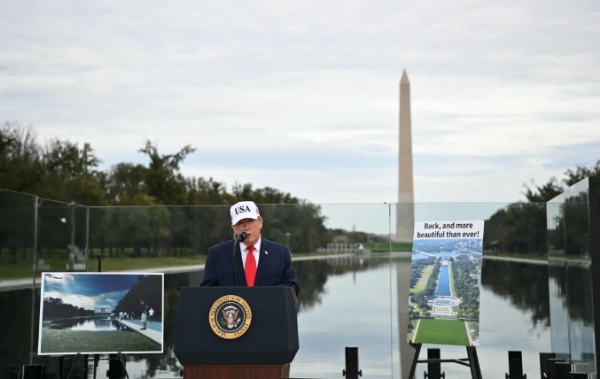
Addressing supporters at the Lincoln Memorial Reflecting Pool on Monday, ahead of Tuesday's US midterm elections, Trump repeatedly referred to Iran and played down the scale of the confrontation, insisting that the situation did not amount to a full-fledged war.
The latest strikes underscore the fragile nature of the diplomatic process, with military action continuing even as both sides publicly signal an interest in exploring a negotiated outcome.
Qeshm Island, located approximately 14 miles from the Iranian port city of Bandar Abbas, occupies a strategically important position near the Strait of Hormuz. The island is significant to Iran's ability to monitor and exert influence over maritime traffic passing through the vital waterway.
Before the conflict, approximately 20 million barrels of oil passed through the Strait of Hormuz each day, making it one of the world's most important energy transit routes. Any disruption to shipping through the strait carries wider implications for international energy markets and global trade.
The United States has previously targeted locations on Qeshm Island during the conflict. Monday's operation, however, was described by US officials as limited and defensive, rather than the beginning of a renewed large-scale military campaign.
---------------
Hindusthan Samachar / Jun Sarkar

18 Aug 2026