Kolkata, 02 November (H.S.): Nestled deep within the high mountain ranges of the Eastern Himalayas, the Nelung Valley - known in Tibetan as Gnas-lung - remains a profound testament to the region's spiritual traditions and collective cultural memory.
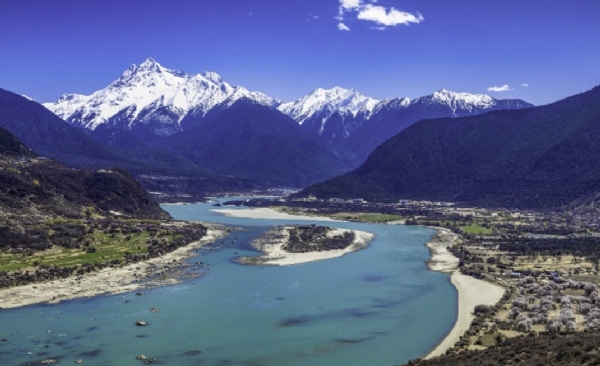
Located in the Tibet Autonomous Region under the Nyingchi Prefecture, near the small settlement of Duimi, the valley stands as far more than a geographical coordinate. It serves as a living record where ancient forests, rivers, and peaks bear witness to a centuries-old relationship between nature and human civilization.
Across administrative records and spiritual texts, the valley is identified by multiple names, each carrying deep historical and religious significance. While officially recognized as Nelung Township or Nelung Xiang, spiritual traditions often refer to it as Lhading. In the local linguistic heritage, place names are rarely mere labels; the name Nelung translates to Valley of the Sacred Abode, derived from 'Gnas' (sacred place) and 'Lung' (valley). Conversely, Lhading evokes the imagery of soaring gods, combining 'Lha' (divine being) and 'Ding' (to soar). These names reflect a traditional Himalayan worldview, deeply rooted in Tibetan Buddhism and the ancient Bon tradition, which perceives natural landscapes as vessels of spiritual energy rather than mere physical terrain.
Historically, Nelung formed a crucial part of Kongpo, a culturally vibrant region in eastern Tibet. Its fertile valleys and mountain passes served as a vital corridor for trade, pilgrimage, and cultural exchange. This historical connectivity fostered a pluralistic identity, where the Monpa and Lhoba indigenous communities, alongside Tibetans, have significantly enriched the valley's folklore and customs over generations. These shared narratives continue to bind the local landscape to human memory, preserving a unique cultural tapestry. Today, the continued presence of prayer flags, Mani stones, and local religious customs visibly expresses a continuity of belief that has outlasted political and administrative shifts.
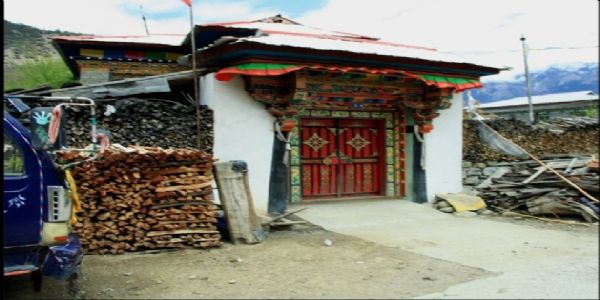
Beyond its cultural significance, the valley is ecologically vital, situated within one of the richest biodiversity zones of the Eastern Himalayas. Its dense forests and mountain rivers harbor rare wildlife and play a critical role in the regional hydrology. The valley's waters flow into the Yarlung Tsangpo, which eventually enters India as the Siang River before becoming the mighty Brahmaputra, creating a natural ecological bridge between the Tibetan Plateau and the Indian plains. Today, despite gradual economic transformations and expanding infrastructure, Nelung continues to balance modernity with tradition, its traditional stone-and-timber homes and seasonal festivals standing as enduring symbols of an inseparable bond between geography, faith, and history.
---------------
Hindusthan Samachar / Satya Prakash Singh