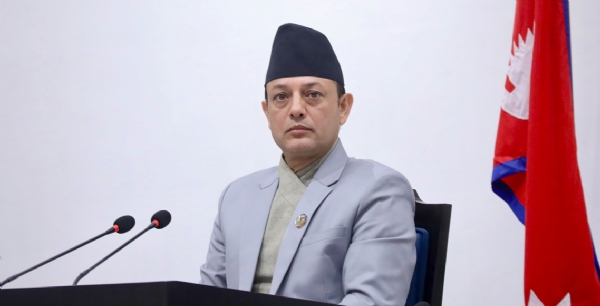
Kathmandu, November 19 (H.S.): Nepal’s House of Representatives Speaker Dol Prasad (DP) Aryal has emphasised the need to integrate geological studies of the Himalayan region, scientific research and disaster risk reduction into the country’s national development agenda and policymaking framework.
Addressing the 12th Nepal Geological Congress in Kathmandu on Thursday, Aryal said Nepal was among the countries highly vulnerable to natural disasters such as earthquakes, landslides, floods, glacial lake outburst floods (GLOFs) and soil erosion.
He observed that although natural disasters could not be prevented entirely, their impact and resulting damage could be substantially reduced through scientific research, preparedness, risk identification and effective policymaking. He stressed that geology had a crucial role to play in this regard.
Aryal said geological investigations and risk assessments must be given priority during the construction of roads, tunnels, hydropower projects, airports and urban infrastructure. He noted that striking a balance between the pace of development and the need to ensure a safe and secure future had become essential.
He also underscored the importance of translating Nepal’s constitutional commitments concerning the right to a clean environment and the sustainable use of natural resources into action through scientific research and evidence-based policymaking.
The Himalayas are not merely our natural pride; they are also a vital natural laboratory for the entire world to study the Earth's evolution, geological processes and climate change. Development guided by an understanding of nature is the only way to ensure safety and sustainability, he said.
The Speaker stressed the need to strengthen cooperation among Parliament, the government, universities, research institutions and the scientific community. He added that Parliament also had an important responsibility to ensure that scientific findings were incorporated into legislation, public policies and development plans.
He called for particular attention to identifying and mitigating disaster risks before calamities occur, ensuring the scientific and sustainable utilisation of natural resources, and enhancing the research and technological capabilities of young scientists.
Aryal further noted that geological and climatic changes in the Himalayan region could have far-reaching consequences for South Asia and the world at large. He said international cooperation, the exchange of scientific data, joint research initiatives and technology transfer must therefore be encouraged.
Commending the Nepal Geological Society for its contribution to geological studies, research and the dissemination of scientific knowledge, Aryal expressed confidence that the organisation would serve as a bridge between scientific research and national policymaking.
The central theme of the congress is ‘Reimagining Himalayan Geosciences for a Resilient, Sustainable and Resource-Secure World’. Aryal expressed hope that the scientific findings and recommendations emerging from the conference would be incorporated into national policies, development plans and practical initiatives implemented at the local level.
---------------
Hindusthan Samachar / Jun Sarkar

18 Aug 2026