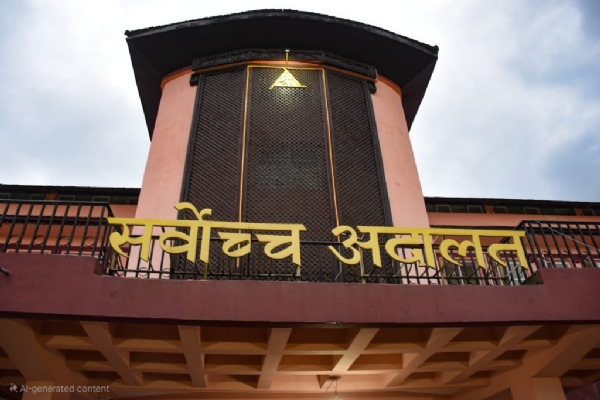
Kathmandu, 01 November (H.S.): The Supreme Court of Nepal has directed the government to establish a regulatory framework for the controlled commercial cultivation and production of cannabis for medicinal, scientific, agricultural, horticultural and industrial purposes.
A joint bench of Justices Nahakul Subedi and Til Prasad Shrestha ordered the government to formulate the necessary regulations, standards and procedures for the effective implementation of the Narcotic Drugs (Control) Act. The court directed the government to put the required legal provisions in place and facilitate regulated cannabis cultivation and production within three months from the date of receipt of the writ of mandamus.
A writ petition had been filed before the Supreme Court by advocate Saroj Adhikari and others, naming the Office of the Prime Minister and Council of Ministers among the respondents. The court had delivered its verdict on May 18, 2025, and the full text of the judgment has now been prepared. The process was delayed after case files were destroyed in a fire at the Supreme Court during the Gen Z protests on September 9, 2025.
According to the court's order, the government will have to establish a legal mechanism for issuing licences and permits for the commercial cultivation, production, processing, storage, use, sale, distribution, export and import of cannabis. It must also put in place stringent regulatory and monitoring mechanisms to prevent unauthorised activities, including illegal cultivation, production, manufacturing, preparation, sale and distribution.
Earlier, lawmakers had also registered a private member's bill in the federal Parliament seeking to establish a legal framework for commercial cannabis cultivation. However, the proposed legislation failed to make further progress in Parliament.
The Supreme Court observed that nearly five decades had passed since the enactment of the Narcotic Drugs (Control) Act, yet the government had failed to issue the necessary regulations and orders to implement its provisions concerning cannabis. The court expressed serious concern over this prolonged inaction.
According to the court, the law permits cannabis cultivation, production, sale, distribution and use subject to prescribed conditions and procedures. However, the absence of the necessary regulations, procedures and standards has prevented the effective implementation of these provisions, leaving the opportunities provided under the law largely unutilised.
Under the restrictive provision of Section 4 of the Act, licences may be issued through appropriate regulations for the production, collection and transportation of cannabis resin, or charas, obtained from cannabis plants growing naturally in the western hill regions of Nepal.
Similarly, Section 5 provides for the purchase and consumption of narcotic substances from licensed outlets for medical treatment, subject to the recommendation of an authorised medical practitioner. The court also noted that the law permits specified categories of individuals to consume prescribed quantities of narcotic substances under stipulated conditions.
Section 6 of the Act allows institutions granted special permission by the Government of Nepal to cultivate, prepare, produce, sell, distribute, export and import cannabis and other narcotic substances for medicinal purposes or scientific research.
However, the government was required to issue the necessary regulations or orders under Section 22 of the Act to implement these legal provisions. The court observed that even after nearly 50 years since the legislation was enacted, the government had failed to fulfil this obligation.
According to the Supreme Court, the absence of regulations has prevented Nepal from benefiting from the medicinal applications of cannabis and the potential gains from scientific research, as recognised within the international narcotics control framework. The court interpreted the prolonged failure to implement the statutory provisions as a failure on the part of government authorities to discharge their legal responsibilities.
The Supreme Court also clarified that the government need not restrict its regulatory framework to naturally growing wild cannabis alone. It observed that while the restrictive provision under Section 4 deals with cannabis growing naturally in the western hill regions, Section 6 provides for its cultivation and production for medicinal purposes and scientific research.
The court also took into consideration the international legal framework and recent studies and research on cannabis while reaching its decision. According to the Supreme Court, the Single Convention on Narcotic Drugs, 1961, provides for a regulated framework concerning cannabis cultivation for non-medicinal purposes, including horticultural, agricultural and industrial applications.
The court further noted that various recent studies and research findings have highlighted the medicinal value of cannabis, as well as its potential as an important raw material for industrial production.
It also observed that official studies conducted or commissioned by the Government of Nepal had recommended regulated cannabis cultivation and production for medicinal and industrial purposes.
Taking all these factors into account, the court held that the government could establish a regulated system for the commercial cultivation, production, processing, sale and distribution of cannabis without acting contrary to the spirit of the Narcotic Drugs (Control) Act or the applicable international legal framework.
The Supreme Court, however, made it clear that its directive concerns the establishment of a legal framework for regulated cannabis cultivation for medicinal and industrial purposes. It rejected the demand to lift the ban on recreational cannabis use.
The court observed that granting legal recognition to recreational cannabis use or removing any activity from the list of criminal offences falls within the jurisdiction of the legislature. Accordingly, it declined to interfere with the legislature's authority on the matter.
---------------
Hindusthan Samachar / Jun Sarkar

18 Aug 2026