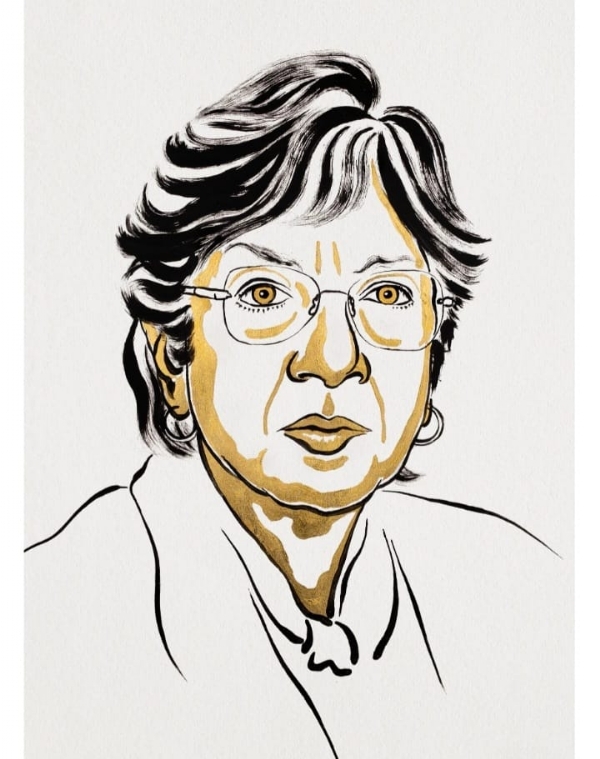
Oslo, 09 October (H.S.): Renowned South African jurist of Indian origin Navanethem “Navi” Pillay has been named the recipient of the 2026 Nobel Peace Prize for her efforts to strengthen international law and promote peace.
The announcement was made on Friday by Jørgen Watne Frydnes, chair of the Norwegian Nobel Committee, at a press conference held at the Norwegian Nobel Institute in Oslo, the capital of Norway.
According to the Nobel Committee, Pillay has played a significant role in ensuring that perpetrators of war crimes, crimes against humanity and genocide are held legally accountable. Through exceptional courage, integrity and moral conviction, she has contributed to the development of a more comprehensive global legal order. Her long career in public service exemplifies an unwavering commitment to universal legal principles and human rights.
Born into a family of Indian Tamil origin, Pillay provided legal assistance to Nelson Mandela and several others who fought against apartheid in South Africa. Born on September 23, 1941, in Durban, South Africa, she established herself as a distinguished lawyer and campaigned against racial discrimination, segregation and social exclusion. Her journey, which began with representing Mandela and other opponents of apartheid, eventually led her to assume significant responsibilities in international judicial institutions.
Pillay has served as a judge on South Africa’s High Court and the International Criminal Tribunal for Rwanda, and has held senior positions in international justice and human rights. She also served as the United Nations High Commissioner for Human Rights. Until recently, she chaired the United Nations Independent International Commission of Inquiry on the Occupied Palestinian Territory. She is currently a judge at the International Court of Justice in proceedings concerning allegations of genocide against Myanmar.
Landmark Contributions to International Criminal Justice
According to the Nobel Committee, Pillay has played a crucial role in landmark international judicial proceedings that demonstrated how legal remedies can help prevent war and violence.
Her contributions to the International Criminal Tribunal for Rwanda marked significant progress towards recognising rape and sexual violence as crimes against humanity and acts of genocide. The proceedings also marked a historic development in which an accused person was charged with inciting genocide solely through propaganda.
Holding States and Leaders Accountable
The Nobel Committee said Pillay has helped strengthen the rule of law by holding states and national leaders accountable while restoring hope for justice among victims of violence and conflict.
Throughout her career, she has emphasised that individuals and countries alike must abide by the rule of law. She has also contributed to the development of international legal standards and principles, reinforcing the importance of accountability in maintaining peace and protecting human rights.
International Law: A Cornerstone of Lasting Peace
The Nobel Committee noted that the first Nobel Peace Prize was awarded 125 years ago. Since then, resolving conflicts through international law has remained one of the central objectives of the Peace Prize.
Following the Second World War, the scope of international law expanded considerably, particularly with the establishment of institutions under the United Nations. The fundamental principle underpinning this framework is that lasting peace must rest on legal principles rather than the will of powerful nations or a balance of power.
The committee acknowledged that the rules-based international order has never been perfect. Powerful countries have frequently attempted to evade their responsibilities, while the outcomes of cases under international law have sometimes varied depending on whether the parties involved were perpetrators or victims.
Nevertheless, diplomatic engagement, treaties and legal procedures have increasingly become important instruments for resolving conflicts peacefully.
International Law Under Growing Pressure
The Nobel Committee observed that the world is facing serious challenges, including a greater number of wars and conflicts than it has experienced for a considerable period.
In this environment, international law has become not merely a complement to peace and security but an indispensable foundation for both. However, the international legal order is under considerable strain, with its institutions increasingly coming under attack.
Prioritising power politics over established legal frameworks weakens stability, trust and peaceful coexistence among nations, the committee said.
It emphasised that the rule of law, at both national and international levels, is essential for preserving peace and resolving conflicts through non-violent means. History has demonstrated that without the rule of law, the world becomes unjust, irrational and inhumane.
Judges, therefore, have a vital responsibility to defend the boundary between order and chaos, the committee added.
A Career That Inspires Hope for a More Peaceful World
The Nobel Committee said Pillay’s distinguished judicial career highlights the urgent need to strengthen, defend and expand the rule of law worldwide.
Her commitment to justice and human dignity serves as a source of hope and inspiration for those working towards a more peaceful world. Through her efforts to uphold universal legal principles and ensure accountability for grave international crimes, Pillay has helped reinforce the belief that justice can serve as a foundation for lasting peace.
---------------
Hindusthan Samachar / Jun Sarkar

18 Aug 2026