Stockholm, 05 October (H.S.):
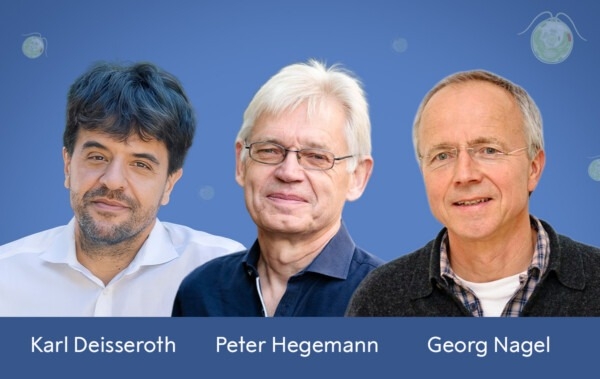
Karl Deisseroth, Peter Hegemann and Georg Nagel were on Monday announced as the joint recipients of the 2026 Nobel Prize in Physiology or Medicine for their discoveries concerning light-gated ion channels and optogenetics. The Nobel Assembly at the Karolinska Institutet in Stockholm made the announcement. The prestigious award will be shared equally among the three scientists.
According to the Nobel Assembly, the discoveries made by the three scientists have laid the foundation for a new era in neuroscience. The prize carries an award amount of 12 million Swedish kronor (approximately Rs 11.5 crore), which will be divided equally among the three laureates. The Nobel laureates will also receive a diploma and a medal.
The three scientists have jointly been honoured “for their discoveries concerning light-gated ion channels and optogenetics.”
Optogenetics is a technique that uses light to control the activity of nerve cells. It enables researchers to activate or inhibit specific neurons with remarkable precision. Peter Hegemann and Georg Nagel discovered channelrhodopsin, a light-sensitive protein found in a single-celled alga. Karl Deisseroth subsequently transformed this discovery into a light-controlled switch for nerve cells, helping establish optogenetics as a powerful tool for neuroscience.
In a statement issued by the Nobel Assembly at the Karolinska Institutet, it said that the laureates had laid the foundation for a new era in neuroscience. Per Svenningsson, Chair of the Nobel Committee for Physiology or Medicine, said, “Optogenetics provides opportunities for mapping the brain in a way that we could once only dream of.”
Karl Deisseroth is the D. H. Chen Professor of Bioengineering and Professor of Psychiatry and Behavioral Sciences at Stanford University. He is also an Investigator at the Howard Hughes Medical Institute.
Deisseroth received his undergraduate degree from Harvard University and his PhD and MD degrees from Stanford University. He completed his postdoctoral training, medical internship and adult psychiatry residency at Stanford. He is board-certified by the American Board of Psychiatry and Neurology.
Peter Hegemann is a German biophysicist and professor at Humboldt University of Berlin, where he holds the Hertie Senior Research Chair in Neuroscience and is associated with experimental biophysics. He received his PhD in biochemistry from the Max Planck Institute of Biochemistry and subsequently conducted postdoctoral research at Syracuse University.
Georg Nagel is Professor of Molecular Plant Physiology at the University of Würzburg in Germany. He received his PhD from the University of Frankfurt in 1988 and subsequently worked at the Max Planck Institute of Biophysics. He also held postdoctoral positions at Yale University and Rockefeller University. His research has played a key role in understanding microbial photoreceptors and the light-gated ion channels known as channelrhodopsins.
The story of optogenetics began with research into how the single-celled green alga Chlamydomonas reinhardtii responds to light. Hegemann and Nagel discovered channelrhodopsin, a protein with unique properties that becomes activated by blue light. When the protein is incorporated into a cell, it can make that cell responsive to light by allowing charged ions to flow through a channel in the cell membrane.
Deisseroth subsequently introduced the gene encoding channelrhodopsin into rat nerve cells. By exposing the cells to blue light, he was able to trigger nerve signals. He published this breakthrough in 2005 and later demonstrated that the light-controlled mechanism could be used in the brains of living mice. This established optogenetics as a method for precisely controlling neural activity with light.
Optogenetics has since transformed neuroscience. By allowing scientists to manipulate specific neurons and neural circuits with precise pulses of light, the technique has enabled researchers to investigate how particular brain circuits influence memory, emotions and behaviour. It has also become an important research tool for studying neurological and psychiatric disorders. Researchers are exploring potential clinical applications, including approaches aimed at restoring vision in people with visual impairment.
Alfred Nobel, the Swedish scientist, inventor, industrialist and founder of the Nobel Prizes, established the awards through his will in 1895. He directed that the majority of his fortune be used to establish prizes for those who had conferred the greatest benefit on humanity. The original prizes were established in the fields of Physics, Chemistry, Physiology or Medicine, Literature and Peace.
Nobel expressed the wish in his will that the prizes should be awarded to individuals whose work had provided the greatest benefit to humanity. In 1968, a sixth award was established by Sweden’s central bank, Sveriges Riksbank. Although commonly referred to as the Nobel Prize in Economics, it is formally known as the Sveriges Riksbank Prize in Economic Sciences in Memory of Alfred Nobel and is not technically one of the original Nobel Prizes.
The Nobel Prize in Physiology or Medicine was first awarded in 1901. With the announcement of the 2026 laureates, the prize has now recognised groundbreaking contributions across more than a century of advances in medical science and human biology. The 2026 award specifically recognises discoveries that transformed light from a means of observing biological activity into a tool for precisely controlling nerve cells, fundamentally changing the study of the brain.
---------------
Hindusthan Samachar / Jun Sarkar

18 Aug 2026