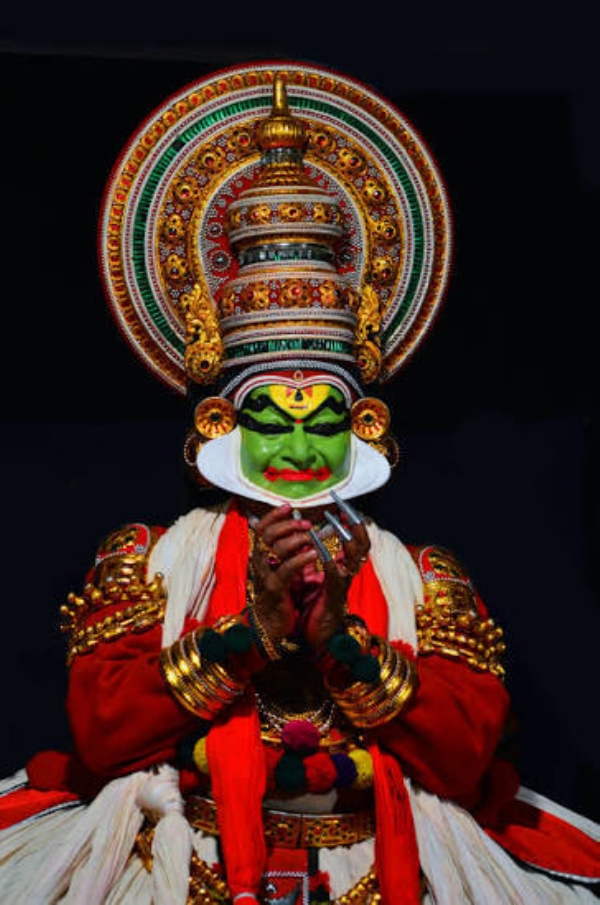
Thrissur, 05 Oct (H.S): From temple courtyards in Kerala to theatres in Europe and classrooms in the United States, Kathakali has travelled far beyond the landscape that nurtured it. With towering headgear, vividly painted faces and extraordinary control of the eyes and body, this traditional dance drama has built an international following through performances, teaching and sustained cultural exchange.
Its appeal begins with a striking visual encounter. A raised eyebrow can suggest suspicion, a trembling lip can reveal grief, and a sweeping movement can announce a warrior. Even spectators unfamiliar with Malayalam or Indian mythology can recognise emotions, although understanding the intricate language of gestures requires guidance.
Kathakali took shape in Kerala during the seventeenth century, developing from Ramanattam and drawing upon older performance traditions. Its repertoire includes episodes from the Ramayana, Mahabharata and Puranas, exploring love, loyalty, ambition, jealousy and conflict. These themes offer audiences abroad an emotional entry into stories rooted in Indian culture.
Actors communicate through movement, facial expression and codified hand gestures, while singers carry the narrative. The chenda and maddalam provide powerful rhythmic accompaniment. Performers undergo years of demanding training, developing strength, flexibility and precise muscular control. Behind the spectacle lies a disciplined theatrical system involving musicians, makeup specialists and costume workers.
The makeup itself introduces the characters. Green, associated with pacha roles, identifies noble heroes, while kathi denotes powerful, morally troubled figures. Beards, colours and facial patterns distinguish other types. The elaborate white chutti framing certain faces sharpens their appearance, turning the performer into a larger presence before the story unfolds.
An important foundation for Kathakali’s overseas journey has been Kerala Kalamandalam. The institution has preserved rigorous training while taking performances to national and international festivals. Its engagement with foreign students and visitors has also created opportunities for people encountering the art to move beyond admiration towards serious study.
In Britain, the Kala Chethena Kathakali Company has provided a lasting bridge between Kerala’s artists and local audiences. Founded in 1987 by actor Kalamandalam Vijayakumar and makeup specialist Kalamandalam Barbara Vijayakumar, it combines touring performances with workshops, educational programmes, training and costume exhibitions.
This educational approach helps explain how a complex tradition can gain followers overseas. Demonstrations introduce gestures and expressions before spectators watch them within a story. Workshops let participants explore rhythm and movement themselves. Such encounters make an unfamiliar theatrical vocabulary more accessible and give audiences reasons to return.
France offers another significant example. Milena Salvini and Roger Filipuzzi established the Centre Mandapa in Paris in 1975. The centre’s history includes international Kathakali tours and epic performance nights at the Théâtre du Soleil. Salvini’s dedication helped establish a continuing space for Indian performance traditions within French cultural life.
In the United States, scholarship and theatre education have been important channels of engagement. American theatre practitioner Phillip Zarrilli studied Kathakali and wrote extensively about it. His work, including his leadership of the Asian Experimental Theatre Programme at the University of Wisconsin, Madison, connected Asian performance practices with American academic and theatrical circles.
For theatre students, Kathakali offers lessons in concentration, physical preparation and the expressive possibilities of the body. Its international significance therefore extends beyond ticketed performances: it also belongs to conversations about acting, performance research and how artists learn from traditions outside their own.
Its overseas following should nevertheless be understood as a dedicated cultural audience rather than universal mass popularity. The documented work of companies, cultural centres and scholars shows how patient engagement has sustained interest across generations.
The challenge ahead is to maintain that connection while giving audiences enough context to appreciate the art’s depth. Shorter presentations can introduce newcomers, but sustained learning reveals its subtleties.
For Kerala’s artists, these exchanges also mean that their inheritance can be encountered as living theatre by people far from its original home.
Kathakali’s journey demonstrates how a distinctly local tradition can speak across borders. The painted face attracts attention; the human emotions behind it build the lasting relationship.
---------------
Hindusthan Samachar / Arun Lakshman