Lucknosw, 4 Oct (HS):
The expansion of eco-tourism in Uttar Pradesh will not be limited to
tourists. The Tourism Department is developing tourist destinations to suit the
needs of wildlife. From buffer safaris to wetland circuits, facilities are
being developed to suit the natural behavior of tigers, cranes, and migratory
birds, to increase tourism while minimizing harm to wildlife.
Circuits are being developed by connecting buffer routes for
tigers, wetlands for cranes, and agricultural areas. Watchtowers, nature
trails, safe feeding and resting areas are being built for migratory birds.
Ramsar sites and butterfly gardens are being developed as eco-tourism centers.
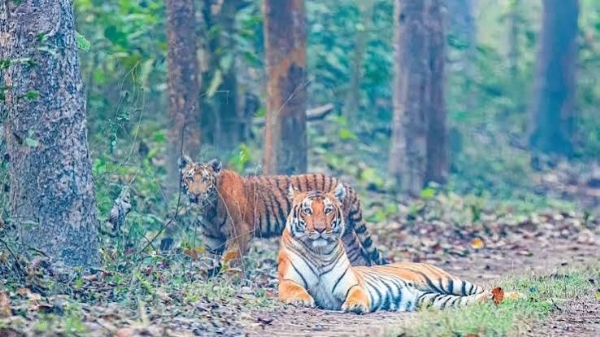
Peace and safe distance are essential for tigers, wetlands and farms for
cranes, safe feeding and resting areas for migratory birds, and suitable plants
for butterflies. Children and youth will be connected to these sites to create
awareness about wildlife conservation.
Ramsar sites are becoming bird destinations: The state's
wetlands are becoming eco-tourism hubs. Nature trails, watchtowers, and
interpretation facilities are being developed at Agra's Sur Sarovar Bird
Sanctuary and Muzaffarnagar's Haiderpur Wetland, so tourists can view birds
without interference. Other water bodies, including Rae Bareli's Samaspur Bird
Sanctuary, Sant Kabir Nagar's Bakhira Lake, Kaushambi's Alwara Lake, and
Shamli's Mamor Lake, are also being linked to eco-tourism.
Emphasis on employment with tourism: Local participation is
crucial in ecotourism. Through homestays, local guides, nature interpretation
centers, local cuisine, transportation, and village-based experiences,
surrounding communities are being integrated into tourism. This aims to promote
conservation as well as employment and self-employment.
Eco-tourism of UP at a glance: The state has four tiger
reserves and 13 Ramsar sites. The Eco-Tourism Development Board was formed in
2022. Between 2018 and 2022, the tiger population in the state increased by 18
percent, reaching over 200 in 2022. Dudhwa has more than 50 rhinos. Ballia's
Surha Tal became India's 100th Ramsar site.
From the forest to the zoo, the number of tourists increased:
Lucknow Zoo received 11.38 lakh tourists in 2023-24, 10.99 lakh in 2024-25,
12.99 lakh in 2025-26 and around 4.65 lakh tourists so far in 2026. Dudhwa
Tiger Reserve received 51,195 tourists in 2023-24, 58,053 in 2024-25 and 76,411
in 2025-26 and Pilibhit Tiger Reserve received 54,378, 56,289 and 56,783
tourists respectively.
“Tourism should adapt to the needs of wildlife, rather than
forcing wildlife to adapt to tourism. Tourism development should respect
wildlife's natural behavior, breeding season, and food, water, and shelter
needs,” opines Jaivir Singh, Minister of Tourism and Culture.
Uttar Pradesh is altering its eco-tourism emphasis to favor
wildlife health, habitat protection, and community-integrated circuits over
visitor numbers.
Key eco-tourism initiatives and a wildlife focus
Tigers' Buffer Routes: To prevent human-animal conflict and mimic natural
movement patterns, designated buffer zones and transit corridors are being
developed around key reserves such as Dudhwa and Pilibhit.
Saras Crane & Wetland Circuits: Establishing specialized observation
trails, watchtowers, and protection networks across wetlands and agricultural
regions in places such as Mainpuri for the state bird, the Saras Crane.
Migratory Bird & Ramsar Sanctuaries: Providing safe
resting spots and educational interpretation centers at Ramsar sites, butterfly
gardens, and critical habitats (such as Okhla Bird Sanctuary and Nawabganj Bird
Sanctuary).
The Uttar Pradesh Eco Tourism Development Board has authorized approximately Rs.
231 crore in state-wide project investments for 70 forest, wetland, and lake
projects.
Wildlife Rescue and Rehabilitation Centers: Featuring famous ethical animal
centers such as the Agra Bear Rescue Facility at Sur Sarovar Bird Sanctuary
(housed rescued sloth bears) and the Elephant Conservation and Care Center.
Hindusthan Samachar / Abhishek Awasthi