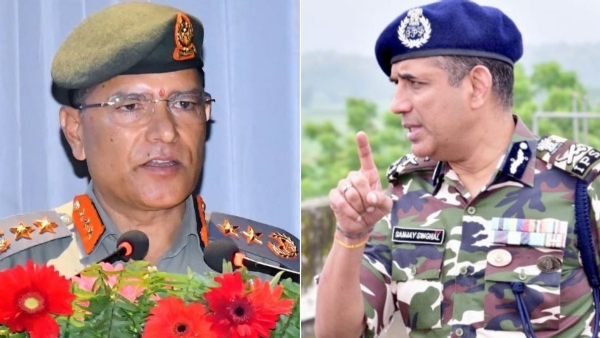
Kathmandu, 28 October (H.S.): Sashastra Seema Bal (SSB) Director General Sanjay Singhal has arrived in Kathmandu to participate in the 10th annual coordination meeting between India’s SSB and Nepal’s Armed Police Force (APF), which begins on Wednesday to review border security challenges and strengthen bilateral cooperation.
The three-day meeting will bring together senior officials from the two security forces, along with representatives of their respective home and foreign ministries and other relevant agencies. APF Inspector General Narayan Dutta Poudyal and his Indian counterpart, Singhal, are leading their respective delegations.
The high-level meeting has been held annually for more than a decade, with the two sides using the forum to assess emerging security concerns, review previous commitments and improve coordination along the open India-Nepal border.
The largely open border has facilitated trade, travel and close people-to-people ties between the neighbouring countries. However, it has also presented challenges, including human trafficking, drug smuggling, customs evasion, illegal imports and exports, and other forms of cross-border criminal activity.
Nepal is expected to seek stronger Indian cooperation and more effective information-sharing mechanisms to curb the trafficking of narcotics across the border. The Indian side, meanwhile, is expected to focus on terrorism, unauthorised entry, illegal movement in border areas and the illicit trade in liquor originating from Nepal. The movement of individuals accused of serious crimes who cross the border to evade law enforcement is also likely to feature in the discussions.
The movement of citizens from third countries across the border is another key issue expected to be discussed. At the previous meeting, both sides agreed to strengthen monitoring of foreign nationals travelling through border areas.
India has expressed particular concern about the movement of Bangladeshi and Pakistani nationals through the region. Nepal, meanwhile, has highlighted the need to monitor the movement of people arriving from Myanmar and Bangladesh, including members of the Rohingya community, as well as other foreign nationals.
The two sides are expected to examine ways to improve surveillance and information exchange while addressing security concerns associated with the movement of third-country nationals.
The meeting is also expected to focus on strengthening operational coordination between the two security forces. Key agenda items include joint border patrols, the repair and maintenance of boundary pillars, prevention of cross-border crime, timely intelligence sharing and closer cooperation among security personnel deployed along the frontier.
According to the APF headquarters at Halchowk, discussions will also cover disaster preparedness and response in border areas, capacity-building for security personnel, cooperation in training and measures to prevent the smuggling of illicit substances.
Both sides are expected to explore practical ways to improve coordination between their field units, strengthen emergency response mechanisms and ensure that information about emerging security threats is shared more efficiently.
India and Nepal have maintained an annual coordination mechanism since 2012, although the meetings were disrupted during certain periods, including the COVID-19 pandemic.
The ninth coordination meeting was held in New Delhi last year. Discussions at that meeting covered cross-border crime, drug trafficking, illegal imports and exports, unauthorised movement, information sharing, joint patrols and cooperation in security training.
Implementation of commitments made at previous meetings is also expected to feature prominently in the current discussions. Officials from both countries will review earlier agreements, assess progress and identify measures to ensure that decisions are translated into effective action on the ground.
The three-day meeting in Kathmandu is expected to conclude with an assessment of existing border security challenges and a renewed framework for cooperation. The two sides are also expected to outline steps to improve intelligence sharing, strengthen joint operations and accelerate the implementation of previous commitments along the India-Nepal border.
---------------
Hindusthan Samachar / Jun Sarkar

18 Aug 2026