Kathmandu, 28 October (H.S.): Nepal has been placed on high alert in view of the potential impact of Cyclone ‘Arnab’, with authorities warning of heavy rainfall, snowfall, thunderstorms and strong winds across several parts of the country from Thursday through Saturday.
The government has directed security agencies and relevant authorities to remain on heightened alert and complete necessary preparations, given the possibility of adverse weather conditions extending from the Himalayan region to the southern plains.
Dr. Dharmaraj Upreti, executive chief of the National Disaster Risk Reduction and Management Authority (NDRRMA), said instructions had been issued to maintain heightened vigilance from Thursday to Saturday. Relevant agencies and security forces have been asked to remain prepared to respond to potential emergencies.
According to the India Meteorological Department, Cyclone ‘Arnab’ made landfall on the Andhra Pradesh coast on Wednesday morning. Nepal is currently experiencing a partial influence of westerly winds, while the approaching weather system is expected to bring additional moisture and trigger rainfall and snowfall.
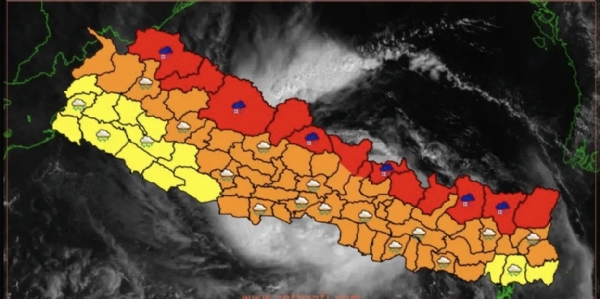
The Meteorological Forecasting Division under Nepal’s Department of Hydrology and Meteorology said that on Wednesday, Koshi, Madhesh, Bagmati and Lumbini provinces would generally experience cloudy conditions, while Karnali and Sudurpashchim provinces were likely to remain partly cloudy.
From Thursday, moderate rainfall or snowfall is possible in some areas of Koshi, Madhesh and Bagmati provinces, as well as at one or two locations in Gandaki, Lumbini, Karnali and Sudurpashchim provinces.
The cyclone’s influence could become more pronounced on Friday and Saturday. Senior meteorologist Bibhuti Pokharel said some areas of Koshi, Madhesh, Bagmati, Gandaki and Lumbini provinces could receive heavy rainfall during the two days. Heavy rain or snowfall is also possible in the mountainous and high-hill areas of Karnali and Sudurpashchim provinces.
Meteorologists believe clouds associated with the outer circulation of the cyclone will reach Nepal and interact with the existing upper-atmospheric system, creating conditions conducive to rainfall and snowfall.
“People do not need to panic at present, but it is important to remain alert,” Pokharel said.
She cautioned that rain and snowfall could disrupt daily life, road transport and routine activities in the Himalayan and hilly regions. Residents have been advised to monitor official weather updates and take appropriate precautions.
Upreti said the high-alert period had been determined on the basis of forecasts issued by the meteorological department. Authorities have been instructed to exercise particular caution in locations already identified as vulnerable to weather-related disasters.
According to the weather department, conditions could deteriorate on Friday and Saturday across Koshi, Madhesh, Bagmati, Gandaki and Lumbini provinces. Several locations in these provinces may experience moderate rainfall accompanied by thunderstorms, lightning and strong winds, while isolated areas could receive heavy rain.
Similar conditions are possible in parts of Karnali and Sudurpashchim provinces, where moderate rainfall, thunderstorms, lightning and strong winds are expected in some locations. Heavy rainfall is also possible at one or two places in these provinces.
The NDRRMA has warned that the potential impact of the weather system could increase the risk of heavy snowfall, blizzards and avalanches in high-altitude and Himalayan areas.
### Tourists and trekkers advised to avoid high-altitude areas
In view of the potential hazards, the disaster management authority has urged tourists, trekkers and mountaineers to avoid travelling to high-hill and Himalayan destinations during the period of adverse weather.
The Department of Immigration has suspended the issuance of trekking permits for the next three days. Those who have already embarked on treks have also been advised to remain in safe locations until conditions improve.
Officials have warned that snowfall and severe weather could block trekking routes, make journeys hazardous and disrupt normal life in mountainous areas. Travellers have been urged to follow instructions issued by the relevant authorities and avoid unnecessary risks.
Authorities have also appealed to the public to refrain from non-essential travel, given the possibility of disruptions to road and air transport and other daily activities.
People living near rivers and in areas vulnerable to flooding have been advised to move away from potentially dangerous locations. The public has been urged to monitor weather forecasts and early-warning announcements regularly and comply with safety instructions issued by government agencies.
### Emergency helpline numbers issued
The National Disaster Risk Reduction and Management Authority has issued the following contact numbers for weather information and emergency assistance:
- Weather information: 1155
- National and District Emergency Operations Centres: 1234
- Nepal Police: 100
- Armed Police Force: 1114
- Tourist Police: 1144
The Meteorological Forecasting Division has urged residents, particularly those in mountainous and high-hill regions, to remain vigilant from Thursday through Saturday and rely on official weather advisories as the situation develops.
---------------
Hindusthan Samachar / Jun Sarkar

18 Aug 2026