Kathmandu, 27 October (H.S.):
Nepal Oil Corporation (NOC) has accelerated plans to establish a large-scale liquefied petroleum gas (LPG) storage facility and build a cross-border gas pipeline from Motihari in Bihar to Sarlahi in Nepal, aiming to address recurring supply disruptions caused by natural disasters and road blockages.
At a time when government-owned LPG storage infrastructure remains extremely limited in Nepal, the state-owned corporation is moving ahead with plans to develop its own storage facility and establish a dedicated pipeline to transport LPG from India into the country.
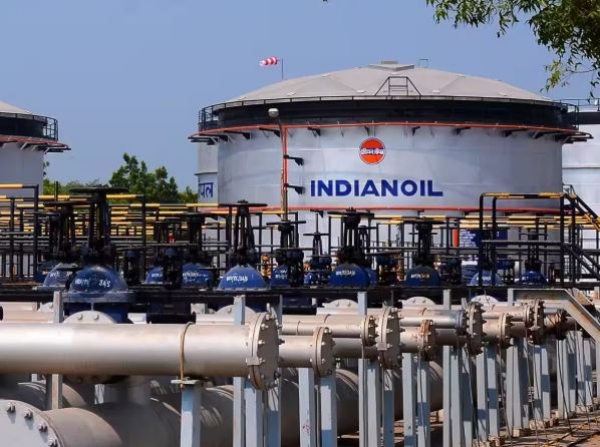
Under the proposed project, an LPG pipeline will connect Motihari in India with Sarlahi in Nepal. A storage facility with a capacity of 50,000 tonnes will also be developed in Sarlahi, with the potential to meet approximately one month of Nepal’s domestic LPG demand.
Technical and strategic discussions with Indian Oil Corporation (IOC) have already taken place to advance the project. The preparation of a detailed project report (DPR) is currently underway.
According to Binit Mani Upadhyaya, head of the LPG and Aviation Department at Nepal Oil Corporation, an in-principle agreement to advance the project was reached during the fifth meeting of the Joint Working Group (JWG) between the ministries responsible for industry, commerce and supplies of Nepal and India, held in New Delhi.
Following the meeting, a business-to-business (B2B) committee comprising representatives of Nepal Oil Corporation and IOC was established to coordinate the project’s development.
According to the proposal submitted by Nepal Oil Corporation to IOC, the planned LPG depot in Sarlahi will be a modern, fully automated facility comprising three principal components.
The first component will be a storage facility with a capacity of 50,000 tonnes, designed to meet approximately one month of the country’s LPG requirements. The second will be a bottling plant capable of filling 25,000 cylinders per day. The third will be a tanker loading and filling (TLF) system capable of loading at least 100 LPG bullet tankers daily.
Upadhyaya said the development of this infrastructure would significantly transform LPG supply management in Nepal. At present, natural disasters or road closures lasting just two to four days can trigger severe shortages across the country. A 50,000-tonne storage facility could provide a long-term solution to these recurring disruptions.
He added that the damage caused to hydropower projects and highways by the disaster in Bhotekoshi on August 26 had further highlighted the need for alternative supply arrangements and a large-capacity storage facility.
The proposed pipeline will originate in Motihari, Bihar, and extend into Sarlahi in Nepal, covering an estimated distance of approximately 131 kilometres.
Under the plan, the pipeline will follow the route of the existing Motihari-Amlekhgunj petroleum pipeline corridor up to Pathlaiya in Nepal’s Bara district. From there, it will extend eastwards to Sarlahi, covering an additional distance of approximately 62 kilometres.
According to Upadhyaya, the pipeline from Pathlaiya to Sarlahi is planned along the left-hand side of the road. Horizontal directional drilling (HDD) technology will be used to cross rivers and streams along the route, allowing the pipeline to pass safely beneath watercourses.
One of the most important requirements for the project, land availability, has already been addressed. Nepal Oil Corporation owns more than 14 bighas of land in Sarlahi, which is earmarked for the proposed facility. IOC is examining the site’s area and other technical aspects to determine the design and layout of the required infrastructure.
Officials from both countries remain in regular contact to move the project forward. Several virtual meetings have been held through the B2B committee, and the two corporations have exchanged the necessary documents.
During the initial phase, IOC submitted a preliminary report examining the suitability of pipelines with diameters of eight inches and 10 inches. Nepal Oil Corporation subsequently submitted a proposal incorporating its requirements, including the planned storage capacity of 50,000 tonnes.
According to Upadhyaya, IOC had requested a soil-testing report for the Sarlahi site, which has already been provided. The Indian corporation has now sought an updated survey report containing the geographical coordinates of the land. NOC said the report has been prepared and will be sent to IOC shortly.
Based on the survey findings and other technical requirements, IOC will prepare a detailed design, paving the way for the project to move towards technical finalisation.
Nepal Oil Corporation estimates that the construction of the pipeline, storage facility and associated infrastructure could cost between NPR 25 billion and NPR 30 billion.
However, a final decision on financing the substantial investment has yet to be made. The financial model will be determined after the DPR is completed and a more precise cost estimate becomes available.
Upadhyaya said the governments of Nepal and India would decide on the financing arrangement. Options include constructing the project with grant assistance from the Indian government or adopting an alternative funding model. The decision will be taken at the appropriate political and administrative levels of the two countries.
At present, Nepal imports LPG from several Indian refineries, with specialised bulk tankers transporting the gas by road. Barauni is among the nearest refineries, located approximately 500 kilometres from Kathmandu.
Transporting gas from Durgapur involves a journey of around 700-800 kilometres, while supplies from Mathura must cover approximately 900-1,000 kilometres. The distance from Paradip is even greater, at around 1,200-1,300 kilometres.
Depending on the point of origin and prevailing road conditions, tankers can take between three or four days and a week to reach their destinations. Traffic congestion, customs procedures and the risk of road accidents can cause further delays.
The proposed Motihari-Sarlahi pipeline is expected to significantly reduce these logistical challenges.
According to Upadhyaya, transporting LPG directly to Sarlahi through a pipeline and storing it locally would eliminate a substantial portion of the costs associated with long-distance road transportation. Nepal currently spends approximately NPR 6 billion annually on LPG transportation alone.
The proposed automated depot would also enable gas to be loaded into bullet tankers more quickly and dispatched to different parts of Nepal, including Kathmandu.
The project is also expected to create new opportunities for Nepal’s domestic gas transportation industry.
Currently, between 600 and 700 Indian LPG bullet tankers are used to transport gas from Indian refineries to Nepal. This arrangement has left Nepal heavily dependent on Indian transport operators for its LPG supply chain.
Once the pipeline delivers gas to Sarlahi, dependence on Indian tankers for transporting LPG from Indian refineries is expected to decline. Nepali transport operators could then use their own bullet tankers to distribute gas from Sarlahi to bottling plants and other destinations across the country.
Upadhyaya said Nepali businesses would be able to operate their own LPG tankers, creating direct and indirect employment opportunities in the transport sector. Keeping more of the expenditure on gas transportation within Nepal would also help retain money in the domestic economy.
Currently, cooking gas is distributed to consumers through 58 privately operated bottling and refilling plants across Nepal. More than 15 million household LPG cylinders, each with a capacity of 14.2 kilograms, are in circulation in the domestic market.
To meet the requirements of these bottling plants, approximately 100-120 LPG bullet tankers are loaded with gas every day. According to Nepal Oil Corporation, the proposed depot would enable Nepali transport operators to transport LPG from Sarlahi at a comparable daily rate.
The construction of the Motihari-Sarlahi LPG pipeline and the 50,000-tonne storage facility could mark a significant step towards strengthening Nepal’s energy security, ensuring a more reliable supply of cooking gas to consumers and improving the country’s economic self-reliance.
---------------
Hindusthan Samachar / Jun Sarkar

18 Aug 2026