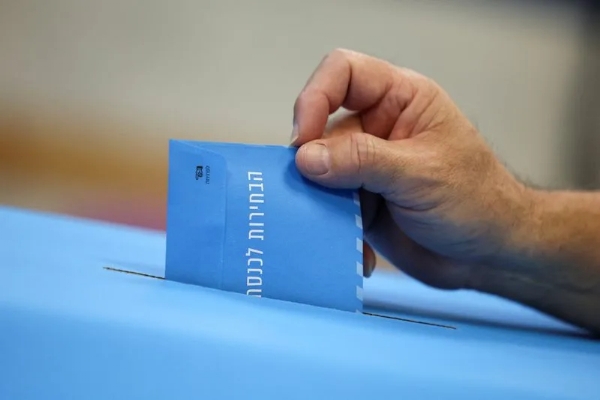
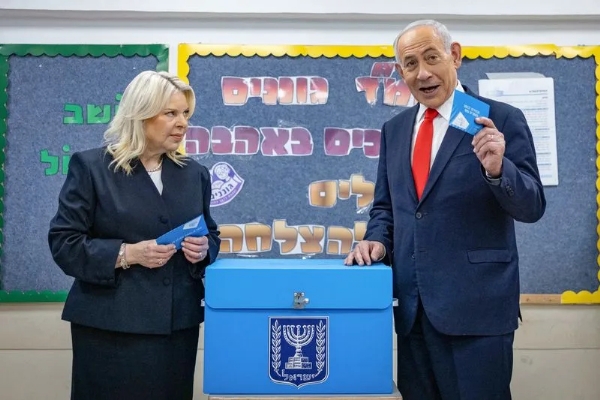
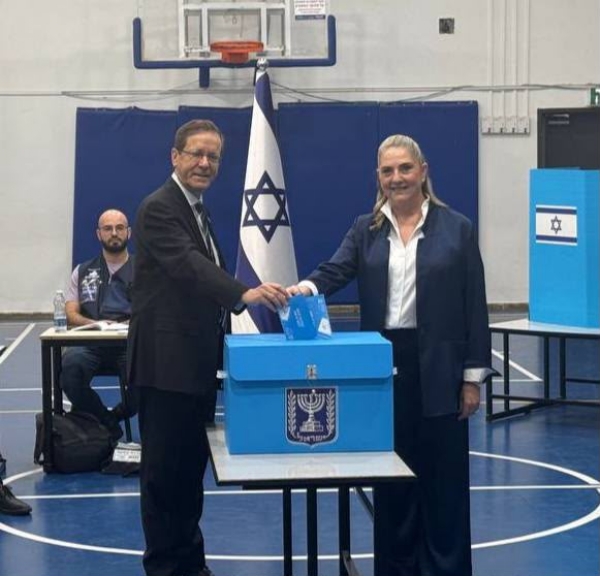
Jerusalem, 27 October (H.S.): Israel recorded its highest early voter turnout in 45 years on Tuesday as voters cast ballots in a closely contested parliamentary election that will determine the composition of the next government and Prime Minister Benjamin Netanyahu's political future. The Central Elections Committee reported that 16.7 per cent of eligible voters had cast their ballots by 10 am, three hours after polling stations opened.
The election is the first since the Hamas-led attacks on Israel on October 7, 2023, and is taking place amid continuing security concerns and divisions over the government's handling of the attacks and subsequent military operations. Netanyahu is seeking to retain power with the support of right-wing, far-right and ultra-Orthodox parties, while former military chief Gadi Eisenkot is seeking to build support for a change of government.
Netanyahu Defends Record
Netanyahu, Israel's longest-serving prime minister, has campaigned on his government's security record and military operations against regional adversaries. He has also highlighted his close relationship with US President Donald Trump and Israel's diplomatic ties with several Arab countries established under the Abraham Accords.
Opposition parties have questioned the government's handling of the security failures surrounding the October 7 attacks, in which around 1,200 people were killed and 251 were taken hostage, according to figures cited in the campaign. They have called for a national inquiry into the events, a demand Netanyahu's government has resisted.
The prime minister's coalition has also faced domestic disputes over judicial reforms and the exemption of ultra-Orthodox Jewish men engaged in full-time religious study from compulsory military service. The conscription issue has become particularly contentious as other sections of Israeli society have faced repeated military call-ups during recent conflicts.
Eisenkot Leads Opposition Challenge
Eisenkot, a former chief of staff of the Israel Defense Forces, has emerged as Netanyahu's principal challenger. His campaign has focused on accountability for the October 7 security failures and the outcome of Israel's military campaign in Gaza.
Eisenkot has pledged to end Hamas' military and governing control of Gaza within 18 months of forming a government, through a political arrangement or military action if necessary. He has also criticised violence by extremist Jewish settlers against Palestinians in the occupied West Bank, while maintaining positions on security and Palestinian statehood that reflect the broader Israeli political debate.
Pre-election polling indicated a close contest, with neither major political bloc assured of securing the 61 seats required for a majority in the 120-member Knesset. Israel's proportional representation system means that parties must negotiate coalition agreements to form a government.
Arab Voters May Influence Outcome
Arab citizens account for about one-fifth of Israel's population, and participation among Arab voters could influence the distribution of parliamentary seats. Arab political leaders have reported strong turnout, although the extent to which Arab parties could influence government formation remains uncertain.
Eisenkot has ruled out a formal partnership with Arab parties, while most leading Jewish parties have also opposed such an arrangement. Their parliamentary strength could nevertheless become significant if neither major bloc secures a majority.
Polling stations opened at 7 am local time and were scheduled to close at 10 pm. Exit polls were expected after voting ended, although the final distribution of seats and the formation of a government could take longer to determine.
If no bloc can assemble a majority, Israel could face prolonged coalition negotiations or another election. The result will determine whether Netanyahu can continue in office or whether rival parties can reach an agreement to form a new government.
Hindusthan Samachar / Indrani Sarkar

18 Aug 2026