Dhaka (Bangladesh), 25 October (H.S.): A worrying rise in road accidents during festival-related travel in Bangladesh has raised fresh concerns over road safety, with 281 people killed and 837 injured in 292 road accidents over a 13-day period surrounding Eid-ul-Azha. According to a report by the Road Safety Foundation (RSF), the accidents occurred between May 21 and June 2, with an average of approximately 22 people losing their lives on the country’s roads every day. The deceased included 34 women and 48 children.
The RSF report, published in the Dhaka Tribune, identified motorcyclists as the largest category of road accident fatalities. A total of 141 motorcycle-related accidents claimed 124 lives, accounting for 44.12 per cent of all road deaths during the period. Motorcycle accidents constituted 48.28 per cent of the total road crashes. Pedestrian fatalities stood at 37, representing 13.16 per cent of the total, while 33 drivers and their assistants lost their lives, accounting for 11.74 per cent.
The toll extended beyond road accidents. Thirteen accidents on waterways claimed eight lives and left 15 people injured. The incidents also resulted in the deaths of 24 cattle being transported for ritual sacrifice. In addition, 22 railway accidents claimed 17 lives and injured nine people.
The report also detailed fatalities according to the types of vehicles involved. These included 21 bus passengers, accounting for 7.47 per cent of the total deaths; 32 passengers travelling in trucks, covered vans, pickups and tractors, representing 11.38 per cent; and 11 occupants of private cars and ambulances, accounting for 3.91 per cent. Three-wheeled vehicles, including auto-rickshaws and easy-bikes, were associated with 48 fatalities, or 17.08 per cent, while eight people travelling in locally manufactured vehicles died, accounting for 2.84 per cent.
An analysis of accident locations showed that 97 crashes, or 33.21 per cent, occurred on national highways, while 112, or 38.35 per cent, took place on regional roads. Rural roads accounted for 42 accidents, representing 14.38 per cent of the total, while 37 accidents, or 12.67 per cent, occurred in urban areas. Four accidents, accounting for 1.36 per cent, were recorded at other locations.
Loss of vehicle control was identified as the leading cause, accounting for 127 accidents, or 43.49 per cent. Head-on collisions caused 73 crashes, representing 25 per cent of the total, while 42 accidents, or 14.38 per cent, involved rear-end collisions. In 38 cases, accounting for 13 per cent, pedestrians were struck by vehicles. The remaining 12 accidents, or 4.10 per cent, were attributed to other causes.
Among Bangladesh’s administrative divisions, Dhaka recorded the highest number of accidents and fatalities, with 95 crashes claiming 101 lives. Rajshahi accounted for 18.50 per cent of the total deaths, followed by Chattogram at 12.09 per cent, Khulna at 10.32 per cent, Rangpur at 7.82 per cent, Barishal at 7.11 per cent, Mymensingh at 5.69 per cent and Sylhet at 2.49 per cent.
Sylhet recorded the lowest number of accidents, with nine crashes resulting in seven deaths. At the district level, Faridpur reported the highest fatality count, with 28 people killed in 19 accidents.
Comparing the figures with the previous year, the report noted that 312 people had died in road accidents during the 12-day Eid-ul-Azha travel period last year, an average of 26 deaths a day. This year, the daily average declined to 21.61. However, the RSF cautioned that the reduction should not be interpreted as evidence of any substantial structural improvement in transport safety.
The foundation observed that Bangladesh lacked a safe and adequate public transport system capable of accommodating the massive surge in travel during Eid. Consequently, many passengers were forced to rely on riskier modes of transport to reach their destinations.
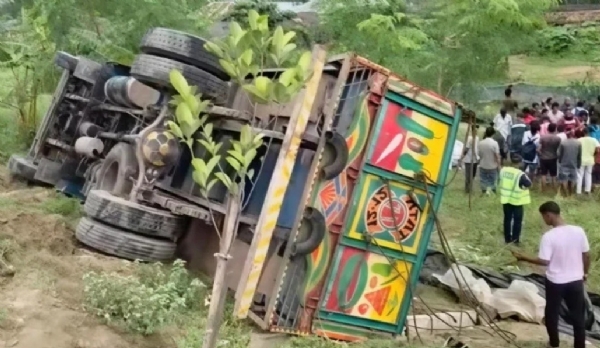
The report also highlighted overcrowding during journeys, excessive fares and irregularities in ticketing arrangements. One of the most serious incidents occurred in Kalihati, in Tangail district, where a truck accident during the Eid travel period claimed the lives of 15 workers.
The RSF identified several major factors contributing to the accidents, including excessive speed, reckless motorcycle riding by young people, poorly maintained vehicles, inadequate traffic management and unqualified drivers.
To reduce dependence on road transport during major festivals, the foundation recommended a long-term, integrated transport plan. Its proposals included expanding railway services, improving water transport infrastructure and services, and strengthening coordination among different modes of public transportation.
The report emphasised that addressing Bangladesh’s road safety crisis would require sustained improvements in transport planning, vehicle fitness, traffic enforcement and public transport capacity. It suggested that a coordinated, long-term approach would be essential to reducing accident-related deaths and injuries, particularly during periods of exceptionally heavy travel.
---------------
Hindusthan Samachar / Jun Sarkar

18 Aug 2026