By Vijayalakshmi
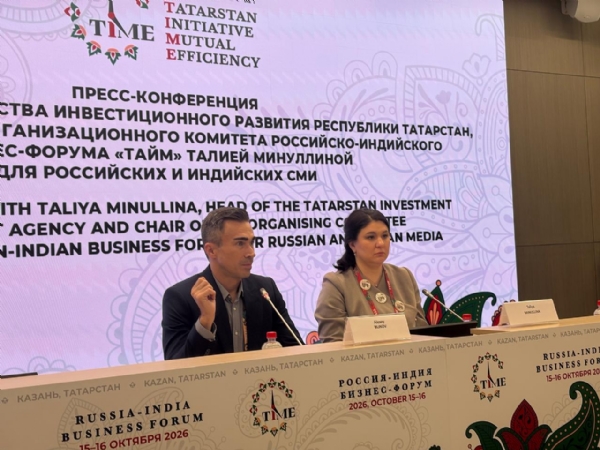
Kazan, 24 October (H.S.): In a significant initiative to promote the traditional Indian system of medicine, Ayurveda, in Russia, the country's Republic of Tatarstan is set to establish its first Ayurvedic centre. Construction of the centre is expected to be completed by 2028. An official agreement to establish the centre in the Zelenodolsk district of Tatarstan was signed at the second Kazan India-Russia Business Forum. Indian health and wellness brands will also support the project. The objective is to assess demand for traditional Indian medical practices in the region, explore the scope for expanding Ayurvedic services and make the benefits of Ayurveda accessible to people.
Taliya Minullina, chief executive officer of the Tatarstan Investment Development Agency, told Hindusthan Samachar that interest in Ayurveda was growing. Against this backdrop, an agreement was reached at the business forum to establish an Ayurvedic centre. The initiative will help assess the acceptance of Ayurvedic treatment and traditional Indian healthcare services in the region, she said.
She added that the initiative was expected to receive support from a new bilateral framework between India and Russia relating to temporary employment. This could make it easier for eligible Indian professionals, including certified Ayurvedic practitioners and therapists, to find work in Russia, subject to the prescribed qualifications and training requirements.
Minullina said the presence of Indian students in Tatarstan was also an important basis for cooperation between the two countries in the medical sector. More than 1,000 Indian students are pursuing medical studies in the region. The proposed Ayurvedic centre could therefore become an important step towards expanding cooperation in healthcare, medical education and the exchange of traditional treatment practices between India and Russia.
Indian Students Continue to Choose Kazan for Medical Education
Indian students are enrolling in medical courses in Kazan, Russia, every year. Hundreds of students travel to the city annually because tuition fees are relatively low compared with those at private medical colleges in India.
Dr Ashutosh Dwivedi, a native of Lucknow who is now a Russian citizen, plays an important role in facilitating admissions for students from northern India. Dwivedi, director of Prolong Education Consultants, said that between 150 and 170 students secured admission each year.
He said the annual tuition fee for MBBS courses in Kazan, which was previously 416,000 roubles (approximately Rs 4.92 lakh), had increased to 637,000 roubles (approximately Rs 7.53 lakh). However, the cost remained considerably lower than that of private medical colleges in India. Students could complete the five-year MBBS course for less than Rs 40 lakh, he said.
Dr Ashish Mahindra said the National Medical Commission (NMC) had introduced a minimum NEET qualification requirement in 2019. This year, the minimum qualifying cut-off was higher, affecting the number of admissions.
Last year, the minimum qualifying mark for general-category students seeking admission abroad was 150, while this year it increased to 250. For reserved-category students, the qualifying mark rose from 120 to 177.
Mahindra also said that the NEET examination, followed by a re-NEET examination and another test this year, had delayed admissions in India. Medical admissions in Russia generally take place in September, and the delay contributed to a lower number of admissions this year.
According to Mahindra, around 20,000 Indian students are pursuing medical education across Russia.
What the Students Say
Chiranjeevi, a second-year medical student from Coimbatore in Tamil Nadu, said admissions at his institution had increased in the year following the outbreak of the Russia-Ukraine war in 2022. He said tuition fees had risen and hostel accommodation now cost around 6,000 roubles per month.
Haripriya Ashoka, a student from Vellore, said most students at Kazan State Medical University came from northern India, followed by students from southern India. She said language and access to vegetarian food were major challenges for newcomers. However, as the courses were taught in English, students did not face significant difficulties in their studies. They gradually began to understand Russian as well, she added.
Tanu Chaudhary, a first-year MBBS student from Haridwar, and Farheen Khan, from Gorakhpur, said the Russia-Ukraine war had not had any significant impact on their studies or daily routines. Although alerts were occasionally issued, they said they had become accustomed to living alongside the local population.
---------------
Hindusthan Samachar / Jun Sarkar

18 Aug 2026