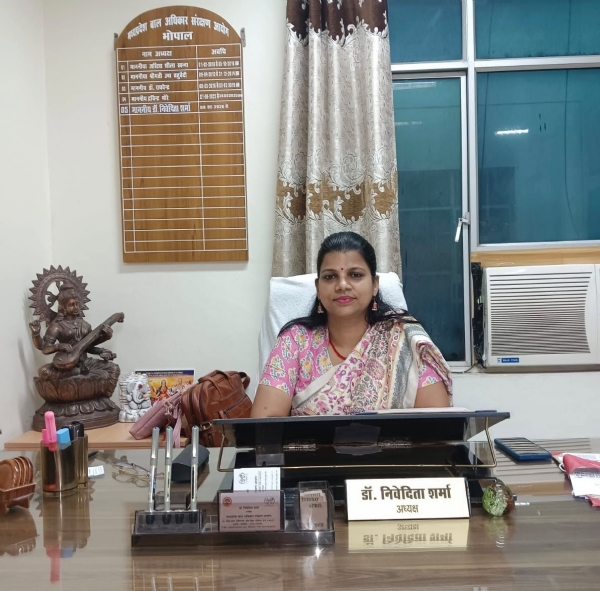
- Dr. Nivedita Sharma
A 2026 Supreme Court bench (Justice JB Pardiwala and Justice K Vinod Chandran) has made clear that the right to access and use the internet is a fundamental right of every person under Articles 21 and 19(1)(a) of the Constitution and that this includes children. The court stressed that children hold these rights regardless of their age and that depriving them of them entirely would be as absurd as claiming that small children have no consciousness or freedom of expression. Safety and freedom, it said, are not opposed to each other.
Instead of a total ban, the court suggested measures such as a child mode, a robust system for identifying and removing CSEAM (child sexual exploitation and abuse material), parental consent and private profiles. The decision comes against the backdrop of earlier rulings such as Anuradha Bhasin (2020) and Pragya Prasun (2025). From the user’s perspective, it is important to note that even if limited or controlled internet use in children’s interest were to become publicly acceptable, it could still serve the country’s bright future. A total ban may be counterproductive, but responsible, age-appropriate and safety-centred access is essential to India’s demographic dividend, education and digital economy.
The Global Regulatory Landscape and Its Lessons
It is true that 2025-2026 has seen a wave of restrictions on children’s use of social media and the internet around the world. From December 2025, Australia became the first country to enforce a ban on children under 16 creating accounts on major social media platforms (TikTok, Instagram, Facebook, YouTube and others). Platforms must take reasonable steps to verify age or face heavy fines.
The United Kingdom announced a similar ban for under-16s in June 2026, likely to come into force by 2027. The European Union’s proposed Kids Act envisages a complete ban below 13 and limited accounts below 15. Indonesia (16), Malaysia (16), Brazil, the UAE (15) and other countries have also introduced or proposed age limits in various forms. China already uses “minor mode” to apply screen-time and app-specific restrictions. Looking at all these steps, it becomes clear that they are driven by concerns about mental health, cyberbullying, addiction and sexual exploitation.
India’s Specific Context and the National Interest
Digital access in India has grown rapidly, but there is a wide gap in use and skills. According to ASER 2024, around 90 per cent of rural children aged 14-16 have a smartphone at home and 82 percent know how to use one, but only 57 per cent use it for educational purposes, against 76 percent for social media. Personal ownership is higher among boys (36%) than girls (27%). The situation in schools is worse: roughly 25-64 percent of government schools have functional computers and internet, with vast differences between states. The NSSO and other surveys indicate that basic internet skills (search, email, transactions) among young people stand at only around 25-30 percent and at a lower level still among rural women.
The DPDP Act 2023 defines anyone under 18 as a child and makes verified parental consent mandatory for processing their data (the rules are likely to come fully into force by 2027). This is stricter than global norms, where the threshold is often 13-16. India’s Aadhaar/DigiLocker system is useful for age verification; in our country everyone under 18 is a child, and all of them come under the protection of child rights oversight.
A large share of India’s population is young. We also accept that a digitally literate generation is necessary for the digital economy, AI, start-ups and global competitiveness. It is indispensable for the Viksit Bharat 2047 goal as well. Yet that is no reason to leave our children free to watch and absorb whatever they like, so good judgement is vital.
In this light, the Supreme Court’s balanced approach, which has just emerged, serves India’s interest. A total ban is, as the court put it, “a proven incongruity of unproven measures”. Global experience shows that bans are hard to enforce effectively and can push children towards unregulated spaces. On the other hand, child mode, private profiles by default, restrictions on messages from unknown adults, strong content moderation and fast CSEAM takedown systems keep children safe while preserving access.
Global evidence shows that the problem lies less in “how much time” than in “what content and how it is used”, which is what is causing the most harm today. Smart regulation is therefore better than a total ban: for instance, a modified form of the Australian model, the European safety-by-design approach and effective implementation of India’s DPDP framework.
On the whole, it can be said that the Supreme Court’s decision is constitutionally sound and practically prudent. Maintaining a balance between children’s safety and freedom is essential to India’s bright future. If controlled, safe and skills-oriented internet access becomes publicly acceptable, it serves not only children’s interests but also the country’s education, economy and social stability.
Both a total ban and total absence of control are dangerous. To turn its young demographic dividend into safe digital citizens, India should follow this balanced path. Global facts make clear that a responsible digital childhood is the foundation of future competitiveness and prosperity. It has therefore become extremely necessary to act on what the bench of Justice JB Pardiwala and Justice K Vinod Chandran has suggested: that, rather than stopping children from using the internet altogether, their online safety should be strengthened through measures such as child mode for social media accounts. That does indeed appear to be right. What is needed now is for society to prepare itself.
---------------
Hindusthan Samachar / Mayank Chaturvedi