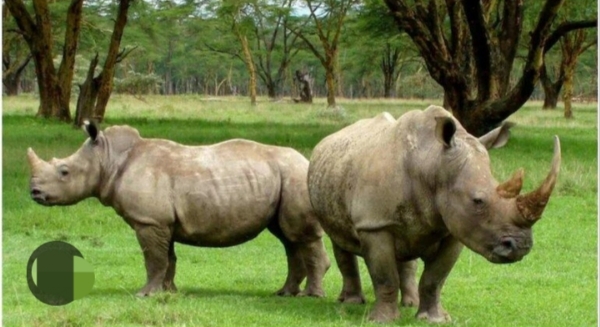
Guwahati, 02 October (HS): A conservation battle that once saw rhinos fall regularly to organised poaching gangs has taken a dramatic turn in Assam. The state did not report a single known rhino-poaching case in 2025, marking a major breakthrough in the decades-long effort to protect the greater one-horned rhinoceros.
For Assam, the significance of the achievement goes far beyond the absence of a single wildlife crime. The state is home to about 3,260 rhinos, nearly 80% of the estimated global population of the species. With Kaziranga National Park alone accounting for more than 2,600 rhinos, Assam has become central to the worldwide conservation of the greater one-horned rhinoceros.
The latest zero-poaching record becomes even more significant when compared with the situation that prevailed a decade ago. Between 2000 and 2021, poachers killed at least 191 rhinos in Assam. The annual death toll climbed to 27 in both 2013 and 2014, exposing the growing influence of organised wildlife-crime networks operating around the state's rhino habitats.
The number of rhinos killed by poachers declined sharply, reaching two each in 2020 and 2021. Assam then achieved a landmark in 2022 by recording no known rhino-poaching case. A single incident occurred in 2023, followed by two in 2024. Enforcement agencies responded with intensified operations and the state returned to zero known poaching in 2025.
According to the International Rhino Foundation, 2025 was only the second year since 1977 in which Assam recorded no known rhino-poaching losses.
The transformation did not come from increased patrolling alone. Assam's anti-poaching strategy gradually evolved into a broader campaign aimed at identifying criminals, tracking their networks and stopping attacks before they reached protected areas.
A key component has been the closer coordination between the police and forest authorities. Intelligence sharing, surveillance and action against suspected trafficking networks have increasingly become as important as physical protection inside national parks.
Operation Falcon, launched in 2024 following two rhino killings in Kaziranga, reflected this new approach. By August 2025, the operation had resulted in the arrest of at least 42 suspected poachers, the identification of six major rhino-poaching gangs and the prevention of nine suspected poaching attempts.
Investigations also indicated links between some of the networks and illegal wildlife-trafficking routes extending towards Myanmar. The findings underlined an important reality: rhino poaching is not simply a forest crime. It is part of a wider illegal trade chain stretching from local hunters and facilitators to organised trafficking networks.
That understanding has changed the geography of enforcement. The focus is no longer restricted to the core areas where rhinos live. Police and forest officials are also monitoring surrounding districts and transit routes, seeking to intercept suspects before they enter protected habitats.
Protecting Assam's rhinos is particularly challenging because their movement is closely linked to the state's annual floods.
During the monsoon, large parts of Kaziranga can be submerged by the Brahmaputra and its tributaries. Rhinos consequently move towards elevated areas, sometimes crossing roads, entering adjoining landscapes or travelling beyond the immediate security perimeter of the park.
These movements create multiple risks. Animals can come into contact with vehicles and human settlements, while their temporary displacement can also create opportunities for wildlife criminals.
For this reason, conservation authorities increasingly have to protect not just a national park but an entire landscape.
Technology has become an important part of that effort. Surveillance systems, cameras, drones and other monitoring tools are being integrated with conventional patrolling to track vulnerable areas and improve the response to suspicious movement.
The fight against poaching has another front—the demand for rhino horn.
Rhino horn has long been traded illegally in parts of Asia, fuelled by unfounded beliefs about its medicinal properties and by its association with status and wealth. Scientifically, however, the horn is primarily composed of keratin, the same structural protein found in human hair and fingernails.
Assam made a powerful statement against the illegal trade in 2021 when authorities publicly destroyed 2,479 rhino horns weighing more than 1,300 kg at Bokakhat.
The horns had been accumulated through seizures, recoveries from rhinos that had died naturally or accidentally and other official sources. The exercise was intended to reinforce the message that rhino horns have no legal commercial value and to challenge the myths that help sustain demand.
Not all horns were destroyed. Ninety-four were retained for heritage and academic purposes, while 50 were kept for court-related requirements.
The move represented more than the disposal of confiscated wildlife products. It was also an attempt to weaken the economic symbolism attached to the horn and reinforce the principle that conservation value lies in the living animal, not in its body parts.
Arrests, seizures and anti-poaching operations provide important indicators of enforcement. But the ultimate test of conservation is whether the animal population survives and grows.
The greater one-horned rhinoceros was once reduced to dangerously low numbers across its range. Decades of conservation efforts in India and Nepal have since helped the population recover to more than 4,000 globally.
With about 3,260 rhinos, the state holds roughly four-fifths of the world's remaining greater one-horned rhinoceroses. This concentration gives Assam an outsized role in determining the future of the species.
Every successful breeding season strengthens the global population. Every protected animal matters to the long-term survival of a species that once faced a far more uncertain future.
The zero-poaching figure for 2025 marks a major conservation milestone, but it does not eliminate the threat.
The incidents recorded in 2023 and 2024 demonstrate how quickly organised poaching networks can attempt to return. International demand for wildlife products continues to exist, while rhino habitats remain exposed to pressures created by flooding, infrastructure, human activity and changing land-use patterns.
As the rhino population increases, the conservation challenge will also evolve. Protecting animals from poachers must go hand in hand with maintaining grasslands, wetlands, breeding areas and wildlife corridors.
Assam's experience shows that successful wildlife protection requires several systems to work simultaneously—forest protection, policing, intelligence gathering, technology, community participation, habitat management and action against trafficking networks.
The transformation from 27 rhinos killed by poachers in a single year in 2013 and again in 2014 to zero known losses in 2025 captures the scale of the change.
For Assam, however, the more difficult task now begins: ensuring that zero poaching becomes a sustained trend and that the state's extraordinary concentration of the world's greater one-horned rhinos remains protected for generations to come.------------
Hindusthan Samachar / Sriprakash