Kathmandu, 18 October (H.S.): The Nepal government has mobilised approximately 17.75 billion Nepalese rupees for relief, rescue and rehabilitation in flood-affected areas, including Rasuwa district. However, the amount deposited in the Prime Minister’s Disaster Relief Fund remains unspent, even as the country faces an estimated reconstruction bill of Rs 723 billion following the devastating floods.
In the meantime, the National Disaster Risk Reduction and Management Authority (NDRRMA) has been meeting immediate relief and logistical requirements through the Central Disaster Management Fund. Over nearly two months, the authority has spent only Rs 370 million on rescue operations and essential arrangements in the affected areas.
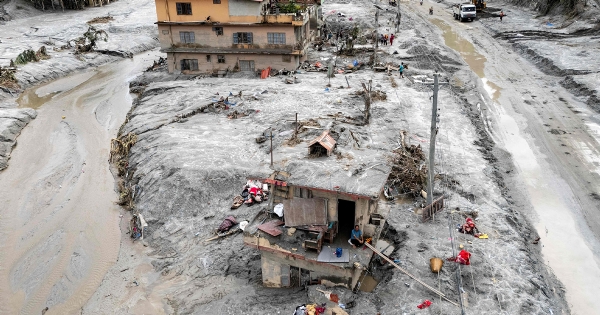
The floods triggered by the Bhotekoshi River in Rasuwa on August 26 caused extensive loss of life and property across several districts, including Rasuwa, Dhading and Nuwakot. A preliminary rapid assessment conducted by a government-appointed team estimated the damage at Rs 408 billion. The report stated that approximately Rs 723 billion would be required to compensate for the losses and undertake reconstruction.
Nearly two months after the disaster, reconstruction efforts have yet to gather momentum. Instead, the funds mobilised for rehabilitation and rebuilding remain in the relief fund, while only a limited amount has been spent from the authority’s central fund on immediate relief measures. The expenditure so far remains considerably below the scale of the requirements in the affected areas.
### Only Rs 370 Million Spent from Central Disaster Fund
According to Ram Bahadur KC, spokesperson for the NDRRMA, all expenditure incurred so far has come from the Central Disaster Management Fund rather than the Prime Minister’s Disaster Relief Fund.
“There was approximately Rs 4 billion available in the Central Disaster Fund. The authority has spent Rs 370 million from that amount so far,” KC said.
The authority has transferred a total of Rs 25 million to the district disaster management funds of Rasuwa, Nuwakot and Dhading. Of this, Rasuwa received Rs 10 million, Nuwakot Rs 10 million and Dhading Rs 5 million.
In addition, Rs 135 million has been spent on making arrangements in 15 local administrative units declared disaster-affected areas following the floods.
Funds have also been provided to security agencies engaged in rescue and relief operations. According to KC, the Nepal Army received Rs 90 million for rescue and logistical arrangements, while the Nepal Police and the Armed Police Force received Rs 60 million each.
Including transfers to district disaster management funds, expenditure on the 15 affected local administrative units and allocations to security agencies, total spending from the central fund has reached Rs 370 million.
The authority maintains that the Prime Minister’s Disaster Relief Fund will be utilised in the second phase, after the immediate arrangements have been completed. It said no additional funding requests had yet been received from the affected areas, eliminating the immediate need to release further funds.
“Our main expenditure is channelled through the districts. When the districts do not submit requests, there is no need for additional funds. Expenditure is not incurred directly from the centre; funds are released through district-level accounts in response to requirements,” KC said.
The authority plans to seek money from the Prime Minister’s Disaster Relief Fund only when additional demands arise from the districts and the available balance in the Central Disaster Management Fund is exhausted.
### Families of Missing Victims Still Await Compensation
Families of people missing since the floods have also been unable to receive the announced financial assistance because the government has not yet legally declared the missing individuals dead.
The government had announced compensation of Rs 200,000 per person for families to cover the last rites of those who lost their lives in the disaster. Nearly two months have passed, and many families of missing people have already completed funeral rites and related religious ceremonies in accordance with their cultural traditions.
However, delays in formally declaring the missing individuals dead have prevented the distribution of the promised assistance to their families.
The authority expects that additional funds will be required for relief and compensation once the process of legally declaring the missing people dead moves forward. KC said the families of individuals listed as missing would be eligible for Rs 200,000 per person after the necessary declaration.
“We have already transferred funds to the district accounts. The money will be distributed according to requests received from local administrative units. Further demands may arise once the missing individuals are declared dead,” he said.
The total amount required under this compensation category has not yet been determined. The necessary funds will be released once the districts submit their requests, raising the possibility of increased expenditure in the coming days.
The cost of helicopters used in rescue operations in the flood-hit areas has also not been fully finalised. KC said bills amounting to Rs 120 million to Rs 130 million had been received for the use of privately operated helicopters. However, the final cost remains unclear because a complete account of all related expenditure has yet to be compiled.
### Reconstruction Requires Hundreds of Billions of Rupees
The floods caused extensive destruction in settlements and infrastructure along riverbanks. Rebuilding damaged structures, roads, bridges and other essential infrastructure will require substantial financial resources.
The preliminary rapid assessment estimated that Rs 723 billion would be needed for reconstruction. In comparison, the Rs 17.75 billion deposited in the Prime Minister’s Disaster Relief Fund represents only a small fraction of the projected requirement.
The significant gap between the estimated reconstruction cost and the available funds raises concerns about whether government grants and domestic contributions alone will be sufficient to meet the overall expenditure.
KC said the money in the Prime Minister’s Disaster Relief Fund could be used for reconstruction and rehabilitation. However, the actual financial requirements and expenditure would become clearer once the rebuilding process begins.
“The reconstruction requirement appears to exceed Rs 500 billion,” he said, highlighting the scale of the financial challenge.
In the flood-affected areas, work is currently under way to install Bailey bridges, reopen blocked roads and construct smaller alternative routes. These infrastructure-related activities are also generating expenditure, but the costs are not being met exclusively from the Prime Minister’s Disaster Relief Fund. Instead, the relevant government agencies are following their regular funding and expenditure procedures.
According to KC, following decisions by the National Disaster Management Council, ministries responsible for infrastructure seek funds from the Ministry of Finance to undertake the necessary work. Even where Bailey bridges do not need to be purchased, expenses are incurred in installing them and restoring road connectivity.
Dr Gunakar Bhatta, Vice-Chairman of Nepal’s National Planning Commission, also said that post-disaster financial management and administrative arrangements were being handled through the disaster management authority.
He said the preliminary rapid assessment report had been completed, while the collection and analysis of more detailed damage data remained under way.
“The rapid assessment report has been received, and the process of obtaining additional details is continuing. The data have been collected and are being analysed. At present, the authority is managing expenditure on rescue and relief operations,” Bhatta said.
Although the government has mobilised funds for disaster response, the money in the Prime Minister’s Disaster Relief Fund remains unspent so far. The authority says additional allocations will be released when requests are received from the districts.
Meanwhile, the preliminary assessment has already placed reconstruction needs at more than Rs 723 billion. The scale of the projected expenditure suggests that rebuilding flood-damaged infrastructure will be extremely difficult to finance through the existing relief fund alone.
---------------
Hindusthan Samachar / Jun Sarkar

18 Aug 2026