By Rajesh Sirothia
Advocating Competition While Raising Questions of National Security
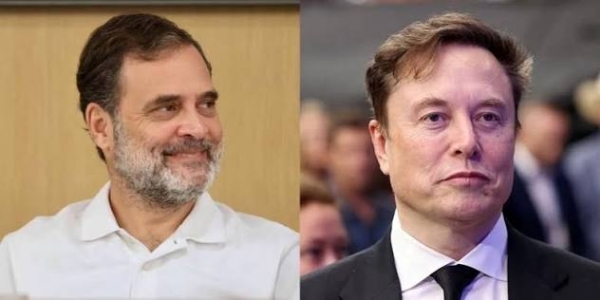
Elon Musk may be one of the world's most celebrated entrepreneurs, but commercial success alone does not explain the scale of his ambitions. His companies operate at the intersection of business, political influence and strategic technology. According to reports published in October 2026, Musk's business ventures have spent more than $276 million supporting political causes in the United States. Such spending may be part of the American political process, but it also raises questions about the extent to which corporate interests can shape political decisions.
This is not merely a question of political ideology or an individual entrepreneur's preferences. It concerns the influence that business interests can exert over the political environment in which they operate.
Musk's ambitions extend beyond the American market. His companies are seeking opportunities in India, where satellite-based internet services could open up a vast new market. The question, therefore, is not whether India should welcome technological innovation or foreign investment. It is whether competition, commercial opportunity and national security can be pursued without compromising one another.
Satellite internet is not simply another consumer service. Unlike conventional telecommunications, it depends on satellite infrastructure, strategically positioned ground stations, networks, spectrum allocation and the management of sensitive data. These systems can have implications for national security, particularly when they operate near international borders, in remote regions or in areas of strategic importance.
If a foreign company's network is used in India, where will the data of Indian consumers be stored? Who will control the network, and who will have the ultimate authority to regulate its operations? If a serious security situation arises, will Indian authorities have effective and timely access to the information required to respond? These are not hypothetical concerns that can be dismissed in the name of technological progress.
The issue becomes even more significant when an American company's infrastructure has the potential to operate across strategically sensitive regions. India must ensure that its security agencies are not left dependent on the goodwill or commercial priorities of a foreign technology provider.
If American and Indian companies are to compete in the satellite communications market, they must operate under clear, transparent and equivalent regulatory standards. Such standards should apply not only to Starlink but also to Jio Satellite Communications, OneWeb and other domestic or international players seeking access to the Indian market.
The objective should not be to exclude a foreign company simply because it is foreign. Nor should an Indian company receive preferential treatment merely because it is Indian. The essential requirement is that every operator comply with India's laws, security protocols, data requirements and licensing conditions.
The government must also ensure that the terms of operation are not determined by a company's political connections or the influence its leadership may exercise in Washington or New Delhi.
This brings us to the political dimension of the debate. Rahul Gandhi's support for competition raises a legitimate question: is he advocating a level playing field for all companies, or is he overlooking the national security implications of allowing foreign-controlled communication networks to expand in India?
Political criticism of the government is a democratic right. But when the subject involves critical communications infrastructure, the debate cannot be confined to allegations of favouritism or corporate influence. It must also address the risks that may arise if a foreign company's network becomes indispensable to Indian consumers, businesses or security agencies.
India needs investment, technology and competition. What it cannot afford is a regulatory framework in which commercial influence takes precedence over national interest.
Musk's companies may be entitled to seek access to the Indian market, and Rahul Gandhi may be entitled to question the government's policies. But both commercial ambitions and political arguments must be examined against the same fundamental test: do they serve India's interests?
The government must ensure that licensing decisions, security clearances and operational conditions are based on transparent rules rather than political considerations. The same standards must apply to every company, regardless of its ownership, financial strength or political influence.
Ultimately, the question is not whether Elon Musk should be allowed to do business in India. The question is whether India can welcome his technology, preserve genuine competition and protect its national security at the same time.
That is the balance the government must strike-and the question every political leader must be prepared to answer.
( writer of this article is senior journalist and views express by him is purely based on information he got from his own sources)
Hindusthan Samachar / Indrani Sarkar