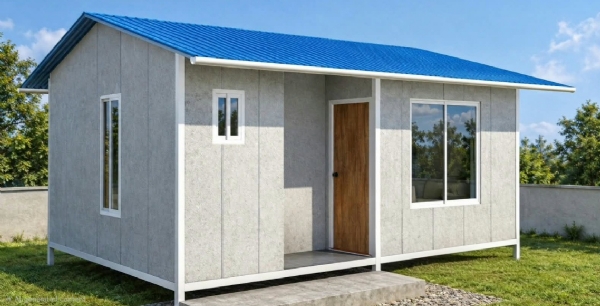
Kathmandu, 16 October (H.S.): The Nepal government has finalised a model for temporary housing for flood victims in Rasuwa district, approving prefabricated modular homes that will cost an estimated 500,000 Nepalese rupees each. The houses will feature two rooms, a kitchen and a toilet, providing essential accommodation for affected families until permanent rehabilitation arrangements are made.
The Ministry of Infrastructure Development has approved the prefabricated modular home design following discussions on various temporary housing options. At a meeting of the Executive Committee of the National Disaster Management Authority, the ministry had been tasked with finalising a suitable housing model for people affected by the floods of August 26.
Suman Pradhan, adviser to Minister Sunil Lamsal, shared the details of the decision. He said Nepal was highly vulnerable to natural disasters, including floods, landslides and earthquakes. Keeping this risk in mind, Lamsal emphasised the need to develop temporary housing structures that could be reused in the future.
“Considering the management of potential natural disasters in the future, it has been decided to construct prefabricated modular homes as temporary accommodation,” Pradhan said.
Prefabricated modular homes are structures whose components, including panels, trusses and walls, are manufactured in advance at a factory or another designated facility. These components are then transported to the site and assembled on prepared foundations to construct the houses.
Such homes can be completed within a few weeks, considerably faster than conventional reinforced cement concrete (RCC) buildings. They are also generally less expensive to construct. Their relatively lightweight structures can offer advantages in earthquake-prone areas, depending on the design and construction standards. The homes can also be dismantled and relocated or expanded when required.
The government intends to use this model for temporary accommodation rather than permanent housing for flood victims. Affected families will be able to live in these homes until permanent rehabilitation arrangements are in place. The structures can subsequently be dismantled and reused in other disaster-affected areas, if necessary. The materials required for their construction are also readily available in the market.
Under the model approved by the ministry, each prefabricated modular home will cover an area of 270 square feet and include two rooms, a kitchen and a toilet. According to the ministry’s preliminary estimate, constructing each unit will cost approximately 500,000 Nepalese rupees.
An initial assessment by the authority found that the floods in Rasuwa district damaged a total of 7,570 private houses. The disaster affected 8,317 families, comprising 32,963 people.
Local authorities are currently identifying the affected residents. Once the identification process is completed, temporary housing will be provided to eligible beneficiaries on the basis of reports submitted by local bodies to the authority.
At present, approximately 60 to 70 per cent of those affected are living in rented accommodation after receiving financial assistance from the government.
---------------
Hindusthan Samachar / Jun Sarkar

18 Aug 2026