Nagpur, 16 Oct (HS): India consists of over 16
per cent of the world population, but sustains only 2.4 per cent of land
resources. Two-third of its population, which provides employment toto its workforce and is a large number of
industries get raw material from this source. However, growing farmers’
suicides is a major concern for the country. Despite launching several measures
and schemes announced by both the Union and State governments, farmers’ suicide
has been increasing with year.
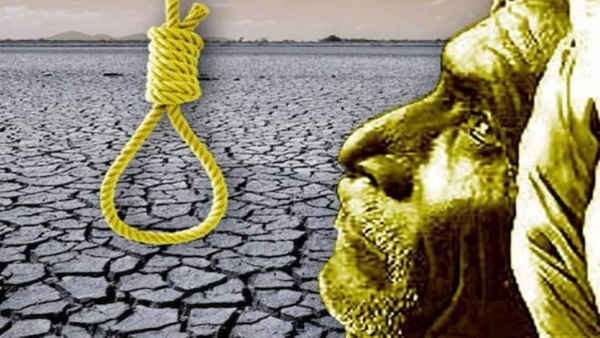
Farmers’ suicide counts for 10
per cent of total suicides in India. The national suicide rate of 10.60 per
lakh of the population, and the number is 14.2 per lakh. Andhra Pradesh
12.1/lakh, Telangana – 27.2/lakh and Chandigarh – 27.7/lakh. Every seventh
suicide in the country is of a famer.
In Maharashtra, particularly the
Vidarbha and the Marathwada region, farmers’ suicide is 60 per cent higher than
the general suicide rate. Every fifth farmers’ suicide in the country occurred
in Maharashtra. Every 7th suicide in the country is by a farmer in
the country. Every 5th suicide by a farmer is in Maharashtra.
The Union and State Governments
launched several measures to prevent farmers’ suicide. In Maharashtra counselling, schemes like ‘Jalyukta
Shivar’, efforts by NGOs like ‘Pani Foundation’ and ‘Naam Foundation’, worked
hard to generate awareness on saving water through systematic planning. The
schemes were successful some parts of the state. But lectures and seminars for
generating awareness among rural population is not enough. Naam Foundation was
working with the farmers and also generating funds for the constructive work.
Psychiatrists and Psychologists across
the world have been debating over the root cause of suicide. Whether the
suicidal tendency is already present in the brain or depends on external
factors like indebtedness, tension related to failure or fear of failure,
inability to fulfil expectations, domestic conditions, alcoholism or other addictions,
lack of patience or non-preparedness to sustain critical situation like how to
face failure etc.
This year drought in about 80 per
cent of its geographical area and fear of severe water scarcity in the coming
summer has affected psyche of the people, particularly rural population. The
financial support announced by the government is not sufficient for survival of
those who are totally dependent on agriculture sector.
Studies conducted
in western countries have found psychosocial factors to be the foremost cause
of suicide among their farmers. According to their studies, trying to balance
the day to day farming operations with their family life was a stressful task.
On the contrary, Indian studies found that socioeconomic issues due to crop
losses and accumulating loans led farmers to commit suicide.
GOVERNMENT SCHEMES
There are multiple government
welfare schemes currently available to farmers across the country to support
the agriculture industry and improve the socioeconomic conditions of those
involved in the farming industry. A few of the numerous yojanas are mentioned
below.
1.PM Kisan Scheme: Starting from
December 2018, 120 million small farmers with <2 hectares of land can get up
to Rs. 6000/year in three installments and minimum income support
2.Pradhan Mantri Kisan Maan Dhan
Yojana: This yojana allows small and marginalized farmers ages 18–40 years to
make monthly contributions which ultimately ensures a minimum pension of Rs.
3000/month when they turn 60 years of age
3.Kisan Credit Card scheme:
Provides timely access to short-time formal credit to buy equipment and other
necessary expenses
4.Pashu Kisan Credit Card Scheme:
Farmers are provided loans to buy livestock like cows, buffalos, and goats to
encourage the growth and development of animal husbandry
5.Paramparagat Krishi Vikas Yojana:
This scheme was implemented to encourage organic farming to improve soil health
and boost the farmers' net income
6.Pradhan Mantri Krishi Sinchai
Yojana: This scheme is concentrated on providing permanent solutions to
irrigation problems and helping harvest rainwater
e-National Agriculture Market: Provided a
nationwide e-marketing platform to bring transparency and revolutionize the
agriculture market.
PREVENTION
Overall, solutions such as
subsidies, loan waivers, crop insurance, and other welfare schemes have failed
due to improper implementation. Worse still, compensation after a suicide has
sometimes provided an incentive for suicide. In addition, loan waivers are
often politically motivated which erode the rural credit delivery system. Over
the years, twelve Indian states have claimed to waive pending loans, but the
India Comptroller and Auditor General's report revealed errors in the inclusion
and exclusions criteria for the beneficiaries and other unbridled corruption.
As primary preventive measures,
as a response to the psychological distress faced by farmers and their family
members, psychiatrists across the country are endeavoring to research
preventive measures and solutions to the core risk factors of farmer suicide. The
farming communities fear the stigma to psychiatric illness and treatment which
need to be studied and addressed. Studies show that if given the opportunity
and resources, forty percent of farmers would opt to change their careers.
The government needs to
acknowledge that farmers face fluctuating weather conditions and various other
expenses for the successful cultivation of their crops. By providing fair
prices for their products and offering farming loans at realistically
affordable interest rates, the financial stress of many farmers can be eliminated.
Crop loan policies need to be revised and schemes ensuring loans carrying
minimal or no interest at the start of every season should be available.
Indian farmers' suicide has been
determined to be primarily due to recurring debt and hence this pitfall needs
to be addressed as one of the core risks factors and realistic solutions need
to be implemented. A great way to resolve this issue is by ensuring profits
while protecting from failure and debt. Unreliable weather issues interlinked
with irrigation problems may be taught to be managed by harvesting rainwater
and resolving interstate river water disputes. While older generation farmers
should be taught modern farming practices to make their tasks simple, younger
generation farmers should be encouraged and educated about the use of modern
and mechanical farming techniques. Farmers should also be simultaneously
provided training in alternative sources of income like goat farming, poultry,
dairy farming, and animal husbandry.
Secondary preventive measures
include identifying the high-risk persons suffering from psychiatric illnesses
and providing treatment and teaching them simple coping mechanisms. The
identification and evaluation process can be done by the grassroots individuals
and gatekeepers who can further refer them to higher psychiatric centers for
management and counselling as and when required.
Tertiary measures involve
rehabilitation of rescued attempters and reaching out and providing help to the
survivors of completed suicides. While providing monetary relief is a
short-term solution, the surviving family members should be provided
psychiatric counseling on coping strategies and guided trained to support
themselves independently. Children should be provided free and easy access to education.
…………………..
---------------
Hindusthan Samachar / Ajay Vasant Mardikar