-Kishor Sarkar
Dhaka, October 15 (H.S.): Several influential leaders of Bangladesh's Awami League, accused of involvement in alleged attempts to undermine India's security at China's behest, have reportedly sought refuge in India following the political upheaval in Bangladesh.
Allegations suggest that a group within former Prime Minister Sheikh Hasina's government sought to mislead her into approving arrangements that could have exposed sensitive Indian security information to China. Following the fall of her government on August 5, 2024, many members of the alleged network reportedly crossed into India. Some subsequently moved with their families to Canada, Britain, the United States, Dubai, Singapore and Malaysia. Sources claim that several of these leaders continue to visit Kolkata and Delhi for party meetings and confidential discussions with associates based in India.
An inquiry has reportedly raised questions about the awarding of maintenance contracts for radar systems and related equipment at weather stations near the Indian border to a Chinese state-owned company during the Awami League government's tenure. According to the account, equipment at stations close to the Indian border was repaired, while the radar at Kalapara, a coastal area in Patuakhali, was left unrepaired despite its importance in monitoring cyclones and tidal surges in the Bay of Bengal.
A senior weather department official, speaking on condition of anonymity, alleged that China may have sought to use ordinary weather radar infrastructure to monitor Indian military activities. The handling of radar operations at Lalmonirhat Airport, located near the Meghalaya border, has also been cited as a matter of concern.
Hospital Project Near the Strategic Siliguri Corridor Raises Questions.
The allegations extend to a proposed hospital project near the strategically important Siliguri Corridor, commonly known as the 'Chicken's Neck'. According to the account, construction of a 1,000-bed facility called North Point Medical College began in 2023 in Tetulia, Panchagarh, without the local MP being fully informed.
It has been alleged that local residents were mobilised to hold a human chain in support of the project. Some sources have further claimed that the proposed medical facility could have served purposes beyond healthcare, including military research. The report states that the hospital was inaugurated by then Commerce Minister Tipu Munshi in the presence of the Chinese ambassador. However, the allegation that the facility was intended to function as a Chinese military research laboratory requires independent verification.
The awarding of contracts to Chinese companies for the modernisation and maintenance of Sylhet Airport has also drawn scrutiny. The airport is considered strategically significant in the broader security context of India's northeastern region. Similar concerns have been raised about Chinese involvement in airport-related projects affecting India's northeastern security interests.
Senior Officials in Hasina Government Named in Allegations
Several senior officials and political figures from the former Sheikh Hasina government have been named in connection with the alleged controversial agreements. They include former Principal Secretary to the Prime Minister Mohammad Tofazzal Hossain Miah, the late Major General Mia Mohammad Zainul Abedin, who served as military secretary, Special Assistant Biplab Barua, former State Minister for Foreign Affairs Shahriar Alam, and former State Minister for Power and Energy Nasrul Hamid Bipu.
The allegations suggest that these officials played a role in persuading Hasina to approve the agreements with China.
Salman F Rahman, the former prime minister's adviser on industry and investment, has also been identified in the account as a key figure allegedly operating behind the scenes. These claims have not been independently established in the information available for this report.
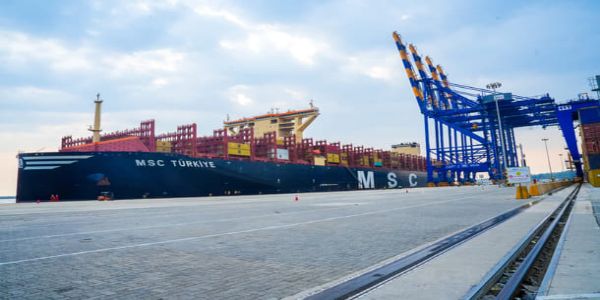
Former State Minister for Shipping Khalid Mahmud Chowdhury has also been accused of using his influence to facilitate the transfer of control over the strategically sensitive Mongla seaport to China. Several sources associated with the concerned ministry have alleged that he received substantial financial benefits in return. Following the fall of the Hasina government, Chowdhury reportedly travelled to India before subsequently moving to London, where he is said to be living with his family. The allegations of financial inducements would require documentary evidence or findings from an independent investigation.
China’s Strategic Interests in the Bay of Bengal Under Scrutiny
Another issue concerns an agreement signed in 2022 between the University of Dhaka and China's First Institute of Oceanography, which operates under the country's Ministry of Natural Resources. The agreement reportedly focused on research into natural resources in the Bay of Bengal.
A senior University of Dhaka professor, speaking on condition of anonymity, said Bangladesh lacked the infrastructure and vessels required for extensive deep-sea resource research. Such capabilities, the professor noted, were available to major powers including the United States, Russia and China. The professor questioned whether the research collaboration could have broader strategic implications, suggesting that it might help China expand its influence in the Bay of Bengal. However, the claim that the agreement was primarily intended to establish Chinese control over the region has not been independently substantiated.
China sold two used submarines to Bangladesh in 2013 as part of its defence cooperation with the country. Subsequently, a submarine base was constructed at Pekua in Cox's Bazar and inaugurated in 2017. Critics have expressed concerns about China's growing military and technical involvement in Bangladesh.
Allegations that Chinese military experts established a virtually permanent presence at the facility under the pretext of maintenance would require further verification.
According to the allegations, the network within the former government repeatedly presented misleading information to the prime minister in the name of protecting national interests while allegedly pursuing arrangements that benefited China financially. The identities, roles and activities attributed to the individuals concerned require independent scrutiny before definitive conclusions can be drawn.
Concerns have also been voiced about the possibility that a section of the current Bangladesh Nationalist Party (BNP) may pursue policies similar to those of the former Awami League government in its dealings with China.
However, specific evidence of such activities has not been detailed in the account.
Given the strategic importance of Bangladesh's geographic location and its shared border with India, the implications of Chinese involvement in infrastructure, telecommunications, maritime research and defence projects remain significant subjects for regional security assessment. Any conclusions about alleged attempts to compromise India's security, however, must be based on verifiable evidence, the terms of the agreements concerned and the responses of the individuals and institutions named.
Hindusthan Samachar / Santosh Madhup