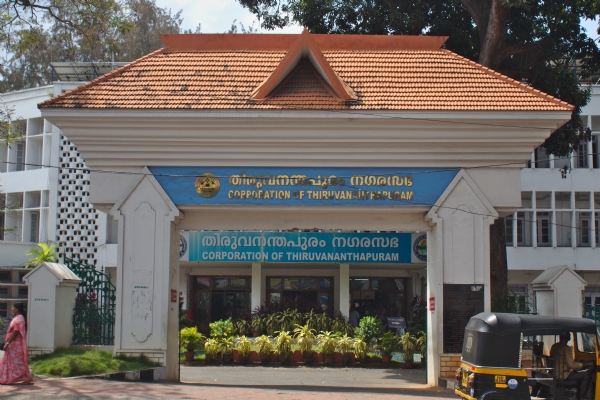
Thiruvananthapuram, 06 Jan (H.S.):Elections to the various Standing Committees of local self-government institutions in Kerala commenced on Monday, marking a key phase in the post-election administrative process across the State.
On Tuesday, elections to the Standing Committees will be held in the Kannur and Kozhikode municipal corporations. The remaining major corporations—Thiruvananthapuram, Kollam, Ernakulam and Thrissur—are scheduled to conduct their committee elections on Wednesday. With these rounds, the process of constituting Standing Committees in all local bodies is expected to be completed within the stipulated time frame.
Standing Committees play a crucial role in the functioning of local self-government institutions, as they are responsible for policy planning, execution and monitoring in specific sectors. In municipal corporations, eight Standing Committees are to be formed, covering finance, development, welfare, health, public works, education, arts and sports, town planning, and tax appeal.
The structure of Standing Committees varies across different tiers of local bodies. Gram panchayats and block panchayats are required to constitute four Standing Committees each, while district panchayats must form five. Municipalities will have six Standing Committees, reflecting their administrative responsibilities and scale of governance.
According to the schedule, elections to the Standing Committees in all local self-government institutions across Kerala must be completed by Wednesday. The election of committee members is being carried out by the respective returning officers in accordance with the Kerala Panchayat Raj Act and the Kerala Municipality Act.
Once the election of Standing Committee members is concluded, the next step will be the selection of chairpersons for each committee. Separate meetings will be convened for this purpose, and notices for these meetings will be issued to all committee members at least two days in advance, as mandated by the rules.
The formation of Standing Committees is considered vital for ensuring smooth decentralised governance, as these bodies are entrusted with sector-specific decision-making and oversight. With the completion of this process, local bodies are expected to move swiftly towards full-fledged administrative functioning for the current term.
---------------
Hindusthan Samachar / Arun Lakshman
08 Jan 2026
People Rejected Kejriwal for Opposing Ayushman Bharat, Mamata Banerjee Will Face Same Fate: J.P. Nadda

08 Jan 2026